We use our own cookies, which the site needs to work, and third-party cookies
for traffic analysis and advertising. You can accept them, reject the optional
ones, or choose which to allow.
Cookie policy.
NecessaryRequired for the site to work. They cannot be turned off.
AnalyticsMeasure traffic and browsing behavior (Google Analytics 4).
AdvertisingShow ads relevant to your interests (Google AdSense).
In this series, a connection without a common tone is one in which you do not hold the note shared by the two chords. Instead, all three upper voices move, usually in contrary motion to the bass, to the nearest note of the next chord. In this practice the bass moves by a 3rd or a 4th, up or down. (Strictly speaking, chords whose roots are a 3rd or 4th apart do share notes, so the task is to write the connection without keeping them. When two chords truly have nothing in common, as with roots a step apart, contrary motion against the bass is the standard way to connect them.)
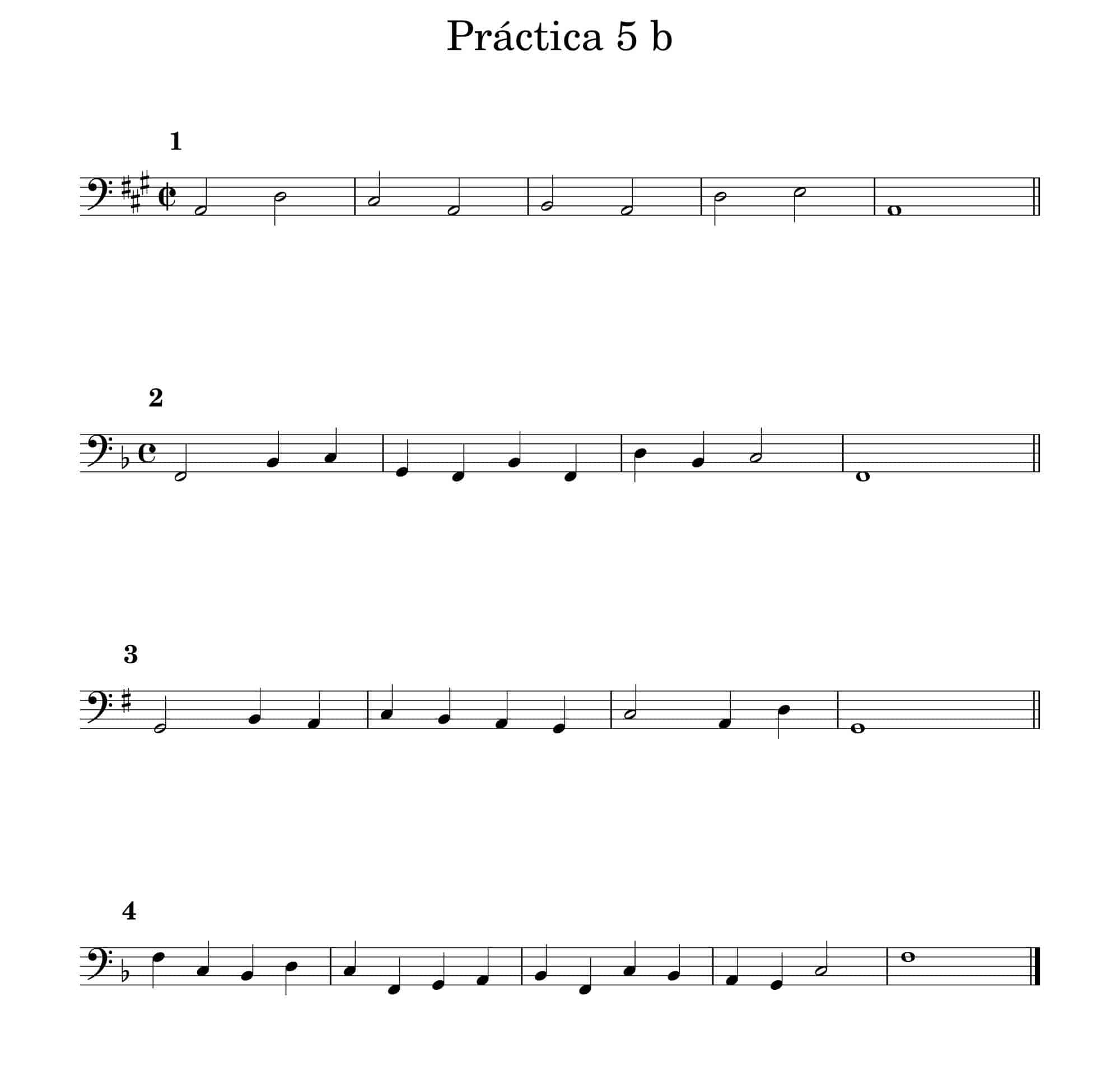
Harmonize the following bass lines without keeping common tones whenever the bass moves by a 3rd or a 4th, in either direction.
Audio
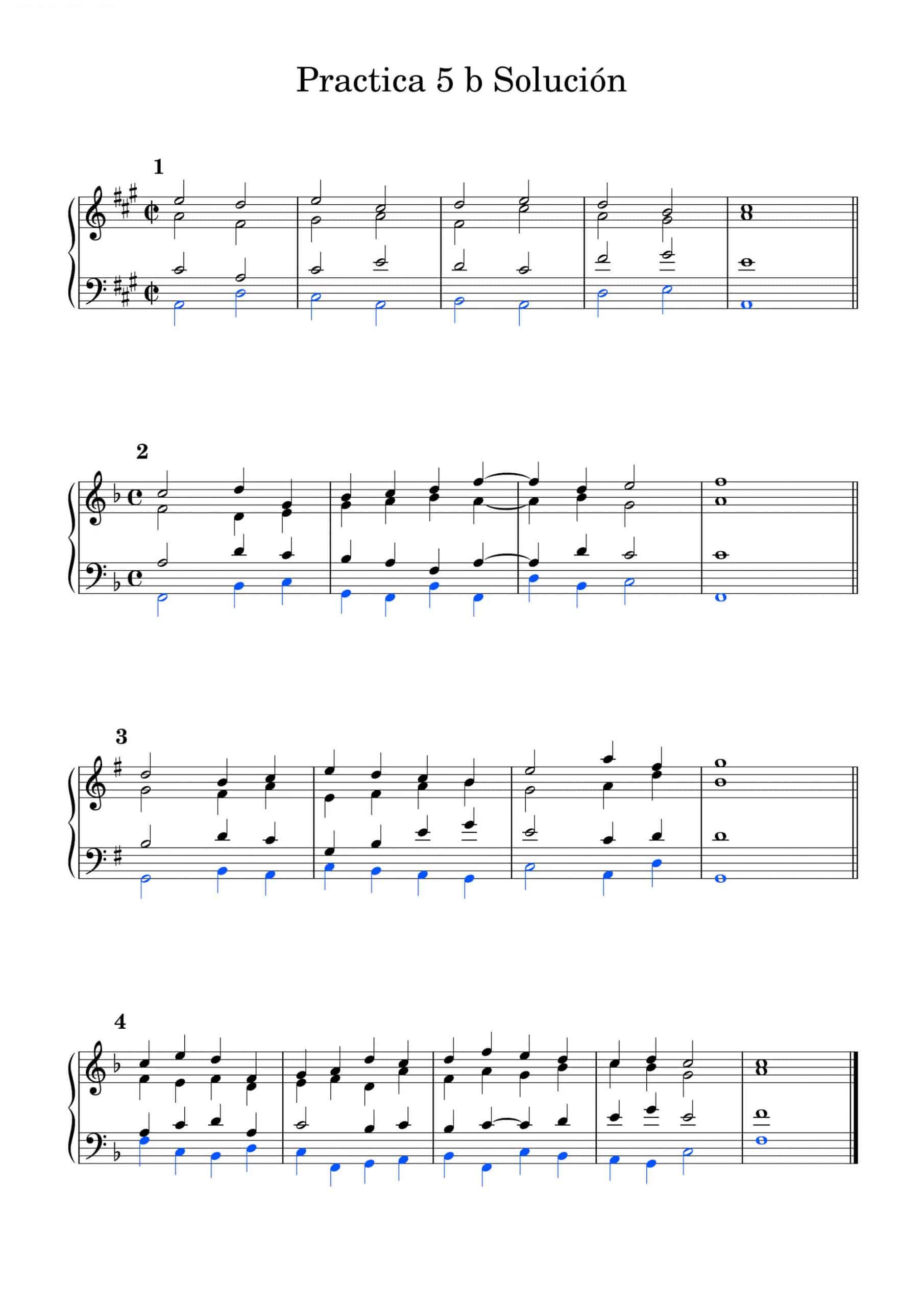
Proposed solution
Below is one possible solution. In harmony there is no single correct answer: other voicings that follow the rules are just as valid. The bass is shown in blue.
Audio
To stay up to date with the harmony exercises as they are added, check the harmony exercises page.
Frequently Asked Questions
What is a connection without a common tone?
It is a connection in which the shared note is not held: all three upper voices move, normally in contrary motion to the bass, so each voice travels to the nearest note of the new chord.
Why does the bass move by a 3rd or a 4th?
Those are the bass motions this exercise practices. Chords whose roots are a 3rd or 4th apart do share one or two notes, but here you deliberately do not keep them. This forces you to control the upper voices by contrary motion.
Why use contrary motion against the bass?
When the upper voices move the opposite way from the bass, parallel fifths and octaves are easy to avoid and the four parts stay independent.
How do you decide the key of a connection?
Find the major or minor key in which both chords have a clear function, such as tonic, subdominant or dominant. With only two chords the answer is often uncertain, and in that case you say so.
Is there one correct solution?
No. Any solution that follows the voice-leading rules and sounds good is valid. The solution shown is only one option.