
Games to train your singing pitch. The game gives you a note or a chord, you sing it, and the microphone on your phone or computer checks whether you are in tune. The more in tune you are, the farther your musician goes. They are free, they run in your browser and there is nothing to install.
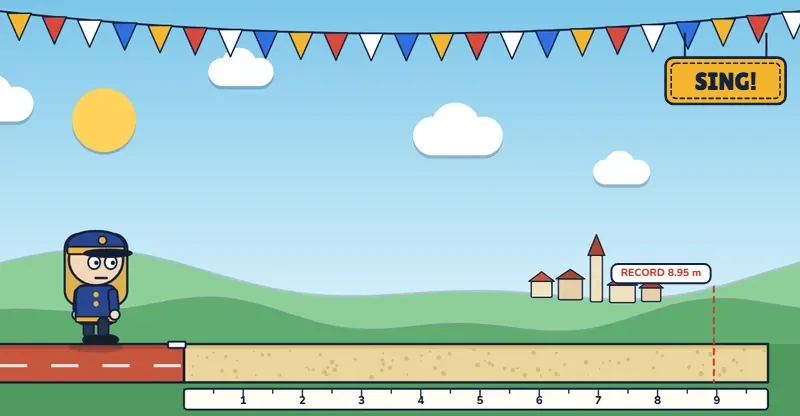
Long Jump
Listen to a note and sing it for 5 seconds. Each second you hold it in tune adds 1.90 m to your jump. A good place to start with single notes.
Play Long Jump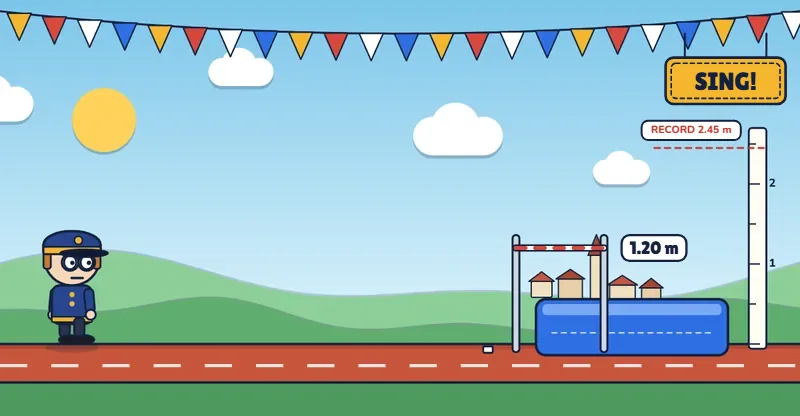
High Jump
Sing two notes: the first is the run-up and the second is the jump. Levels run from 2nds and 3rds up to every interval.
Play High Jump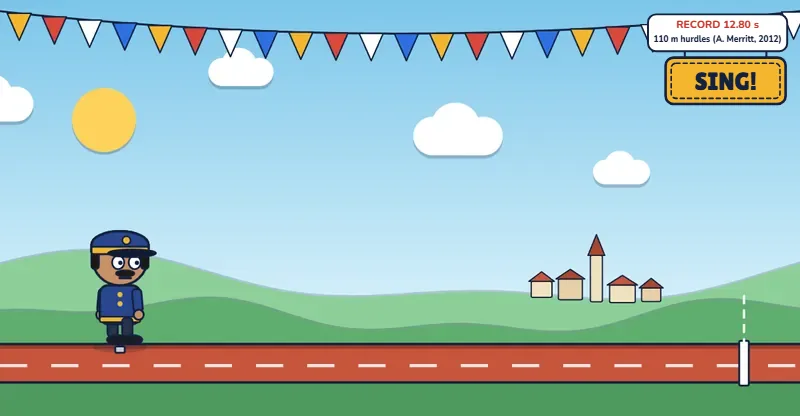
110-Meter Hurdles
Sing a whole scale, note by note: each note is a hurdle you only clear once it is in tune. Here distance does not count, time does: the fastest runner wins.
Play the hurdles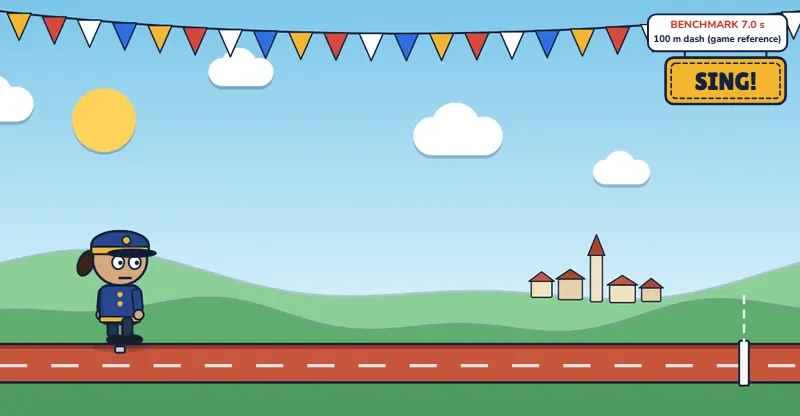
100-Meter Dash
Sing a short melody from memory, note by note: not a scale or a chord but a real phrase with a few leaps. Rhythm is not scored, only tuning.
Play the 100-meter dash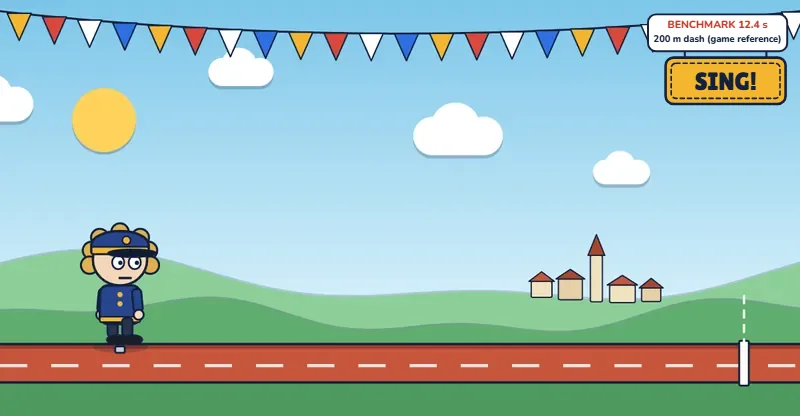
200-Meter Dash
Twice as long as the 100-meter dash: two different melodic shapes chained one after the other in the same key. Still no rhythm scoring, only tuning.
Play the 200-meter dash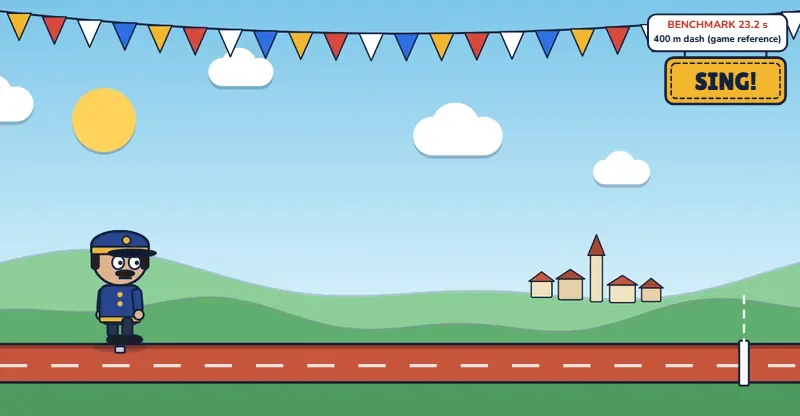
400-Meter Dash
Four times the 100-meter dash: four different melodic shapes chained into one very long melody. The toughest memory challenge of the running games.
Play the 400-meter dash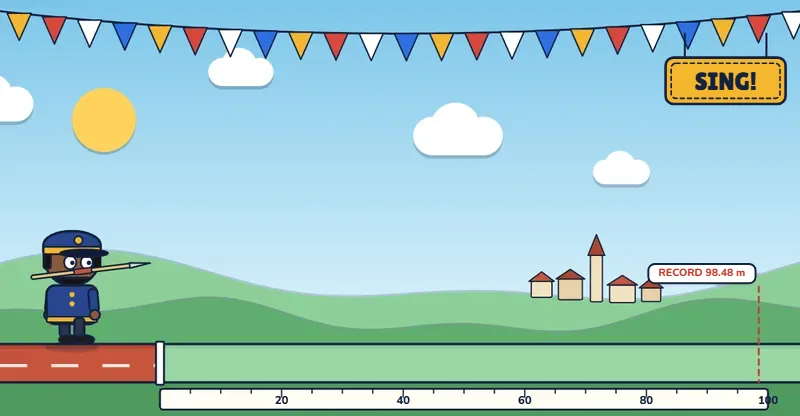
Javelin Throw
Sing a glissando between two notes: hold the first, slide your voice to the second and hold it. A lane guides you and decides how far the javelin flies.
Play Javelin Throw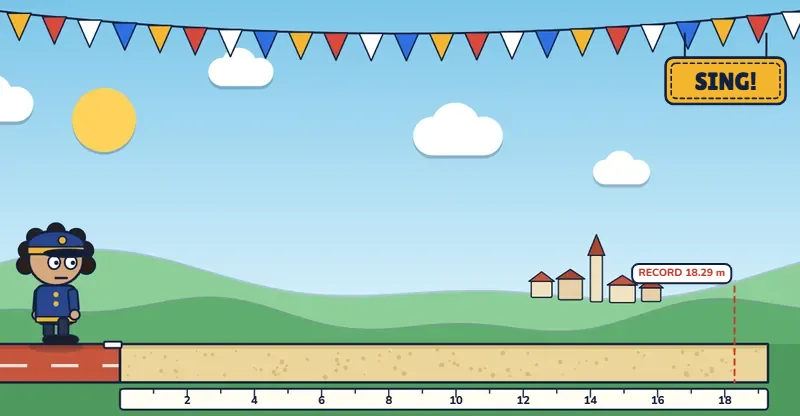
Triple Jump
Sing the arpeggio of a major or minor chord: root, third and fifth. Three notes, three jumps. Good practice for chords and thirds.
Play the triple jump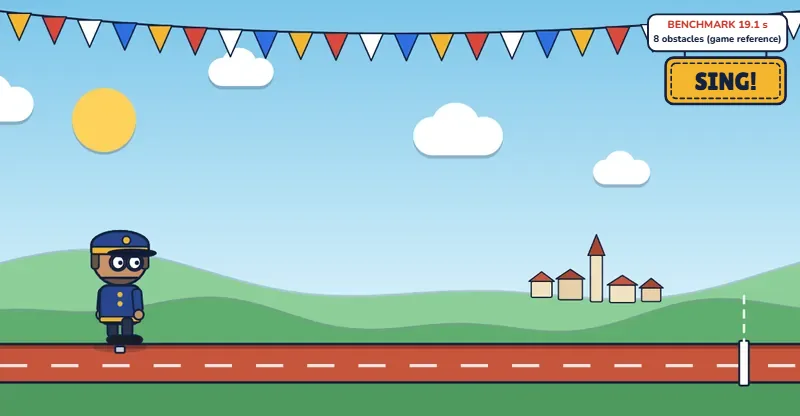
Obstacle Race
Sing 8 obstacles in a row: each is an interval that can go up or down from a base note, and you clear it only when both notes are in tune. The most complete and hardest of the nine games.
Play the obstacle raceWhat these games train
Intonation is singing or playing each note at exactly the right pitch. It is the basis of playing in tune in an ensemble: in a band, an orchestra or a choir, good tuning depends on each player hearing the note they want and correcting it on the spot. These games train exactly that:
- Listening before you sing: hear a reference and remember it.
- Correcting on the fly: the needle shows whether you are flat or sharp, and you adjust.
- Holding the note: the time you spend in tune is what counts, not a lucky hit.
- Recognizing chords: in the triple jump you sing the three notes of the chord, with its major or minor third.
- Measuring intervals: in the high jump you sing two notes a given distance apart, from a 2nd to a 7th.
- Controlling a glissando: in the javelin throw you slide your voice from one note to another at a steady speed, inside a lane.
- Singing a whole scale: in the hurdles you sing all eight degrees of a major or minor scale, one after another, without skipping any.
- Telling whether an interval goes up or down: in the obstacle race you do not know in advance, so you have to listen to each leap before singing it instead of repeating a pattern.
- Singing a melody from memory: in the 100-meter dash you sing a short real phrase, with steps and a few leaps; rhythm does not count, only tuning.
- Holding melodic memory over long phrases: in the 200- and 400-meter dashes the melody chains 2 or 4 shapes in the same key, and you have to remember them all and link them without losing your reference.
Before you play
These games use the microphone, so your browser will ask for permission the first time. The audio is analyzed on your device and is never recorded or sent to a server. Find a quiet place. The local leaderboard is stored only on your device; only what you choose to publish (nickname, musician and result) is sent to the world leaderboard.
To check the tuning of an instrument rather than your voice, use the online tuner. For the theory behind the games, see the music theory exercises. If you prefer to read and write on the staff, try the music theory games, or train your ear with the ear training games.