
The bass clarinet is the low voice of the clarinet family: a tube twice as long as the clarinet's, with a metal curved neck and an upturned metal bell that give it its unmistakable "wooden saxophone" silhouette. It is still an instrument in B♭, but it sounds a major 9th below the written note (an octave plus a whole step; UK: tone). This page gives its notes, its registers and what it shares with the clarinet. Its fingerings are the clarinet's.


| Family | Woodwind (single reed) |
|---|---|
| Pitch | B♭ |
| Transposition | Yes: sounds a major 9th below written |
| Range | Written E♭3–A6 (sounding C♯2–G5); low-C models reach written C3 (sounding B♭1) |
| Mechanism | Keys (Boehm system) |
| Clef | Treble (bass clef in some older scores) |
Does the bass clarinet transpose? The major 9th
Yes, and it is the most striking case in the family. It is in B♭ like the ordinary clarinet, but because the tube is twice as long it sounds an octave lower than the usual clarinet transposition: in total, a major 9th below the written note. A written C4 sounds B♭2. In the usual notation (the "French" one, also used in Spain and in most of the English-speaking world) it is written in treble clef, like the clarinet, so the clarinetist reads and fingers exactly the same on both instruments, and the tube takes care of the rest. All the notes on this page are written notes unless it says "sounding".
Some older scores, especially German ones (Wagner, for example), write the bass clarinet in bass clef, where it sounds a major 2nd below the written note. If you see a bass-clef part, check which convention the score uses before transposing.
| Instrument | A written C4 sounds… |
|---|---|
| B♭ clarinet | B♭3 (a whole step down) |
| B♭ bass clarinet | B♭2 (major 9th down) |
Range and registers
The standard written range runs from E♭3 to A6. In sounding pitch that is C♯2 to G5. Its low end is almost as low as the cello's lowest string (the C♯2 is a half step above the cello's C2; only the low-C models go lower). Note one detail: the bass clarinet has a low note that the B♭ clarinet does not have, the written E♭3, with a key of its own. That E♭ is the usual limit of student models; professional long-bell instruments go down to the written C3 (sounding B♭1). It keeps the named registers of the family. The notes below are written:
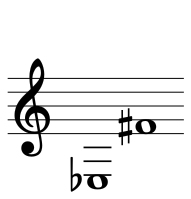
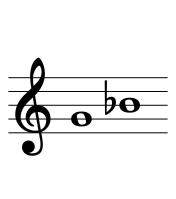
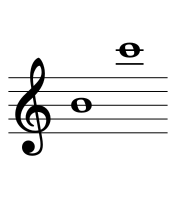
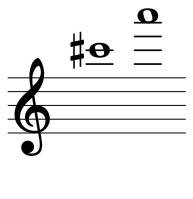
Pitches use scientific pitch notation (C4 is middle C). Its natural territory is the chalumeau register, deep and velvety. Composers from Wagner to Stravinsky have written for it in the orchestra, and since the mid-20th century it also has a voice of its own in jazz and contemporary music (Eric Dolphy made it a solo instrument). Counting the accidentals, it produces 43 different pitches in its standard range.
Is the bass clarinet played like the clarinet?
Yes: the same Boehm system, the same fingerings and the same treble-clef reading. Any clarinetist can double on it, just as a flutist doubles on piccolo or an oboist on English horn. The differences are physical: the mouthpiece sits on a metal curved neck, the body (usually grenadilla wood) is much longer, the metal bell turns upward and forward, it is played seated or on a floor peg, and it adds the key for the low E♭ beside the right little finger. The reed, as on the whole family, is a single reed, but much larger than the one for the B♭ clarinet.
Bass clarinet fingerings
Choose a note and you will see its fingering, the note on the staff and a real bass clarinet sound.
The fingerings are those of the B♭ clarinet (Boehm system) plus the key for the low E♭.
Common mistakes when learning bass clarinet notes
- Counting the transposition wrong. It is not a whole step as on the B♭ clarinet: it is an octave plus a whole step. To sound in unison with a piano you must read a major 9th above the piano's pitch.
- Attacking the chalumeau as on the clarinet. The long tube needs more air and a more relaxed embouchure; squeezing chokes exactly the register that is the instrument's reason for being.
- Forgetting the low E♭ key. It is the one fingering that does not exist on the B♭ clarinet: like E3 but adding the extra key under the right little finger.
- The "break" gets wider. The jump from the throat register (B♭4) to the clarion register (B4) is the same as on the clarinet, but with more tube to fill, so it needs even slower practice.
Summary
- The bass clarinet is in B♭ and sounds a major 9th below the written note (written C4 → sounding B♭2). It is read in treble clef.
- Written range E♭3–A6 (sounding C♯2–G5), about 43 pitches; professional models go down to the written C3.
- The same Boehm fingerings as the clarinet, plus the low E♭ key.
- Its trademarks: the curved neck, the upturned metal bell and the deepest chalumeau of the woodwinds.