
The E♭ clarinet is the smallest and highest of the common clarinets, and a signature voice of the wind band. (In Spanish bands it is called the requinto, a name you will see on Spanish scores and pages.) It is played exactly like the ordinary clarinet, with the same Boehm-system fingering, but it is a transposing instrument: it sounds a minor 3rd above the written note, which gives it the bright, piercing top of the clarinet section. This page gives its notes, its registers and what it shares with the B♭ clarinet.


| Family | Woodwind (single reed) |
|---|---|
| Pitch | E♭ |
| Transposition | Yes: sounds a minor 3rd above written |
| Range | Written E3–A6 (sounding G3–C7), the same as the B♭ clarinet |
| Mechanism | Keys (Boehm system) |
| Clef | Treble |
| Also called | Sopranino clarinet; requinto in Spanish bands |
Does the E♭ clarinet transpose? The minor 3rd
Yes, and in the opposite direction to its lower relatives: while the B♭ clarinet sounds below the written note, the E♭ clarinet, being smaller, sounds above it, by a minor 3rd (three half steps; UK: semitones). A written C4 sounds E♭4. It is written in treble clef, like the clarinet, so the clarinetist reads and fingers exactly the same on both instruments. All the notes on this page are written notes.
| Instrument | A written C4 sounds… |
|---|---|
| E♭ clarinet | E♭4 (minor 3rd up) |
| B♭ clarinet | B♭3 (major 2nd down) |
| B♭ bass clarinet | B♭2 (major 9th down) |
Range and registers
The written range runs from E3 to A6, the same as the B♭ clarinet. Because it sounds a minor 3rd higher, the real pitches run from G3 to C7, which is why it can cut through a whole band. It keeps the four named registers of the family. The notes below are written:
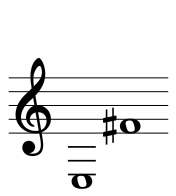
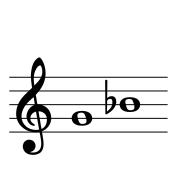
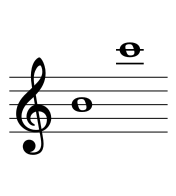
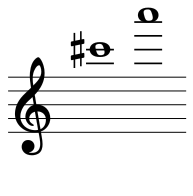
Pitches use scientific pitch notation (C4 is middle C). Like every clarinet, it overblows at the twelfth: the jump from the chalumeau register to the clarion register, made with the register key, goes up a 12th (not an octave). Counting the accidentals, it produces 42 different pitches in its written range.
Why is it called requinto in Spanish?
In Spanish, requinto is the name given to the smallest, highest member of a family of instruments (there is also, for example, the requinto guitar); the word points to the fact that it sounds higher than the reference instrument. Its technical name is the E♭ clarinet, and it is sometimes called the sopranino or piccolo clarinet. In other languages you will see clarinetto piccolo in mi bemolle (Italian), Es-Klarinette (German) and petite clarinette en mi♭ (French).
The E♭ clarinet in the band and the orchestra
In the wind band, especially in the Spanish and above all the Valencian tradition, it is a regular and very recognizable voice: it doubles the clarinets an octave (or more) higher and takes the highest and most virtuosic passages, the ones that seem to "cut the air" above the whole ensemble. In the pasodoble it is a classic protagonist. In the orchestra it appears much less often, almost always for a special, shrill or grotesque color: the textbook example is the witches' sabbath that ends Berlioz's Symphonie fantastique, where the E♭ clarinet turns the beloved's melody into a mocking caricature.
Is it played like the B♭ clarinet?
Yes: the same Boehm system, the same fingerings, the same reading in treble clef. A clarinetist picks up an E♭ clarinet and plays; doubling on it is common in bands. The differences are physical: the tube is shorter, the reed and mouthpiece are smaller, and so everything sounds higher and is harder to tune and control (the embouchure is more delicate). But the finger map is identical to the one for the B♭ clarinet.
E♭ clarinet fingerings
Choose a note and you will see its fingering, the note on the staff and the sound at the real pitch of the E♭ clarinet.
The fingerings are those of the B♭ clarinet (Boehm system).
Common mistakes when learning E♭ clarinet notes
- Counting the transposition backwards. The E♭ clarinet goes up, not down. To sound in unison with a piano, the player reads a minor 3rd lower than the piano plays (the piano plays C4, the E♭ clarinet reads A3), the opposite of the B♭ clarinet.
- Squeezing to tune the high notes. The short tube is very sensitive; pitch is corrected with air and embouchure, not by biting the reed, which gets out of control quickly on the E♭ clarinet.
- Thinking it is "an easy clarinet because it is small". It is the other way around: the same fingering, but much less margin for error in pitch and tone. It demands a very fine ear.
- Forgetting that it overblows at the 12th. As on every clarinet, the register key jumps a twelfth, not an octave: the "break" between the throat and clarion registers has to be practiced as on the B♭ clarinet.
Summary
- The E♭ clarinet is the small, high member of the family. It sounds a minor 3rd above the written note (written C4 → sounding E♭4) and is read in treble clef.
- Written range E3–A6 (sounding G3–C7), about 42 pitches; it overblows at the twelfth like every clarinet.
- The same Boehm fingerings as the B♭ clarinet: clarinetists play it themselves.
- It is an emblematic band voice (a protagonist of the pasodoble); in the orchestra it appears for high, special colors.