
The piccolo is the highest voice of the whole orchestra: a flute of half the size that sounds an octave higher than written. Its fingerings are the same as the concert flute's, with one important difference: the piccolo has no foot joint. Below you will find its written and sounding range, its registers and how it compares with the flute.


| Family | Woodwind (edge-blown, no reed) |
|---|---|
| Pitch | C (octave transposing instrument) |
| Transposition | Yes: sounds an octave higher than written |
| Range | D4–C7 written (sounds D5–C8) |
| Mechanism | Keys (Boehm system), no foot joint |
| Clef | Treble |
| Also called | Flauto piccolo, ottavino (Italian) |
Does the piccolo transpose?
Yes, in the simplest possible way: by an octave. It is pitched in C, so a written C sounds as a C, only one octave higher. It is written this way to save ledger lines: if its part were written at sounding pitch, it would live permanently above the staff (UK: stave). It reads in treble clef, and it is the exact mirror image of the contrabassoon, which sounds an octave below what is written (see the bassoon page).
Range and registers
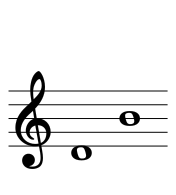
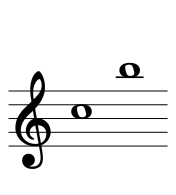
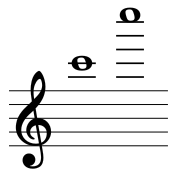
The standard written range runs from D4 to C7, which at sounding pitch is D5–C8, reaching the top of the piano keyboard. It is divided into three registers:
| Register | Written | Sounds (an octave higher) |
|---|---|---|
| Low | D4–B4 | D5–B5 · pale and sweet |
| Middle | C5–B5 | C6–B6 · clear and bright |
| High | C6–C7 | C7–C8 · piercing, heard over the whole tutti |
Octaves are in scientific pitch notation (C4 is middle C). The written D4 is the real lowest note: with no foot joint, the flute's C4 and C♯4 do not exist on the piccolo.
Is the piccolo played like the flute?
Yes: it uses the same Boehm system and the same fingerings, which is why flutists can double on piccolo without relearning the map of the fingers. There are two real differences:
- It has no foot joint. On the flute, the foot joint adds the C and C♯ keys for the right little finger; the piccolo's body ends after the right ring finger. That is why its lowest written note is D4.
- The embouchure hole is much smaller and the bore is conical (the reverse of the flute's mostly cylindrical body): control of the air and the intonation is more demanding, especially in the high register. Orchestral piccolos are usually made of grenadilla wood; for bands and outdoor use there are plastic or metal models.
| Instrument | What is written… |
|---|---|
| Concert flute | …sounds as written (no transposition) |
| Piccolo | …sounds an octave higher |
Counting accidentals, the piccolo produces 35 different pitches in its standard range (the 37 of the flute minus the two of the foot joint).
Piccolo fingerings
The keys have the same names as on the flute: index, middle and ring fingers of each hand, the G♯ lever, the E♭ key and the two trill keys between the hands, plus the two left-thumb keys (B and B♭).
Choose a note and you will see its fingering, the note on the staff and a real piccolo sound (an octave above written).
Common mistakes when learning piccolo notes
- Treating it as "an easy flute". The finger map is the same, but the small embouchure forgives much less: the same note demands more precision of air than on the flute.
- Forcing the high register. From written G6 upward the pitch easily goes sharp; fix it with air speed and angle, not by blowing harder.
- Looking for the low C4. It is not there: with no foot joint, the piccolo ends at written D4. If a flute part goes below D4, that note cannot be played on piccolo.
- Forgetting the octave when reading. A written A4 sounds A5: when you tune with the group or check against the piano, you must count the extra octave.
In short
- The piccolo is in C and transposes by an octave: it sounds an octave higher than written. It reads in treble clef.
- Written range D4–C7 (sounding D5–C8): the highest voice of the orchestra, about 35 pitches.
- It uses the same Boehm fingerings as the flute, but without a foot joint: no C4 or C♯4.
- Its challenge is not the fingers but the embouchure and intonation.