
According to its size, an interval is either simple or compound. The dividing line is the octave: what fits inside it is simple; what goes beyond it is compound.
Simple interval
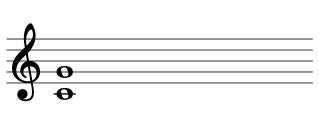
A simple interval is one that fits within an octave: anything from the unison up to the octave (8th). These are the intervals used most often. For example, a 5th from C to G:
Compound interval
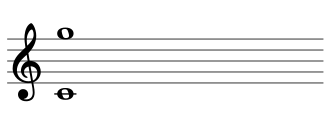
A compound interval is one that goes beyond the octave: it is larger than an 8th. It equals a simple interval plus one or more octaves. For example, C to G one octave higher forms a 12th (a 5th + an octave):
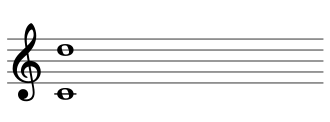
The most common compound interval is the 9th (a 2nd plus an octave), very present in harmony:
How to reduce a compound interval to a simple one
To find which simple interval a compound one equals, just subtract 7 from its number. The quality (major, minor, perfect, augmented or diminished) does not change: a major 9th reduces to a major 2nd, a perfect 12th to a perfect 5th, and so on.
| Compound interval | Equals (simple) |
|---|---|
| 9th | 2nd (+ octave) |
| 10th | 3rd (+ octave) |
| 11th | 4th (+ octave) |
| 12th | 5th (+ octave) |
| 13th | 6th (+ octave) |
The octave marks the limit: every interval up to and including the 8th is simple, and only from the 9th upward do we speak of compound intervals. To review how intervals are counted and named, see the page on musical intervals.