
What is a musical interval?
A musical interval is the distance between two notes. It is measured in two ways at once: by counting the scale degrees it spans (its number) and the exact half steps (UK: semitones) between the notes (its quality). Understanding intervals is the basis for building chords, analyzing melodies and understanding harmony.
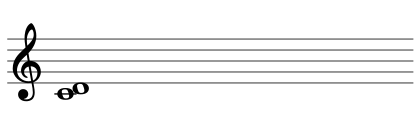
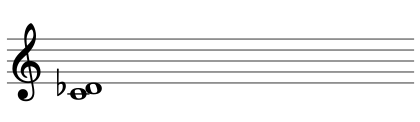
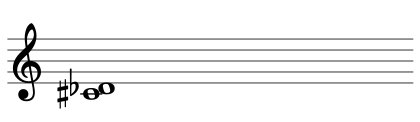
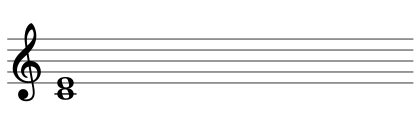
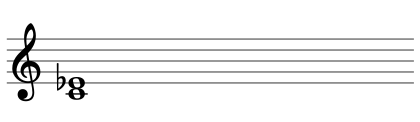
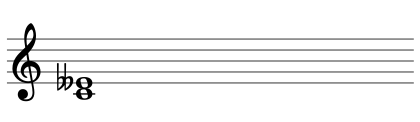
For example, these three intervals above C:
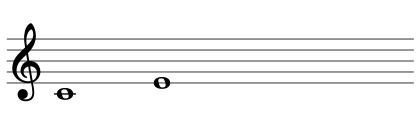
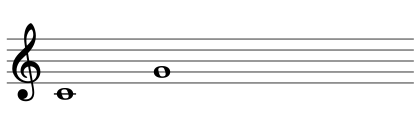
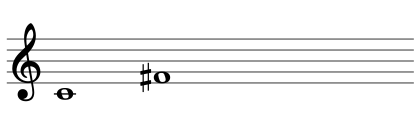
Musical intervals are classified in two ways:
- By size (the number of notes they span): unison, 2nd, 3rd, 4th, 5th, 6th, 7th and 8th (octave).
- By quality (the exact number of half steps): perfect, major, minor, augmented and diminished.
Chart of musical intervals
| Interval | Quality | Half steps | Example from C | On the staff |
|---|---|---|---|---|
| Unison | Perfect | 0 | C – C | 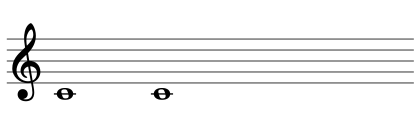 |
| 2nd | minor | 1 | C – D♭ | 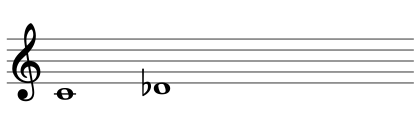 |
| 2nd | Major | 2 | C – D | 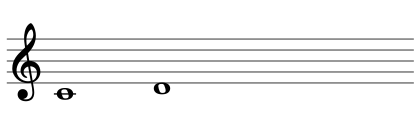 |
| 3rd | minor | 3 | C – E♭ | 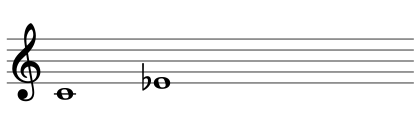 |
| 3rd | Major | 4 | C – E | |
| 4th | Perfect | 5 | C – F | 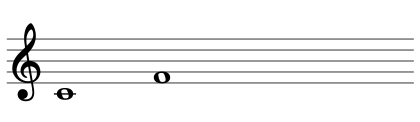 |
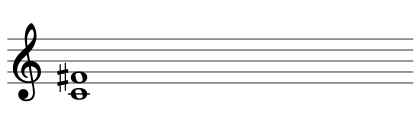
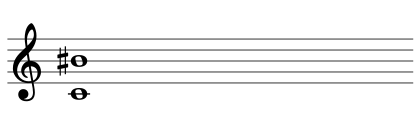
| Augmented 4th / Tritone | Augmented | 6 | C – F♯ | |
| 5th | Perfect | 7 | C – G | |
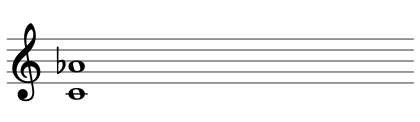
| 6th | minor | 8 | C – A♭ | 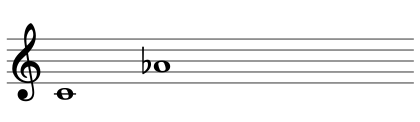 |
| 6th | Major | 9 | C – A | 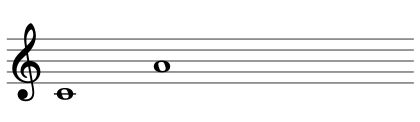 |
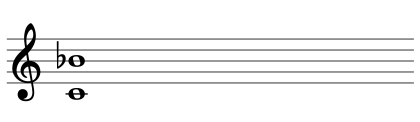
| 7th | minor | 10 | C – B♭ | 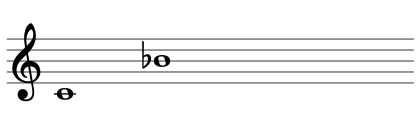 |
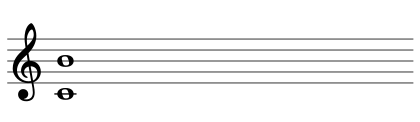
| 7th | Major | 11 | C – B | 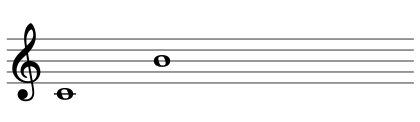 |
| 8th | Perfect | 12 | C – C′ | 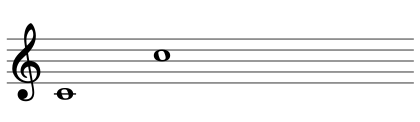 |
Harmonic and Melodic Intervals
Depending on how the two sounds are presented in the score, intervals fall into two large groups:
- Melodic intervals: the two notes are played one after the other, like the notes sung by a singer or an instrumental solo. They have a direction in time.
- Harmonic intervals: the two notes sound at the same time, blending into a vertical block. They are the building blocks of all chords and polyphony.
The examples below show how each type is written on the staff (UK: stave). We cover them in depth on the page about harmonic and melodic intervals.
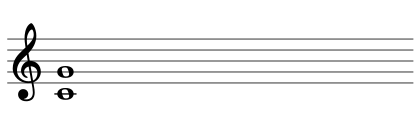
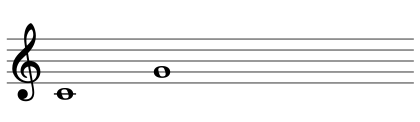
To practice: harmonic and melodic interval exercises.
How do you count the distance of an interval?
The size of an interval is always counted inclusively: count the notes (scale positions) starting with the first written note and ending with the second, always including both in the count.
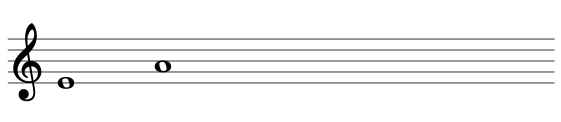
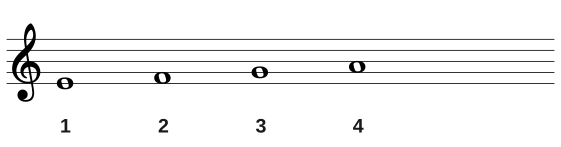
For example, in the image above the notes are E and A. Counting from E inclusive: E (1), F (2), G (3), A (4). The total is four, so this is a 4th.
To practice: interval distance exercises.
The full name of an interval in 3 steps
The name of an interval combines its number and its quality:
- Count the notes from the lower to the higher (including both) → this gives the number: 2nd, 3rd, 5th…
- Count the half steps between them → this gives the quality: major, minor, perfect, augmented or diminished.
- Combine both → the full name of the interval.
For example, C–E♭: there are three notes (C-D-E → 3rd) and three half steps → it is a minor 3rd.
Simple and Compound Intervals
The dividing line is the octave (8th). Simple intervals are any interval equal to or smaller than an octave. When an interval is larger than eight notes, it is a compound interval (9ths, 10ths, 11ths, and so on). See simple and compound intervals.
The 5 characteristics of an interval
Identifying an interval is not only a matter of finding its number. A complete analysis covers five levels that describe how it sounds and how it resolves:
1. Type (harmonic or melodic)
As noted above: if the two notes sound together, the interval is harmonic; if they sound one after the other, it is melodic.
2. Numerical distance
The plain count of the diatonic notes, from the first note to the last, without yet considering sharps or flats (3rd, 5th, 7th, etc.).
3. Direction
This applies only to melodic intervals. It describes the path of the line: from a lower pitch to a higher final note (ascending), or from a higher pitch down to a lower one (descending).
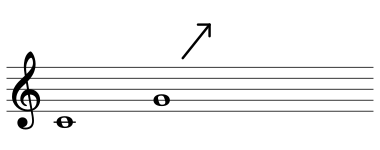
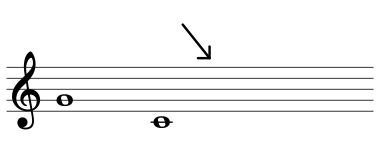
To practice direction: ascending and descending interval exercises.
4. Closeness of the notes: conjunct or disjunct
This describes the movement (steps or leaps), covered in depth in conjunct and disjunct intervals:
- Only a 2nd is called conjunct: the music moves to the adjacent scale degree, up or down, step by step.
- All other intervals (a 3rd or larger) skip over at least one scale degree and are called disjunct, or leaps.
To practice: conjunct and disjunct motion exercises.
5. Quality (species)
The exact number of half steps in the interval determines its quality: major, minor, perfect, augmented or diminished. Each interval number can have several qualities, depending on the accidentals on the notes.
Qualities by interval number
The 2nds
The smallest interval number between two different scale degrees. The four qualities are:
- Augmented: 1 whole step and 1 half step (3 half steps).
- Major: exactly 1 whole step (2 half steps).
- minor: the smallest gap between scale degrees, 1 half step.
- Diminished: in theory 0 half steps, so it is an enharmonic spelling of a unison.
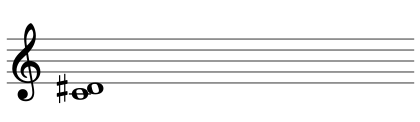
To practice them: 2nd exercises.
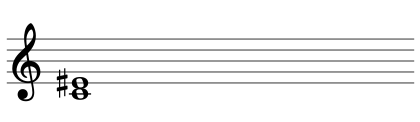
The 3rds
The 3rd determines the major or minor character of tonal chords. The four qualities are:
- Augmented: 2 whole steps and 1 half step (5 half steps).
- Major: exactly 2 whole steps (4 half steps). It gives the "bright" sound of major chords.
- minor: 1 whole step and 1 half step (1½ whole steps, 3 half steps). It gives the minor chord its darker color.
- Diminished: 2 half steps.
To practice them: 3rd exercises.
The 4ths
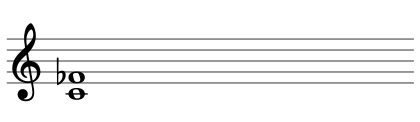
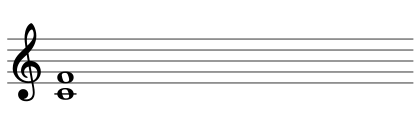
The 4th carries great harmonic weight: it defines the relationship between tonic and dominant (the tonic is a 4th above the dominant) and between subdominant and tonic. The three qualities are:
- Augmented: exactly 3 whole steps (6 half steps). This is the tritone, the most unstable interval in tonal harmony.
- Perfect: 2 whole steps and 1 half step (2½ whole steps, 5 half steps). The most common and stable 4th.
- Diminished: 1 whole step and 2 half steps (2 whole steps, 4 half steps; enharmonic with the major 3rd).
To practice them: 4th exercises.
The 5ths
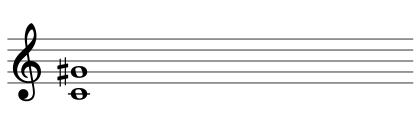
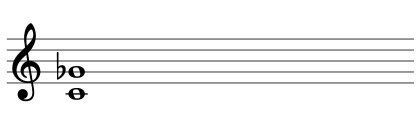
The perfect 5th is, together with the unison and the octave, one of the most stable intervals:
- Augmented: 4 whole steps (8 half steps). Enharmonic with the minor 6th.
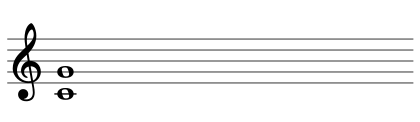
- Perfect: 3 whole steps and 1 half step (7 half steps). Example: C–G. The reference perfect interval.
- Diminished: 2 whole steps and 2 half steps (6 half steps). Enharmonic with the tritone.
To practice them: 5th exercises.
The 6ths
- Augmented: 5 whole steps (10 half steps). Enharmonic with the minor 7th.
- Major: 4 whole steps and 1 half step (9 half steps). Example: C–A.
- minor: 3 whole steps and 2 half steps (8 half steps). Example: C–A♭.
- Diminished: 3 whole steps and 1 half step (7 half steps). Enharmonic with the perfect 5th.
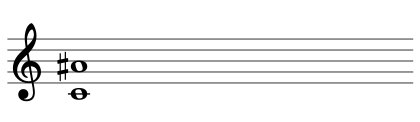
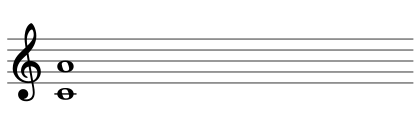
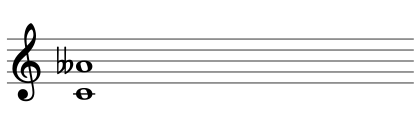
To practice them: 6th exercises.
The 7ths
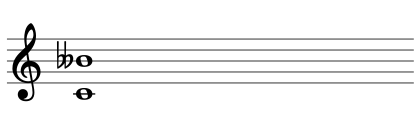
The 7ths are the tensest intervals within the octave. The major 7th (11 half steps) appears in the major seventh chord (C-E-G-B); the minor 7th (10 half steps) appears in the dominant seventh chord and in the blues. The diminished 7th (9 half steps, enharmonic with the major 6th) is characteristic of the diminished seventh chord.
- Augmented: 6 whole steps (12 half steps). Enharmonic with the perfect octave.
- Major: 5 whole steps and 1 half step (11 half steps). Example: C–B.
- minor: 4 whole steps and 2 half steps (10 half steps). Example: C–B♭. The basis of blues and jazz sounds.
- Diminished: 4 whole steps and 1 half step (9 half steps). Enharmonic with the major 6th.
To practice them: 7th exercises.
The octaves
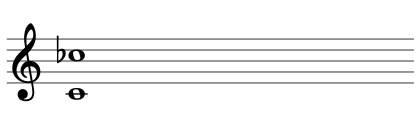
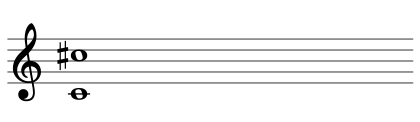
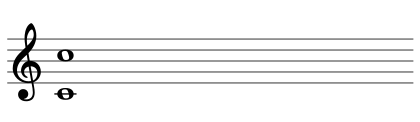
The octave is the interval between two notes with the same name in different registers. The perfect octave (12 half steps) is the most consonant interval after the unison: the notes blend so completely that in harmony they are treated as equivalent.
- Augmented: 6 whole steps and 1 half step (13 half steps). The result of raising a perfect octave by a half step.
- Perfect: 5 whole steps and 2 half steps (12 half steps). Example: C–C′. The natural half steps E–F and B–C fall inside it.
- Diminished: 5 whole steps and 1 half step (11 half steps). Enharmonic with the major 7th.
To practice them: octave exercises.
Summary of simple intervals, and analyzing compound intervals
The chart below summarizes all the simple intervals with their number of half steps and quality.
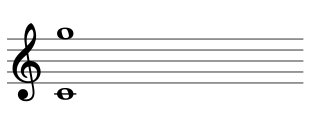
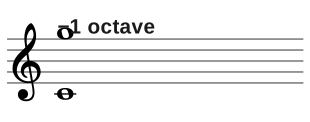
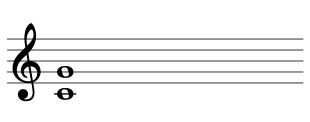
To analyze large compound intervals (for example a 12th), use interval reduction: reduce the compound interval until it fits within an octave. The quality you find (perfect, minor, major, etc.) carries over directly to the original compound interval. See the guide to reducing intervals.
| Diminished | Minor | Perfect | Major | Augmented | |
|---|---|---|---|---|---|
| 2nd | Enharmonic unison | 1 H | 1 W | 1 W + 1 H | |
| 3rd | 2 H | 1 W + 1 H | 2 W | 2 W + 1 H | |
| 4th | 1 W + 2 H | 2 W + 1 H | 3 W | ||
| 5th | 2 W + 2 H | 3 W + 1 H | 4 W | ||
| 6th | 3 W + 1 H | 3 W + 2 H | 4 W + 1 H | 5 W | |
| 7th | 4 W + 1 H | 4 W + 2 H | 5 W + 1 H | 6 W | |
| 8th | 5 W + 1 H | 5 W + 2 H | 6 W + 1 H |
The abbreviations in the chart above:
- W = whole step (UK: tone)
- H = half step (UK: semitone)
How do you analyze compound intervals?
Compound intervals are analyzed with the same characteristics as simple ones. To find the quality, subtract octaves until the interval fits within an 8th; the resulting quality is the same as that of the original compound interval.
To learn how to reduce intervals, see the guide to reducing intervals.
What are intervals for?
Mastering intervals is the all-purpose tool of music theory. They are used mainly to:
- Build chords: a chord is a stack of intervals (a major triad is a major 3rd plus a minor 3rd).
- Identify scales and keys: every scale is a fixed pattern of whole steps and half steps.
- Analyze melodies and cadences: recognize the leaps and tensions that form them.
- Train the ear and improvise: singing and recognizing intervals is the basis of dictation and of playing by ear.
Download the interval chart
Here is the complete chart at a glance, ready to save on your phone, share with students or print in large format.

Prefer to practice on paper? There are interval exercises with answers in PDF, ready to print.