Skip to content
Music Theory

Widening and Narrowing Intervals

Widening an interval means moving one of its notes an octave outward so the distance between the two notes is larger. Narrowing it is the opposite: moving one note an octave inward so the interval gets smaller. Both operations are common in music-theory exercises in Spanish conservatory courses. Do not confuse them with augmented and diminished intervals: widening and narrowing change the interval's number by moving a note an octave, while augmented and diminished are qualities that change by half steps (UK: semitones). To review the concepts of interval and octave, see the section on musical intervals.

OperationNote to moveDirection of the move
WideningHigher noteUp an octave
Lower noteDown an octave
NarrowingLower noteUp an octave
Higher noteDown an octave

If the exercise only lets you move the second note: in ascending intervals, widening raises the second note and narrowing lowers it. In descending intervals, it is the other way around.

Widening intervals

To widen an interval is to make it one octave (or more) larger.

Widening can be done in several ways, depending on whether the exercise lets you move either note or only the second one.

Free to move either note

With no restriction on which note moves, there are two equivalent procedures.

The higher note

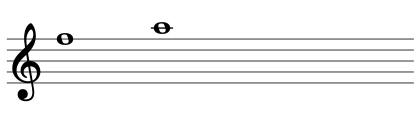
Move the higher note up an octave.
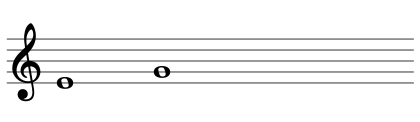
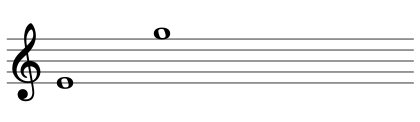
Original interval before being widened
Original interval
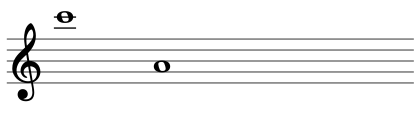
Interval widened by raising the higher note an octave
Widened interval
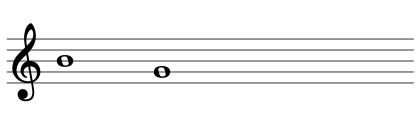
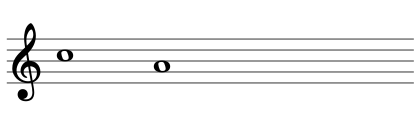
Second example of an original interval before widening
Original interval
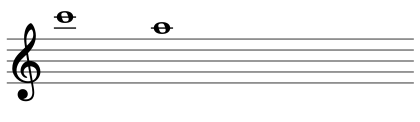
Second example of an interval widened by raising the higher note
Widened interval

The lower note

Move the lower note down an octave.
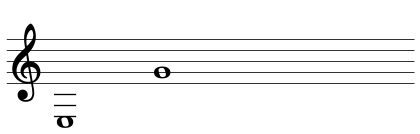
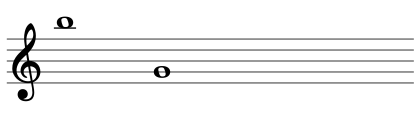
Original interval before widening by lowering the lower note
Original interval
Interval widened by lowering the lower note an octave
Widened interval
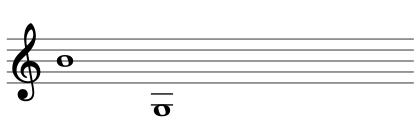
Second original example before widening by lowering the lower note
Original interval
Second example of an interval widened by lowering the lower note
Widened interval

Restricted to the second note

First decide the direction of the interval. If it is ascending, the second note goes up an octave. If it is descending, the second note goes down an octave.

Original ascending interval before widening by moving the second note
Original interval
Ascending interval widened by raising the second note
Widened interval
Original descending interval before widening by moving the second note
Original interval
Descending interval widened by lowering the second note
Widened interval

Narrowing intervals

To narrow an interval is to make it one octave (or more) smaller. For that reason the starting interval must be larger than an octave (a compound interval).

Narrowing can be done in several ways, depending on whether the exercise lets you move either note or only the second one.

Free to move either note

The lower note

Move the lower note up an octave.
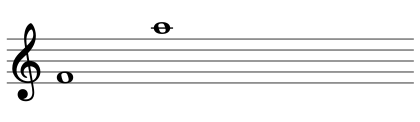
Original compound interval before being narrowed
Original interval
Interval narrowed by raising the lower note an octave
Narrowed interval
Second example of an original compound interval before narrowing
Original interval
Second example of an interval narrowed by raising the lower note
Narrowed interval

The higher note

Move the higher note down an octave.
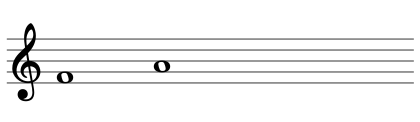
Original compound interval before narrowing by lowering the higher note
Original interval
Interval narrowed by lowering the higher note an octave
Narrowed interval
Second original example before narrowing by lowering the higher note
Original interval
Second example of an interval narrowed by lowering the higher note
Narrowed interval

Restricted to the second note

First decide the direction of the interval. If it is ascending, the second note goes down an octave. If it is descending, the second note goes up an octave.

Original ascending compound interval before narrowing by moving the second note
Original interval
Ascending interval narrowed by lowering the second note
Narrowed interval
Original descending compound interval before narrowing by moving the second note
Original interval
Descending interval narrowed by raising the second note
Narrowed interval

See also the inversion of intervals: a related operation that changes the number and quality of the interval by moving one note an octave.

Frequently Asked Questions

What does it mean to widen a musical interval?
Widening an interval means moving one of its notes an octave outward: the higher note goes up an octave or the lower note goes down an octave, increasing the distance between them.
What does it mean to narrow a musical interval?
Narrowing an interval is the opposite process: one of the notes moves an octave toward the middle of the interval, reducing the distance between the two notes.
Can you move either note when widening an interval?
It depends on the wording of the exercise. If any note may move, there are two options: raise the higher note or lower the lower note. If only the second note may move, follow the direction of the interval: ascending goes up, descending goes down.
What happens to the interval number when it is widened?
Widening an interval increases its number by 7: a 3rd becomes a 10th, a 5th becomes a 12th. The quality is kept: a major 3rd widened is a major 10th. Narrowing does the opposite: the number decreases by 7.
How is widening an interval different from changing it with an accidental?
Widening moves a note an octave: it changes the number but keeps the quality. Adding an accidental (sharp, flat) changes the quality but not the number. For example, widening a minor 3rd gives a minor 10th, while adding a sharp to the upper note gives a major 3rd.