
A cadence is the harmonic formula that closes or marks off a musical phrase: a group of chords that gives a feeling of rest, suspension or surprise. In harmony, cadences are the equivalent of punctuation marks in language. Almost all of them are defined by their last two chords and their relation to the key. All the examples are in C major.
Types of cadence
Cadence names differ between American and British usage, so both are given. The table uses the American names; the British equivalents follow in the next paragraph.
| Cadence | Chords | Character |
|---|---|---|
| Perfect authentic (PAC) | V → I (both in root position, tonic in the top voice) | Strongest conclusion |
| Imperfect authentic (IAC) | V → I (with an inversion, or without the tonic on top) | Weaker conclusion |
| Plagal | IV → I | Gentle rest (“Amen”) |
| Deceptive | V → vi | Surprise: does not conclude |
| Half cadence | … → V | Suspensive (a “comma”) |
UK names. The British “perfect cadence” is any V–I (or V7–I) in the root position, roughly what Americans call an authentic cadence. The British “imperfect cadence” is what Americans call a half cadence (a phrase that stops on V). The British “interrupted cadence” is the American deceptive cadence. “Plagal” is the same in both.
Authentic cadence (V – I)
This is the conclusive cadence par excellence: the dominant chord (V or V7) resolves to the tonic (I). The tritone inside the dominant “demands” that resolution. Depending on how it is presented, there are two kinds:
- Perfect authentic: V and I in root position and with the tonic in the highest voice of the final chord. It gives the strongest feeling of conclusion and is the one that ends a piece.
- Imperfect authentic: still V–I, but it fails one of those conditions (a chord is inverted, or the top voice of the I chord is the 3rd or 5th instead of the tonic). It concludes, but less firmly.
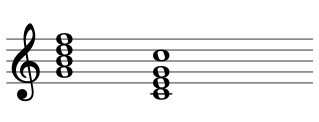
Plagal cadence (IV – I)
It connects the subdominant (IV) with the tonic (I). It sounds softer, more solemn and more “old-fashioned” than the authentic cadence, because it does not contain the tension of the tritone. It is the famous “Amen” cadence that ends many hymns.
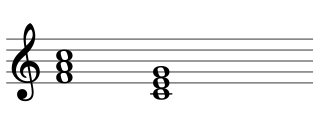
Deceptive cadence (V – vi)
The dominant (V), which seems about to resolve to the tonic, resolves instead to the vi chord (the relative minor). The ear expects rest and gets a surprise: the phrase does not conclude and the music continues. In British usage it is called the interrupted cadence.
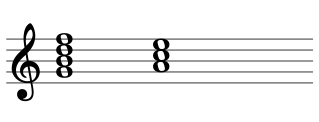
Half cadence (… – V)
This is a suspensive cadence: the phrase ends on the dominant (V), usually preceded by I, ii or IV, instead of resolving to the tonic. It does not close: it leaves a feeling of a question, a “musical comma” that asks for continuation. It is very common at the end of the first phrase of a theme, before the answer. (In British usage it is the imperfect cadence.)
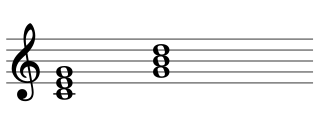
Pause on the subdominant (… – IV)
Some Spanish-language textbooks also teach a half cadence that ends on the subdominant (IV). It is equally suspensive, but its effect is softer and more relaxed than that of the half cadence on V, because the subdominant does not create the tension characteristic of V. In English-language theory the term “half cadence” normally means ending on V, so this ending is usually just described as a phrase that stops on IV.
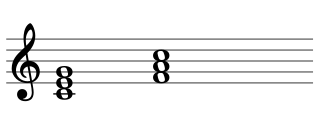
Cadences and scale degrees
All cadences are built with chords raised on the degrees of the scale: the tonic (I), the subdominant (IV) and above all the dominant (V), the three tonal degrees that support the harmony (this is what is studied in harmonic functions: tonic, subdominant and dominant). To go deeper into the chords involved, see seventh chords and triads.
To practice, there is an exercise on recognizing the type of cadence from its last two chords, written at the piano as in a four-part chorale.