
Triads are three-note chords built from stacked thirds. This page presents the four types in root position, their inversions and their figured-bass numerals. To review intervals first, see the page on musical intervals.
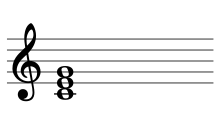
The four types in root position come first, followed by the inversions and the figured bass.
What is root position?
Root position is the arrangement in which the lowest note (the bass) is the root, with the third and the fifth above it. When the chord is not in this arrangement, it is in one of the inversions explained below.
The four types of triad in root position
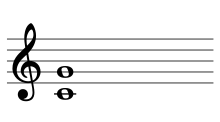
Depending on the distances between the notes, a triad can be:
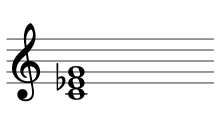
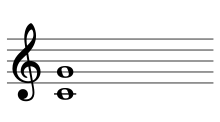
Diminished (diminished 5th)
From the root: minor 3rd + diminished 5th. → Complete guide to the diminished triad.
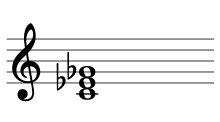
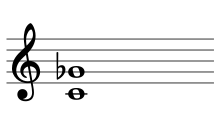
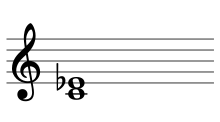
Adding a seventh to this diminished triad gives two fundamental four-note chords of the repertoire: the half-diminished (leading-tone) seventh chord (with a minor seventh, belonging to the major mode) and the diminished seventh chord (with a diminished seventh, belonging to the harmonic minor mode).
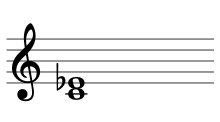
Minor (perfect minor)
From the root: minor 3rd + perfect 5th. → Complete guide to the minor triad.
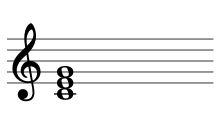
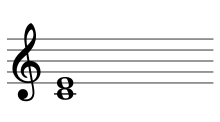
Major (perfect major)
From the root: major 3rd + perfect 5th. → Complete guide to the major triad.
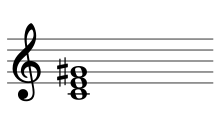
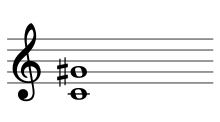
Augmented (augmented 5th)
From the root: major 3rd + augmented 5th. → Complete guide to the augmented triad.
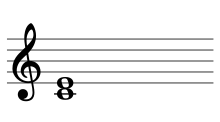
Summary of the four types
| Type | 3rd | 5th | Symbol on C | Example on C |
|---|---|---|---|---|
| Major | Major (4 half steps) | Perfect (7 half steps) | C | C–E–G |
| Minor | minor (3 half steps) | Perfect (7 half steps) | Cm | C–E♭–G |
| Augmented | Major (4 half steps) | Augmented (8 half steps) | Caug (C+) | C–E–G♯ |
| Diminished | minor (3 half steps) | Diminished (6 half steps) | Cdim (C°) | C–E♭–G♭ |
The 7 triads of the major scale
If you build a triad on each scale degree of the major scale, using only the notes of that scale, you always get the same pattern of types. In C major:
| Degree | Numeral | Notes in C major | Triad type |
|---|---|---|---|
| I — Tonic | I | C–E–G | Major |
| II — Supertonic | ii | D–F–A | Minor |
| III — Mediant | iii | E–G–B | Minor |
| IV — Subdominant | IV | F–A–C | Major |
| V — Dominant | V | G–B–D | Major |
| VI — Submediant | vi | A–C–E | Minor |
| VII — Leading tone (UK: leading note) | vii° | B–D–F | Diminished |
The pattern is major – minor – minor – major – major – minor – diminished in every major scale. In G major the chords are G–Am–Bm–C–D–Em–F♯°; in D major, D–Em–F♯m–G–A–Bm–C♯°, and so on.
The 7 triads of the natural minor scale
In the natural minor scale the pattern changes. In A minor:
| Degree | Numeral | Notes in A minor | Triad type |
|---|---|---|---|
| I — Tonic | i | A–C–E | Minor |
| II — Supertonic | ii° | B–D–F | Diminished |
| III — Mediant | III | C–E–G | Major |
| IV — Subdominant | iv | D–F–A | Minor |
| V — Dominant | v | E–G–B | Minor |
| VI — Submediant | VI | F–A–C | Major |
| VII — Subtonic | VII | G–B–D | Major |
In the harmonic minor scale the seventh degree is raised by a half step (G♯ in A minor), which turns the V chord into a major triad (E–G♯–B) and strengthens the V–i cadence.
Chord inversions
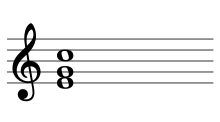
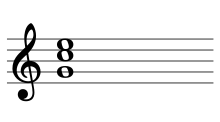
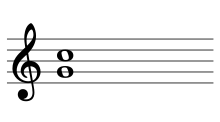
First inversion
From the bass: a 3rd up to the middle note and a 6th up to the top note. The third of the chord is in the bass.
To practice building them in a game, try Billiards: each ball carries a chord (in root position or in an inversion) and, to pocket it, you write its notes on the staff. If you would rather recognize chords, there is Bowling.
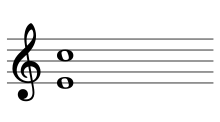
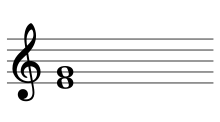
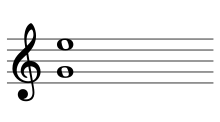
Second inversion
From the bass: a 4th up to the middle note and a 6th up to the top note. The fifth of the chord is in the bass.
Figured bass for triads
Figured bass is the shorthand of numerals written under the bass note that tells you which chord to play above it. For triads only three cases matter:
Root position
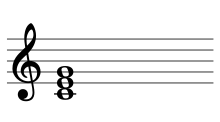
A triad in root position has no figure: the bass note alone implies the third and the fifth above it.
First inversion: 6
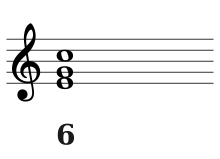
The numeral 6 (short for 6/3) shows that the third of the chord is in the bass: the upper notes are a sixth and a third above it.
Second inversion: 6/4
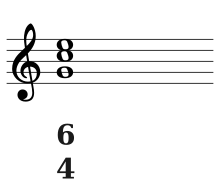
The numerals 6/4 show that the fifth is in the bass: the upper notes are a sixth and a fourth above it.
An accidental written next to a figure, or alone under the bass note, changes the note that figure refers to; an accidental alone refers to the third. Seventh chords add the figures 7, 6/5, 4/3 and 4/2.