
The leading-tone seventh chord, also called the half-diminished seventh chord, is a four-note chord built on the seventh degree (the leading tone; UK: leading note) of the major scale. It is one of the seventh chords. For background, see the pages on scale degrees and musical intervals.
Construction and function
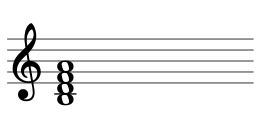
In a major key, the seventh degree naturally produces a diminished triad. Adding a seventh, which in major is a minor 7th above the root, gives the half-diminished chord. In C major:
- Root: B (degree VII, the leading tone)
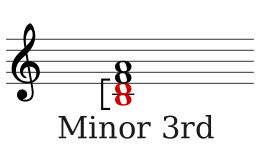
- Minor 3rd: D (3 half steps; UK: semitones)
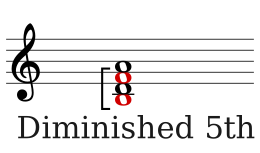
- Diminished 5th: F (6 half steps)
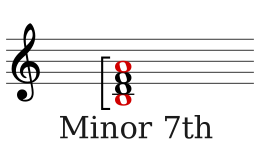
- Minor 7th: A (10 half steps)
Its harmonic function is similar to that of the V7: both contain the same tritone (B–F in C major) and both tend to resolve to the tonic. The difference is the interval content: the half-diminished chord has a minor 3rd and a diminished 5th where V7 has a major 3rd and a perfect 5th, which makes it somewhat less bright but just as unstable.
Do not confuse it with the diminished seventh chord, which is built on the seventh degree of the harmonic minor scale and has a diminished 7th, making it completely symmetrical. Here, in major, the seventh is minor and the chord is not symmetrical.
Summary of intervals in each position
| Position | Figured bass | Intervals above the bass | Notes in B half-diminished 7th (C major) |
|---|---|---|---|
| Root position | 7 5̄ | m3 · d5 · m7 | B–D–F–A |
| First inversion | +6 5 | m3 · P5 · M6 | D–F–A–B |
| Second inversion | +4 3 | M3 · A4 · M6 | F–A–B–D |
| Third inversion | 4 +2 | M2 · P4 · m6 | A–B–D–F |
Root position
The chord is built with a minor 3rd, a diminished 5th and a minor 7th above the root.
Figured bass
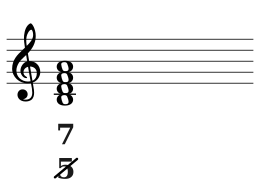
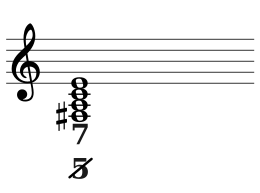
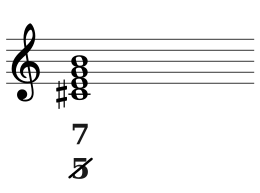
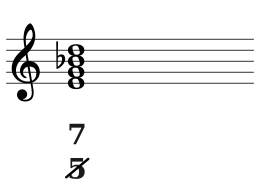
The figured bass is 7 and a slashed 5: the 7 says that the distance between the outer notes is a seventh, and the slashed 5 says that the fifth is diminished. It is the same in every key.
First inversion
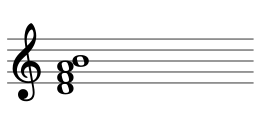
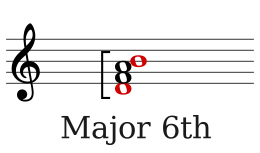
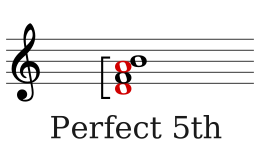
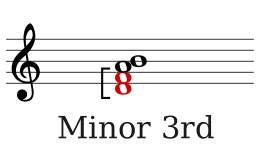
The third is in the bass. Above the bass the chord has a minor 3rd, a perfect 5th and a major 6th.
Figured bass
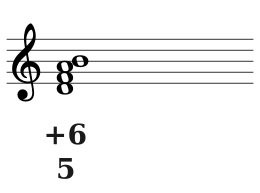
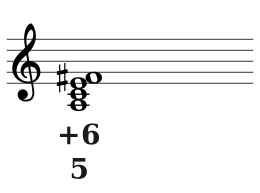
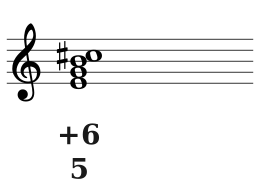
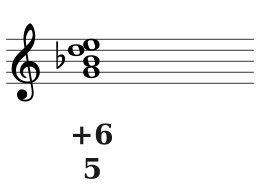
The figured bass is +6 and 5: the +6 says that the sixth is the leading tone; the 5 is added to tell it apart from the dominant seventh in second inversion. It is the same in every key.
Second inversion
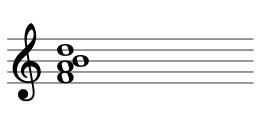
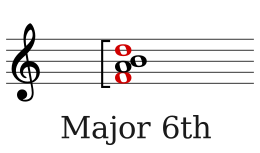
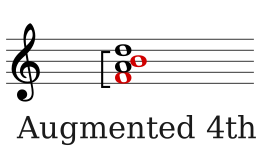
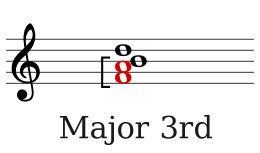
The fifth is in the bass. Above the bass the chord has a major 3rd, an augmented 4th and a major 6th.
Figured bass
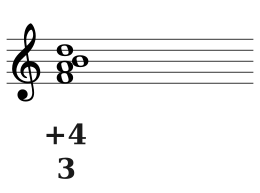
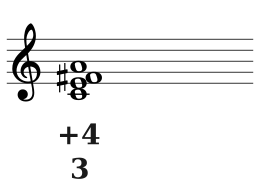
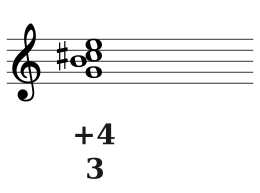
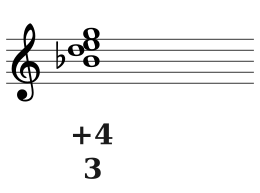
The figured bass is +4 and 3: the +4 says that the fourth is the leading tone; the 3 is added to tell it apart from the dominant seventh in third inversion. It is the same in every key.
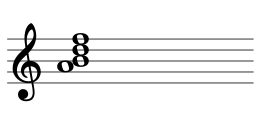
Third inversion
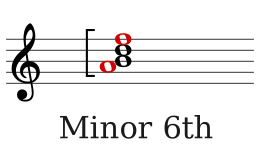
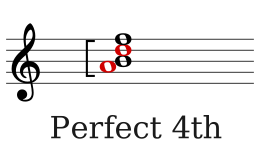
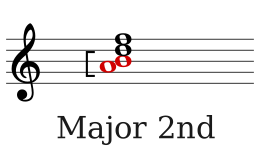
The seventh is in the bass. Above the bass the chord has a major 2nd, a perfect 4th and a minor 6th.
Figured bass
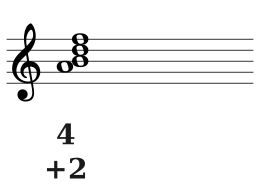
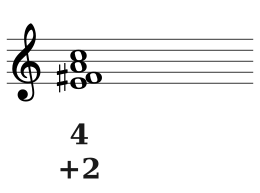
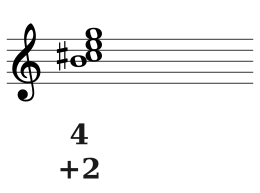
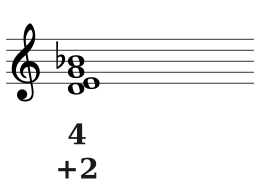
The figured bass is 4 and +2: the 4 gives the distance of a fourth and the +2 says that the second is the leading tone. It is the same in every key.
To practice this chord there is an exercise on building the leading-tone seventh (in its four positions) and another on recognizing it next to the dominant seventh and the diminished seventh.