Skip to content
Music Theory

Dominant Seventh Chord

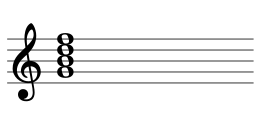
The dominant seventh chord is a four-note chord built on the fifth degree (the dominant) of the scale. It is made of a major 3rd, a perfect 5th and a minor 7th above the root. It is the most important of the seventh chords. For background, see the pages on scale degrees and musical intervals.
Why does V7 resolve to the tonic?

V7 is the chord with the most tension in a key, because it contains two opposite forces that pull toward each other:

  • The leading tone (UK: leading note), the third of the chord (for example B in C major), tends to rise a half step (UK: semitone) to the tonic (C).
  • The seventh of the chord (for example F in C major) tends to fall a half step to the third of the tonic chord (E).

Between the leading tone and the seventh there is a tritone (an augmented 4th or diminished 5th), the most unstable interval in the scale. That instability demands resolution. The V7–I cadence (or V7–i in minor) is the most conclusive in tonal harmony and appears in almost all Western music from the Baroque to the 20th century.

The same driving tritone appears in two other chords with dominant function: the leading-tone seventh chord (half-diminished), which can stand in for V7 in major, and the diminished seventh chord, which does the same job in minor with even more tension.

Summary of intervals in each position

PositionFigured bassIntervals above the bassNotes in G7 (C major)
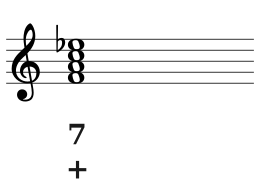
Root position7 (+)M3 · P5 · m7G–B–D–F
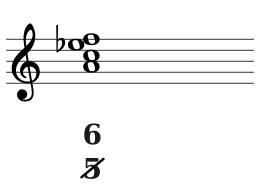
First inversion6 5̄m3 · d5 · m6B–D–F–G
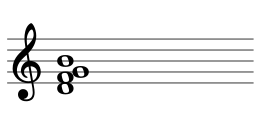
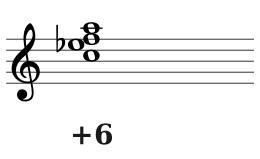
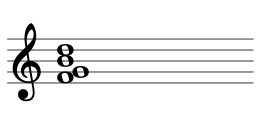
Second inversion+6m3 · P4 · M6D–F–G–B
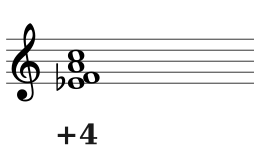
Third inversion+4M2 · A4 · M6F–G–B–D

Root position

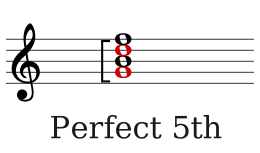
The chord is built with a major 3rd, a perfect 5th and a minor 7th above the root.
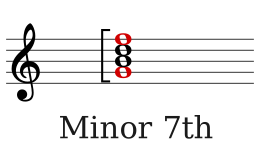
Dominant seventh chord in root position
Minor seventh of the dominant seventh chord
Perfect fifth of the dominant seventh chord
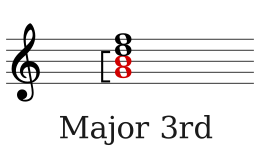
Major third of the dominant seventh chord

Figured bass

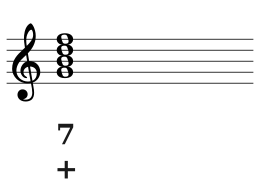
Figured bass of the dominant seventh chord in root position, example 1
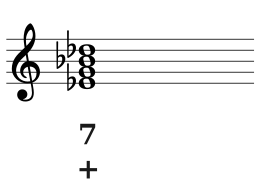
Figured bass of the dominant seventh chord in root position, example 2
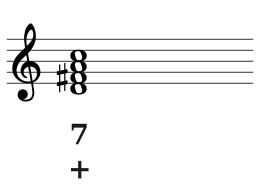
Figured bass of the dominant seventh chord in root position, example 3
Figured bass of the dominant seventh chord in root position, example 4

The figured bass is 7 and +: the 7 says that the distance from the root to the top note is a seventh, and the + says that the third is the leading tone. It is the same in every key.

First inversion

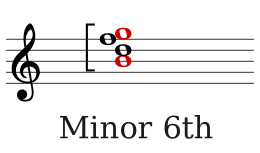
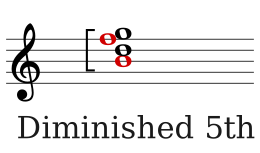
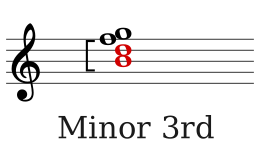
The third is in the bass. Above the bass the chord has a minor 3rd, a diminished 5th and a minor 6th.

Dominant seventh chord in first inversion
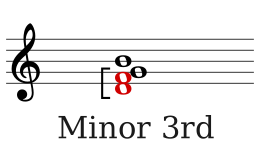
Minor sixth in the first inversion of the dominant seventh chord
Diminished fifth in the first inversion of the dominant seventh chord
Minor third in the first inversion of the dominant seventh chord

Figured bass

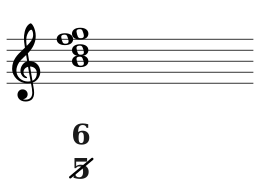
Figured bass of the dominant seventh chord in first inversion, example 1
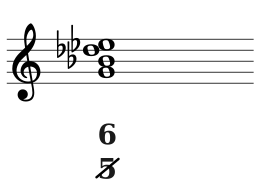
Figured bass of the dominant seventh chord in first inversion, example 2
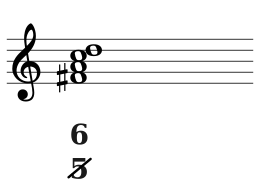
Figured bass of the dominant seventh chord in first inversion, example 3
Figured bass of the dominant seventh chord in first inversion, example 4

The figured bass is 6 and a slashed 5: the 6 says that the distance from the bass to the top note is a sixth, and the slashed 5 says that the fifth is diminished. It is the same in every key.

Second inversion

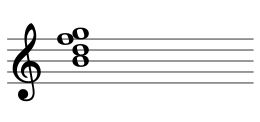
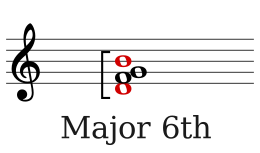
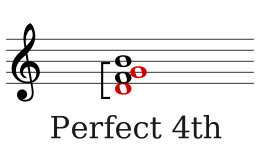
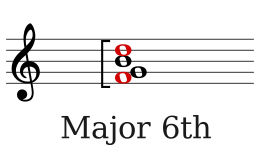
The fifth is in the bass. Above the bass the chord has a minor 3rd, a perfect 4th and a major 6th.

Dominant seventh chord in second inversion
Major sixth in the second inversion of the dominant seventh chord
Perfect fourth in the second inversion of the dominant seventh chord
Minor third in the second inversion of the dominant seventh chord

Figured bass

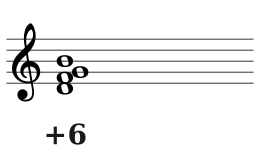
Figured bass of the dominant seventh chord in second inversion, example 1
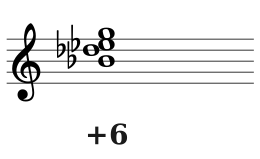
Figured bass of the dominant seventh chord in second inversion, example 2
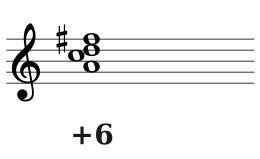
Figured bass of the dominant seventh chord in second inversion, example 3
Figured bass of the dominant seventh chord in second inversion, example 4

The figured bass is +6: the +6 says that the sixth is the leading tone. It is the same in every key.

Third inversion

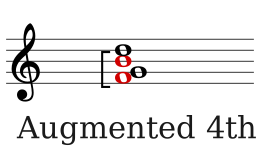
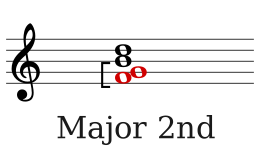
The seventh is in the bass. Above the bass the chord has a major 2nd, an augmented 4th and a major 6th.

Dominant seventh chord in third inversion
Major sixth in the third inversion of the dominant seventh chord
Augmented fourth in the third inversion of the dominant seventh chord
Major second in the third inversion of the dominant seventh chord

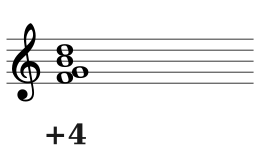
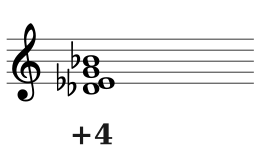
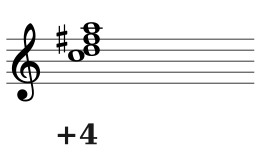
Figured bass

Figured bass of the dominant seventh chord in third inversion, example 1
Figured bass of the dominant seventh chord in third inversion, example 2
Figured bass of the dominant seventh chord in third inversion, example 3
Figured bass of the dominant seventh chord in third inversion, example 4

The figured bass is +4: the +4 says that the fourth is the leading tone. It is the same in every key.

Frequently Asked Questions

What is the dominant seventh chord?
It is a four-note chord built on the fifth degree (the dominant) of the scale. It is made of a major 3rd, a perfect 5th and a minor 7th above the root. Its figured bass in root position is 7 with the + sign.
How many inversions does the dominant seventh chord have?
Three, in addition to root position: first inversion (a minor 6th, a diminished 5th and a minor 3rd above the bass), second inversion (figured bass +6, for the leading tone) and third inversion (figured bass +4, for the leading tone).
Why is it called the dominant seventh chord?
Because it is built on the fifth degree of the scale, called the dominant. The minor 7th added to that major triad gives it a strong pull toward the tonic.
What are the notes of the dominant seventh chord in C major?
In C major it is built on G (degree V). Its notes are G–B–D–F: a major 3rd (G–B), a perfect 5th (G–D) and a minor 7th (G–F). The tritone between B and F is what drives it toward the tonic chord.
How does the dominant seventh chord resolve?
The leading tone rises a half step to the tonic and the seventh falls a half step to the third of the tonic chord. In C major: B→C and F→E, usually landing on the C major chord.