
A tie or slur is a curved line that connects two or more notes in a score. They are drawn in a similar way, but there are two very different types: the tie and the slur. Telling them apart is essential, because one affects duration and the other affects performance.
The tie
The tie joins two notes of the same pitch (the same note) and adds their durations into one sustained sound: the second note is not played again, the first one is simply held longer. It is mostly used to hold a note across the bar line of a measure (UK: bar) or to get lengths that a single note value cannot write.
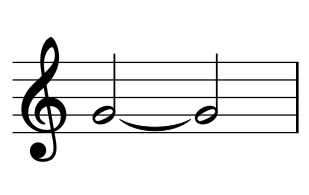
The slur
The slur joins notes of different pitches and tells the performer to play them smoothly connected, with no break between them. The Italian word for this is legato. A slur does not change the length of the notes. It is a mark of articulation and phrasing (a phrase mark is a longer slur that shows a musical phrase).
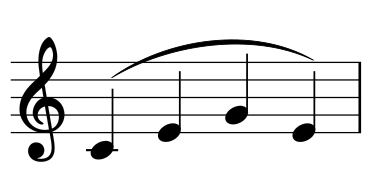
How to tell them apart
| Aspect | Tie | Slur |
|---|---|---|
| Notes it joins | Same pitch | Different pitches |
| What it does | Adds the durations | Indicates legato (play smoothly) |
| Affects | Duration | Performance |
| Is the note played again? | No: a single sound | Yes: all notes sound, but connected |
| Spanish name | Ligadura de unión | Ligadura de expresión |
Rule of thumb: if the curve joins two identical notes, it is a tie (one sustained note sounds). If it joins different notes, it is a slur (they are played connected, without changing their length).
To practice, try the exercise on ties and slurs: you have to tell them apart and work out how long the tied note lasts in its measure. It has a PDF worksheet with answers.