
Note values are the symbols that show the duration of musical sounds. The position of a note on the staff shows its pitch (how high or low it is), and the note value shows how long it lasts. There are seven note values, and each one is worth exactly half of the one before it.
What is a note value?
A note value is the shape of the note: whether its head is hollow or filled, whether it has a stem (the vertical line) and whether it has flags or beams. These three features show its duration. Every note value also has a matching rest of the same length. The pitch of the note and its note value together define each written note completely.
The 7 note values and their durations
The length of a note value is relative: each one is worth twice the next one, whatever the time signature. To give concrete numbers, we use a 4/4 measure (UK: bar) as the example. In 4/4 the quarter note (UK: crotchet) is the beat (1 beat). Here are the seven note values from longest to shortest. The American names are used on this page; the UK names are in the second column.
| Note | UK name | Symbol | Duration | Equals |
|---|---|---|---|---|
| Whole note | semibreve | 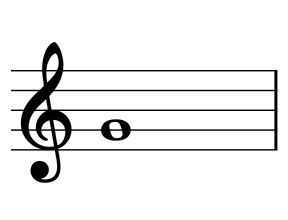 | 4 beats | 2 half notes |
| Half note | minim | 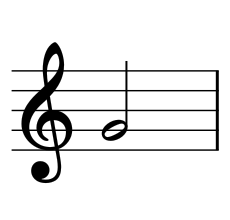 | 2 beats | 2 quarter notes |
| Quarter note | crotchet | 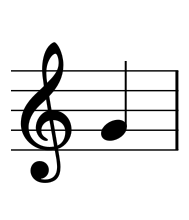 | 1 beat | 2 eighth notes |
| Eighth note | quaver | 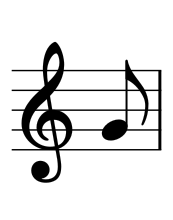 | ½ beat | 2 sixteenth notes |
| Sixteenth note | semiquaver | 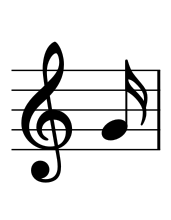 | ¼ beat | 2 thirty-second notes |
| Thirty-second note | demisemiquaver | 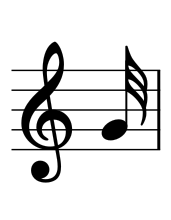 | ⅛ beat | 2 sixty-fourth notes |
| Sixty-fourth note | hemidemisemiquaver | 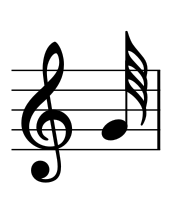 | 1/16 beat | — |
These numbers apply to time signatures where the quarter note gets the beat (4/4, 3/4, 2/4…). If the beat unit is different, the value of one beat changes. In cut time (2/2, also called alla breve), where the half note gets the beat, the half note is worth 1 beat and the whole note 2. What never changes is the proportion between note values: a whole note is always equal to two half notes.
Equivalences between note values
Because each note value is worth twice the next one, they are all related by simple proportions. Starting from the whole note:
1 whole note = 2 half notes = 4 quarter notes = 8 eighth notes = 16 sixteenth notes = 32 thirty-second notes = 64 sixty-fourth notes
That is why a 4/4 measure (four quarter-note beats) can hold one whole note, or two half notes, or four quarter notes, or any combination that adds up to four beats.
Rests
A rest is a silence of a set length. Every note value has a rest that lasts exactly the same time:
| Rest | Symbol | Duration |
|---|---|---|
| Whole rest | 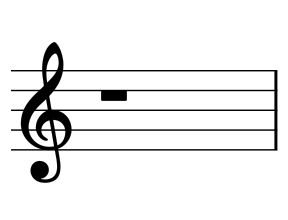 | 4 beats |
| Half rest | 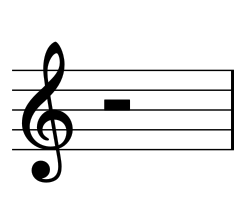 | 2 beats |
| Quarter rest | 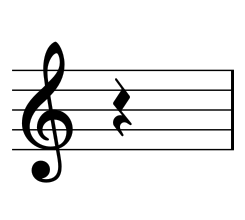 | 1 beat |
| Eighth rest | 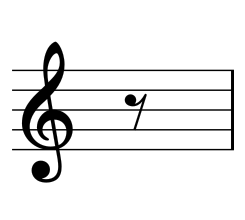 | ½ beat |
| Sixteenth rest | 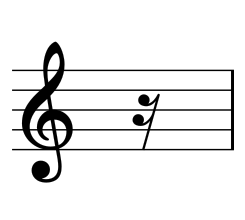 | ¼ beat |
| Thirty-second rest | 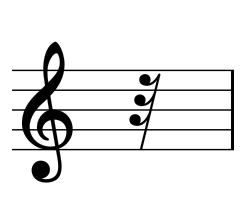 | ⅛ beat |
| Sixty-fourth rest | 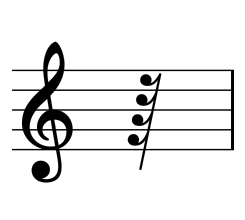 | 1/16 beat |
The dot
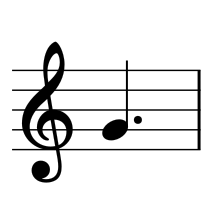
A dot is a point placed to the right of a note and it lengthens the note by half of its value. Any note value, and any rest, can have a dot: a dotted quarter note, for example, lasts 1.5 beats. More about the dot and the double dot →
The tie
A tie joins two notes of the same pitch and adds their durations into one sustained sound (it is used, for example, to hold a note across the bar line). It should not be confused with a slur (legato mark), which joins notes of different pitches. More about ties and slurs →
Tuplets
Sometimes a beat is divided into a number of notes that does not fit the usual division: three eighth notes in the space of two (the triplet), two in the space of three (the duplet), and the same idea with the quadruplet, quintuplet and sextuplet. These are tuplets (irregular groups), which briefly change the normal division of a note value. More about tuplets →
Note value exercises
To practice what is explained here, try the note value and rhythm exercises with instant feedback and PDF worksheets: identify notes and rests, equivalences between note values, the value of notes in each time signature and adding up the notes in a measure. To recognize them by ear, try rhythmic dictation, organized by note value: from the quarter note and its rest to the whole note and groups of two eighth notes.