
Accidentals are the signs that change the pitch of a note, raising or lowering it by one or two half steps (UK: semitones). The three basic ones are the sharp (♯), the flat (♭) and the natural (♮). The double sharp (𝄪) and the double flat (𝄫) complete the set.
What is an accidental?
An accidental is a sign placed to the left of a note (or at the beginning of the staff, in the key signature). It changes the pitch without changing the line or space the note sits on. This is what separates F from F♯: the same position on the staff, a different sound.
The five accidentals
| Accidental | Symbol | Effect |
|---|---|---|
| Sharp | 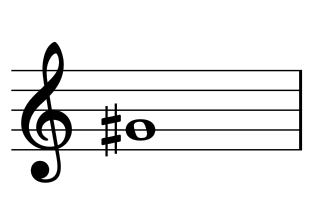 | Raises the note by a half step |
| Flat | 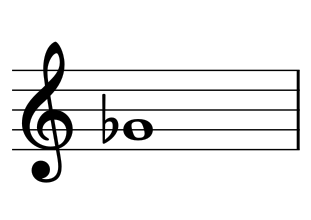 | Lowers the note by a half step |
| Natural | 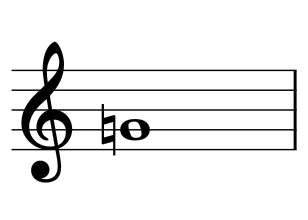 | Cancels a previous accidental (natural note) |
| Double sharp | 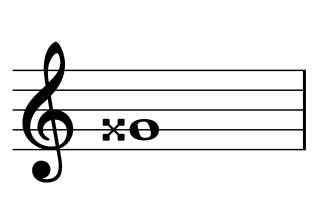 | Raises the note by a whole step (two half steps) |
| Double flat | 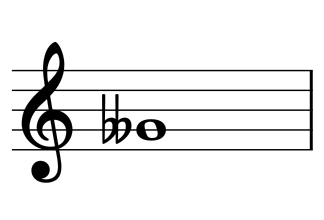 | Lowers the note by a whole step (two half steps) |
Raising or lowering a note often produces enharmonic notes: C♯ and D♭ sit in different places on the staff but sound exactly the same.
Key-signature accidentals, accidentals in the music and cautionary accidentals
Depending on where they appear and what they are for, accidentals fall into three types:
- Key-signature accidentals: the ones written in the key signature, right after the clef. They affect every note with that letter name (in every octave) throughout the whole piece and they define the key.
- Accidentals in the music (the common meaning of "accidental"): they appear inside a measure, in front of a particular note. They affect only the notes on the same line or space (same octave) until the end of that measure.
- Cautionary (courtesy) accidentals: reminders, sometimes in parentheses, that do not change the sound. They only tell the player that an earlier accidental is no longer in force.
The measure rule and the natural sign
An accidental in the music lasts until the end of the measure (UK: bar) on its line or space. So if a measure has an F♯ and later in that same measure you want an F natural, you must write a natural sign in front of it. Without it, the F would still be sharp. After the bar line, accidentals in the music stop working and only the key signature remains. (One exception: if the note is tied across the bar line, the accidental still applies to the tied note.)
Accidentals and half steps
The effect of an accidental is measured in half steps. A chromatic half step (C–C♯) uses the same letter name with a different accidental, while a diatonic half step (E–F) uses two different letter names. Accidentals are therefore the tool that lets us write every note of the equal-tempered system using only the seven natural note names.