
The bass trombone is the low sibling of the tenor trombone. It has the same slide and the same seven positions, but a wider tube, for a deeper and bigger sound, and it adds two thumb valves that open up the low register. It does not transpose: what is written is what sounds, in bass clef. This page gives its notes, with the slide position and the valves for each one.


| Family | Brass (mostly cylindrical tube, wider bore than the tenor) |
|---|---|
| Pitch | B♭ (valves in F, G♭ and D) |
| Transposition | None (concert pitch) |
| Range in the chart below | B♭1 (pedal tone) to B♭4, sounding; pedal tones go lower and advanced players go higher |
| Mechanism | Slide (7 positions) + 2 rotary valves worked by the thumb |
| Clef | Bass |
| Also called | Trombón bajo (Spanish) · trombone basso (Italian) · Bassposaune (German) · trombone basse (French) |
Slide, harmonics... and two valves
The basic mechanism is the one of the tenor. The sound starts at the lips, which produce a series of harmonics, and the slide lengthens the tube in seven positions (each a half step lower; UK: semitone) to fill the gaps. From E2 upward, the positions of the bass trombone are the same as those of the tenor.
What is special about the bass trombone is the two valves (rotary valves worked by the left thumb). In the setup used here, B♭/F/G♭/D with independent valves, they work like this:
| Valve | Changes the instrument to... |
|---|---|
| 1st (F) | F (a perfect 4th lower) |
| 2nd (G♭) | G♭ (a major 3rd lower) |
| Both together | D |
Other setups exist, such as dependent systems (where the second valve only works together with the first) and different tunings for the second valve, so a fingering chart must always say which setup it is for.
The valves add tubing. This lets the player reach low notes that the slide alone cannot give, and also offers alternate positions that are more comfortable in many passages. Each valve makes the tube longer, so the slide positions used with the valves are farther apart than the standard ones: the number of the position is a guide for the arm, not an absolute distance.
The low register: filling the gap
Without valves, the trombone goes down to E2 (7th position) and below that only to the pedal tones (B♭1 and lower). In between there is a gap: B1, C2, C♯2, D2 and E♭2 cannot be played. The valves of the bass trombone fill exactly this gap:
| Note | Position + valves |
|---|---|
| E♭2 (D♯2) | 3rd · F valve |
| D2 | 1st · both valves (D) |
| C♯2 | 2nd · both valves |
| C2 | 3rd · both valves |
| B1 | 4th · both valves |
These are the preferred fingerings. There are alternatives (for example, C2 can also be played in a very long 6th position with the F valve). In every case the note is the 2nd harmonic of the series of the valve: for example, with both valves the series starts on D1, and its 2nd harmonic is D2. In the chart below you will see each note with the slide and the valves.
The pedal B♭1 is the lowest note of the chart. It does not need valves: it is the fundamental of the 1st position. With both valves it can also be played in a very long 5th position. Below B♭1 come more pedal tones (A1 in 2nd position, A♭1 in 3rd and so on), which are very low and used only occasionally.
The bass trombone in the band and the orchestra
The bass trombone is the low voice of the trombone section. In the orchestra it completes the trombone trio from below and joins the tuba in the foundation of the brass. In the concert band, which is very present in the Valencian tradition, it adds a low sound with body and definition that supports the whole harmony. Compared with the tenor, its wider tube and larger bell give a rounder and more powerful sound in the low register, and the valves allow it to sustain the lowest notes of the repertoire.
| Notewritten = sounding | On the staffbass clef | Slide position1 2 3 4 5 6 7 | Harmonic | Valves |
|---|---|---|---|---|
| B♭1 | 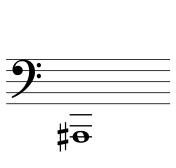 | ●○○○○○○ | 1st (pedal) | — |
| B1 | 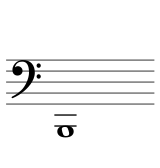 | ○○○●○○○ | 2nd | F + G♭ |
| C2 | 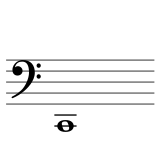 | ○○●○○○○ | 2nd | F + G♭ |
| C♯2D♭2 | 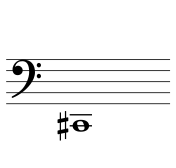 | ○●○○○○○ | 2nd | F + G♭ |
| D2 | 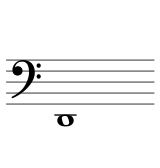 | ●○○○○○○ | 2nd | F + G♭ |
| D♯2E♭2 | 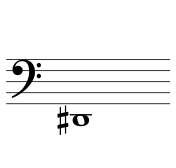 | ○○●○○○○ | 2nd | F |
| E2 | 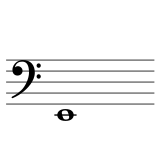 | ○○○○○○● | 2nd | — |
| F2 | 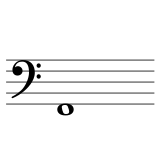 | ○○○○○●○ | 2nd | — |
| F♯2G♭2 | 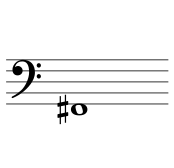 | ○○○○●○○ | 2nd | — |
| G2 | 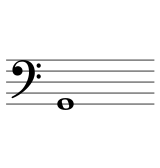 | ○○○●○○○ | 2nd | — |
| G♯2A♭2 | 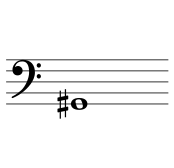 | ○○●○○○○ | 2nd | — |
| A2 | 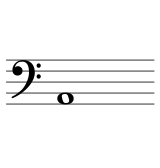 | ○●○○○○○ | 2nd | — |
| A♯2B♭2 | 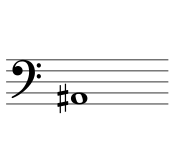 | ●○○○○○○ | 2nd | — |
| B2 | 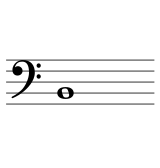 | ○○○○○○● | 3rd | — |
| C3 | 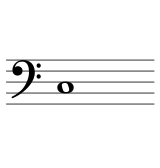 | ○○○○○●○ | 3rd | — |
| C♯3D♭3 | 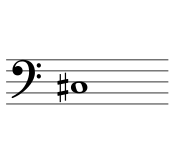 | ○○○○●○○ | 3rd | — |
| D3 | 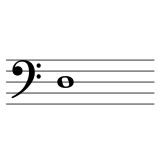 | ○○○●○○○ | 3rd | — |
| D♯3E♭3 | 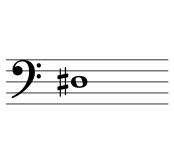 | ○○●○○○○ | 3rd | — |
| E3 | 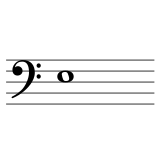 | ○●○○○○○ | 3rd | — |
| F3 | 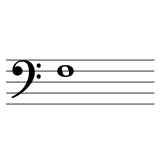 | ●○○○○○○ | 3rd | — |
| F♯3G♭3 | 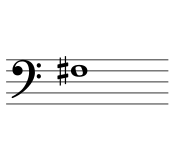 | ○○○○●○○ | 4th | — |
| G3 | 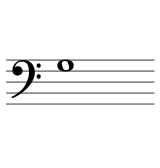 | ○○○●○○○ | 4th | — |
| G♯3A♭3 | 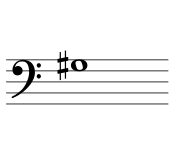 | ○○●○○○○ | 4th | — |
| A3 | 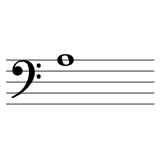 | ○●○○○○○ | 4th | — |
| A♯3B♭3 | 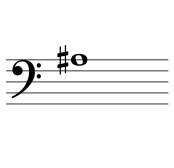 | ●○○○○○○ | 4th | — |
| B3 | 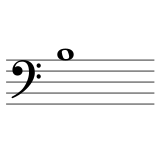 | ○○○●○○○ | 5th | — |
| C4 | 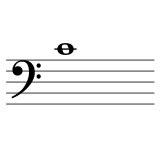 | ○○●○○○○ | 5th | — |
| C♯4D♭4 | 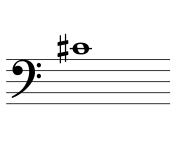 | ○●○○○○○ | 5th | — |
| D4 | 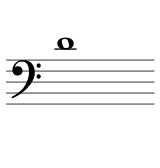 | ●○○○○○○ | 5th | — |
| D♯4E♭4 | 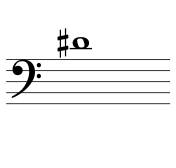 | ○○●○○○○ | 6th | — |
| E4 | 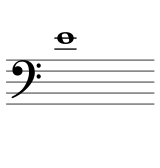 | ○●○○○○○ | 6th | — |
| F4 | 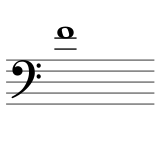 | ●○○○○○○ | 6th | — |
| F♯4G♭4 | 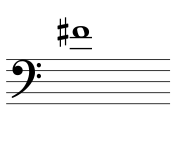 | ○○○○●○○ | 8th | — |
| G4 | 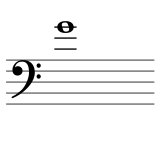 | ○○○●○○○ | 8th | — |
| G♯4A♭4 | 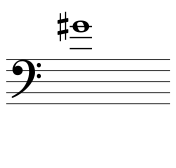 | ○○●○○○○ | 8th | — |
| A4 | 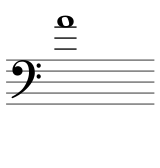 | ○●○○○○○ | 8th | — |
| A♯4B♭4 | 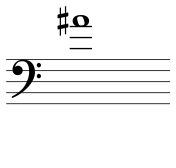 | ●○○○○○○ | 8th | — |
● marks the slide position: 1st is the slide closed and 7th the slide fully extended. The Harmonic column says which harmonic of the series gives the note, adjusted with the lips. The notes of the low register (B1 to E♭2) are played with the valves (F, G♭ or both together, which give D), and for them the harmonic is counted on the series of the valve. —: no valve. The bass trombone does not transpose: what is written is what sounds.
Bass trombone fingerings
The diagram shows the fixed mouthpiece on the left, the slide reaching toward the bell on the right, and the two valves (F and G♭) above. When you pick a note, the slide position is marked (ruler from 1 to 7) and the valves you need to press light up (if any are needed). Remember that one position serves for several notes: the lips do the rest by adjusting the harmonic.
Pick a note to see its position and valves, the note on the staff and its real bass trombone sound.
To tune, use the trombone tuner. Note that it cannot read notes below about 40 Hz, which includes the lowest pedal tones of a bass trombone.
Printable worksheet (PDF)
The same table on paper, on one side of A4 in two columns, for the music stand. And a second sheet to fill in: the 37 notes with the slide position, harmonic and valves columns left blank, so you can write them yourself. The reference sheet works as the answer key.

Download the positions (PDF) Download the fill-in sheet (PDF)
Common mistakes when learning bass trombone notes
- Thinking there is one position per note. As on the tenor, there are only 7 positions: the same position gives several notes depending on the harmonic. The valves add alternatives, not a new position for every note.
- Forgetting the valves in the low register. The notes from B1 to E♭2 need a valve. It is impossible to get them with the slide alone.
- Confusing the position with the real length. With the valves, the physical "4th position" is longer than without them. The position number is a reference for the arm, not an absolute measure.
- Thinking the valves transpose. They do not change the written note: they only lengthen the tube to reach the low register.
Summary
- The bass trombone shares the slide and the 7 positions with the tenor, but has a wider tube and two thumb valves.
- In the B♭/F/G♭/D setup: the 1st valve gives F, the 2nd gives G♭ and both together give D.
- The valves fill the low gap chromatically (B1, C2, C♯2, D2, E♭2) between the pedal B♭1 and the E2 of the slide alone.
- It does not transpose (bass clef). It is the low voice of the trombone section.