
The trombone is the one common brass instrument that changes notes mainly with a slide instead of valves. It is also one of the few brass instruments that does not transpose in most traditions: the note on the page is the note that sounds, and the part is usually written in bass clef. This page gives the slide positions, the range, the role of the F-attachment (the trigger) and a chart of all the notes from E2 to B♭4.


| Family | Brass (mostly cylindrical tube) |
|---|---|
| Pitch | B♭ (the length of the tube with the slide closed) |
| Transposition | None in bass or tenor clef (concert pitch). British brass band parts are written in treble clef as a B♭ instrument |
| Standard range | E2 to B♭4 (about two and a half octaves), plus pedal tones below and extra high notes for advanced players |
| Mechanism | Slide (7 positions); most advanced instruments also have an F-attachment |
| Clef | Bass (tenor clef for high passages) |
| Also called | Trombón (Spanish) · trombone (Italian, French) · Posaune (German) · sackbut (the Renaissance and Baroque ancestor) |
How are the notes produced? Seven positions and the harmonics
The physics is the same as on the trumpet: the lips choose one harmonic of the series. But instead of valves, the slide makes the tube longer or shorter. There are seven positions. In the 1st position the slide is closed (the shortest tube) and in the 7th it is fully extended. Each position lowers the pitch by about one half step (UK: semitone) compared with the one before. The positions get farther apart as the slide goes out, so the 7th is much farther from the 6th than the 2nd is from the 1st.
Every position has its own harmonic series. The lowest note of each series, the fundamental (or pedal tone), is very low, so most playing happens on the harmonics above it:
| Position | Pedal (1st harmonic) | 2nd | 3rd | 4th | 5th | 6th |
|---|---|---|---|---|---|---|
| 1st (slide closed) | B♭1 | B♭2 | F3 | B♭3 | D4 | F4 |
| 2nd | A1 | A2 | E3 | A3 | C♯4 | E4 |
| 3rd | A♭1 | A♭2 | E♭3 | A♭3 | C4 | E♭4 |
| 4th | G1 | G2 | D3 | G3 | B3 | D4 |
| 5th | F♯1 | F♯2 | C♯3 | F♯3 | A♯3 | C♯4 |
| 6th | F1 | F2 | C3 | F3 | A3 | C4 |
| 7th (slide extended) | E1 | E2 | B2 | E3 | G♯3 | B3 |
Sounding pitch, which is also the written pitch in bass clef. The 5th harmonic is naturally about 14 cents flat, so the player lips it up. The 7th harmonic is too flat to use in tune and is skipped.
Because the same note appears in several series, one position serves many notes: the harmonic makes the difference. Some notes can also be played in two different positions. For example, F3 is the 3rd harmonic in 1st position and the 4th harmonic in 6th position, and D4 is the 5th harmonic in 1st position and the 6th harmonic in 4th position. Choosing the better position for the context (the previous note, the speed) is part of trombone technique.
Why seven positions exactly? Between two neighboring harmonics there are gaps. The widest one in the playing range is between the 2nd and 3rd harmonic, a perfect 5th (7 half steps). The seven positions cover 6 half steps from each harmonic downward (from B♭ to E, a tritone), and together with the neighboring series they leave no half step uncovered in the low and middle register. The notes between E2 and B♭2 come from the 2nd harmonic, and those between B2 and F3 from the 3rd. An eighth position would only repeat notes that already exist.
A history note: from the Renaissance to the Baroque the instrument was called the sackbut (sacabuche in Spanish), a slightly smaller trombone with a narrower bore, used in church and court music.
Is the trombone a transposing instrument?
It depends on the tradition, but usually it is not:
- Bass clef (or tenor clef), concert pitch. In orchestras, concert bands and Spanish bands, the tenor trombone is written exactly as it sounds. It is not a transposing instrument. This is different from the trumpet or the flugelhorn, which are in B♭ and sound a whole step (UK: tone) below the written note. Trombone parts are read in bass clef, like the bassoon or the cello, and move to tenor clef (a C clef on the fourth line) when the music stays high, to avoid many ledger lines. The chart on this page stays in bass clef.
- Treble clef, in B♭ (British brass band). In the British brass band tradition the tenor trombone is written in treble clef as a B♭ transposing instrument: it sounds a major 9th lower than written, so a written C4 sounds B♭2. The bass trombone in a brass band is still written in bass clef.
The instrument and the slide positions are the same in every case. Only the notation changes.
Range and registers
The standard range of the tenor trombone goes from E2 (7th position, 2nd harmonic) to B♭4, about two and a half octaves. Below E2 come the pedal tones, the fundamentals of each position (B♭1 in 1st position, A1 in 2nd and so on down to E1). They are very low and take training. Above B♭4, professionals play several notes higher on the upper harmonics.
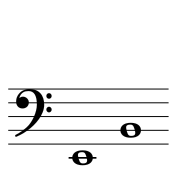
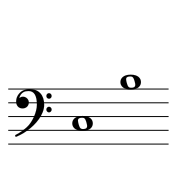
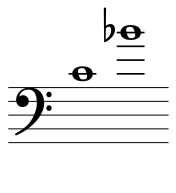
These pitches use scientific pitch notation (C4 is middle C, A4 is 440 Hz). Counting the sharps and flats, the chart below covers 31 notes.
The F-attachment (trigger): the valve most trombones have today
Many tenor trombones have a lever next to the bell, worked by the left thumb. It is the F-attachment (also called the trigger): a rotary valve that sends the air through an extra loop of tubing. While the lever is pressed, the fundamental of each position changes from B♭ to F, a perfect 4th lower. This is not transposition: the part is still read at concert pitch. What changes is the physical length of the tube, just as when the slide moves.
In practice it is used for two things:
- Reaching the low notes between E2 and the pedal B♭1. Without the trigger these notes do not exist on the trombone. With it, you can play E♭2, D2, C♯2 and C2 (they are the 2nd harmonic of the F-side series in the 3rd, 4th, 5th and 6th positions). They use longer positions than on the B♭ side, and the lowest ones need a very long reach. The pedal B♭1 does not need the trigger: it is the fundamental in 1st position.
- Alternate positions. This is the most frequent use. Many notes that need a long 6th or 7th position in the normal mode can be played with the trigger in a shorter position. The trigger positions are farther apart, so they are not simply "the same positions". This allows fast passages and shorter slide movements.
The F-attachment is standard on advanced and orchestral tenor trombones, and student models often do not have it. The chart on this page shows the standard positions (without the trigger), the base you need to master before learning the alternates. The bass trombone goes further: it has two valves and a wider bore.
The trombone in the band, the orchestra and jazz
The trombone is a main voice in the concert band, especially in the Valencian tradition, where it usually has a section of several players and plays both melodic lines and the low harmony of the brass. In the orchestra it forms a section with other trombones and the tuba, the solemn block of low brass (the trombone "chorale" in many symphonies is famous). In jazz it is a solo instrument with its own voice. The slide makes a continuous glissando, a slide from one note to another, especially natural on this instrument (it is typical of jazz and of orchestral humor).
| Notewritten = sounding | On the staffbass clef | Slide position1 2 3 4 5 6 7 | Harmonic |
|---|---|---|---|
| E2 | 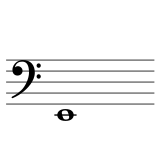 | ○○○○○○● | 2nd |
| F2 | 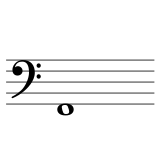 | ○○○○○●○ | 2nd |
| F♯2G♭2 | 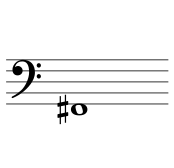 | ○○○○●○○ | 2nd |
| G2 | 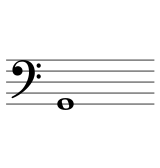 | ○○○●○○○ | 2nd |
| G♯2A♭2 | 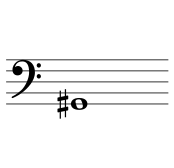 | ○○●○○○○ | 2nd |
| A2 | 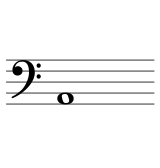 | ○●○○○○○ | 2nd |
| A♯2B♭2 | 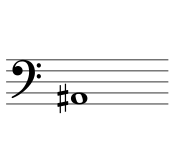 | ●○○○○○○ | 2nd |
| B2 | 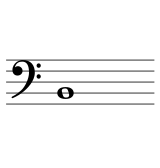 | ○○○○○○● | 3rd |
| C3 | 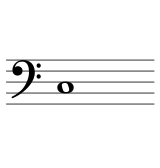 | ○○○○○●○ | 3rd |
| C♯3D♭3 | 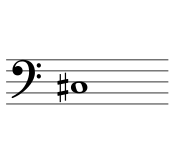 | ○○○○●○○ | 3rd |
| D3 | 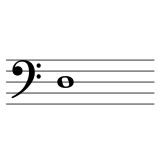 | ○○○●○○○ | 3rd |
| D♯3E♭3 | 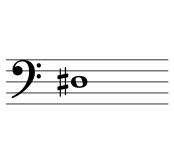 | ○○●○○○○ | 3rd |
| E3 | 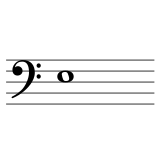 | ○●○○○○○ | 3rd |
| F3 | 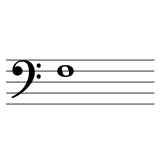 | ●○○○○○○ | 3rd |
| F♯3G♭3 | 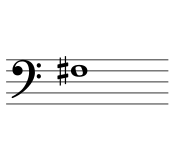 | ○○○○●○○ | 4th |
| G3 | 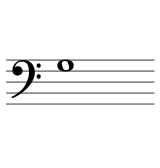 | ○○○●○○○ | 4th |
| G♯3A♭3 | 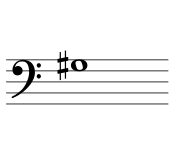 | ○○●○○○○ | 4th |
| A3 | 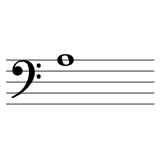 | ○●○○○○○ | 4th |
| A♯3B♭3 | 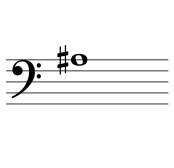 | ●○○○○○○ | 4th |
| B3 | 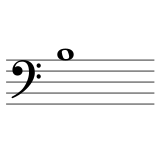 | ○○○●○○○ | 5th |
| C4 | 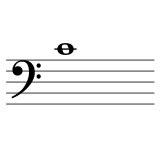 | ○○●○○○○ | 5th |
| C♯4D♭4 | 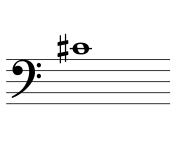 | ○●○○○○○ | 5th |
| D4 | 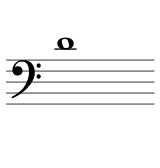 | ●○○○○○○ | 5th |
| D♯4E♭4 | 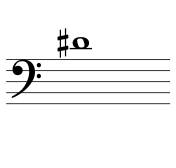 | ○○●○○○○ | 6th |
| E4 | 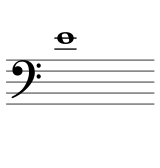 | ○●○○○○○ | 6th |
| F4 | 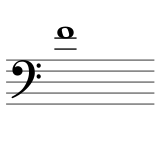 | ●○○○○○○ | 6th |
| F♯4G♭4 | 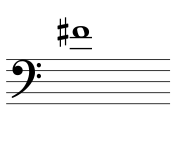 | ○○○○●○○ | 8th |
| G4 | 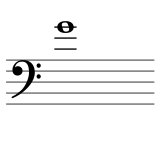 | ○○○●○○○ | 8th |
| G♯4A♭4 | 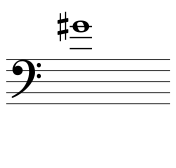 | ○○●○○○○ | 8th |
| A4 | 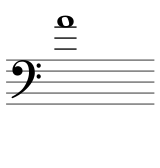 | ○●○○○○○ | 8th |
| A♯4B♭4 | 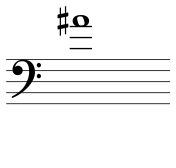 | ●○○○○○○ | 8th |
● marks the slide position: 1st is the slide closed and 7th the slide fully extended; each position lowers the note by about a half step. The Harmonic column says which harmonic of that position gives the note; the player adjusts it with the lips. Altered notes show their enharmonic name below, because F♯ and G♭ are the same note and you will see one or the other depending on the key. The notes of the chart are at concert pitch. The trombone does not transpose in bass clef: what is written is what sounds.
Trombone slide positions
The diagram shows a trombone with the mouthpiece and slide on the left (the slide gets longer or shorter depending on the note) and the fixed bell on the right. Below it, a ruler marks the active position from 1 to 7. Remember that, as on the trumpet, one position can give several notes: the lips do the rest by adjusting the harmonic.
Pick a note to see its slide position, the note on the staff and its real trombone sound.
To tune, use the trombone tuner.
Printable worksheet (PDF)
The same table on paper, on one side of A4 in two columns, for the music stand. And a second sheet to fill in: the 31 notes with the slide position and harmonic columns left blank, so you can write them yourself. The reference sheet works as the answer key.

Download the positions (PDF) Download the fill-in sheet (PDF)
Common mistakes when learning trombone notes
- Thinking each note has its own position. There are only seven positions. The same position gives several notes, depending on the harmonic. Train your ear and your lips instead of memorizing 31 separate positions.
- Moving the slide blindly. The positions are not marked on the tube. You learn them by the feel of the arm, and at first it is easy to stop short or go too far, especially between the 4th and 7th positions.
- Assuming the positions are equally spaced. They are not: the farther the slide is out, the larger the distance between neighboring positions. Relying only on distance without listening leads to out-of-tune notes.
- Mixing the F-attachment positions with the standard ones. Learn the seven standard positions first, and then add the alternates the trigger offers.
Summary
- The trombone changes notes with a slide of 7 positions. Each position lowers the pitch by about a half step, and the lips choose the harmonic in each one.
- Unlike the trumpet, it does not transpose in the usual tradition: it is written at sounding pitch, in bass clef (tenor clef for high passages). British brass bands write it in treble clef as a B♭ instrument.
- The standard range is E2–B♭4 (31 notes), with pedal tones below.
- The F-attachment adds the low notes between E2 and B♭1 and gives alternate positions. It is standard on advanced trombones.
- The brass instrument on which a continuous glissando comes most naturally, thanks to the slide.