
The trumpet is the bright, high voice of the brass family, a leading instrument in the band, the orchestra and jazz alike. Unlike the woodwinds it has no holes: each note is chosen by combining three valves with the harmonic the player sets with the lips. The most common trumpet is the B♭ trumpet, a transposing instrument that sounds a whole step (UK: tone) lower than written. Below you will find its notes, written and sounding, and a complete fingering chart.


| Family | Brass |
|---|---|
| Pitch | B♭ (the most common) |
| Transposition | Yes: sounds a whole step below the written note |
| Range | F♯3–C6 written (sounds E3–B♭5) |
| Valves | 3 piston valves |
| Clef | Treble |
How are the notes produced? Valves and harmonics
On a brass instrument the sound starts at the lips, which buzz against the mouthpiece. With one fixed length of tubing, changing the tension of the lips gives a series of harmonics. The three valves fill the gaps between those harmonics: each one adds tubing and so lowers the pitch.
| Valve | Lowers the note by |
|---|---|
| 2nd | a half step (UK: semitone), 1 half step |
| 1st | a whole step, 2 half steps |
| 1st + 2nd (or 3rd alone) | a whole step and a half, 3 half steps |
| 2nd + 3rd | two whole steps, 4 half steps |
| 1st + 3rd | two and a half whole steps, 5 half steps |
| 1st + 2nd + 3rd | three whole steps, 6 half steps |
Only seven combinations (including open, with no valves) and the play of the lips cover the whole range. That is why one fingering serves for several notes: the harmonic makes the difference.
With no valves pressed, and only the lips changing, the written notes from low to high are C, G, C, E, G, (B♭) and C: the harmonics of the tube. For centuries trumpets were natural trumpets (no valves) and could only play those notes. Piston valves were invented in the 19th century; by adding tubing they give several harmonic series and make the full chromatic scale possible.
One detail that matters a lot is the mouthpiece. Its size and depth affect how easy the high register is and the color of the tone; most trumpeters have a favorite.
Is the trumpet a transposing instrument? The B♭
The usual trumpet is in B♭ and transposes like the clarinet: it sounds a major 2nd below the written note. A written C4 sounds B♭3. It is written in treble clef. Every note name on this page is the written note unless it says "sounds".
| Written note | Sounding pitch |
|---|---|
| C4 | B♭3 (a major 2nd lower) |
| G4 | F4 |
| C5 | B♭4 |
There is also the C trumpet, very common in the orchestra, which does not transpose, and higher ones (in D, E♭, and the piccolo trumpet). They all share the same three-valve system: the pitch changes, not the fingering.
Range and registers
The standard written range runs from F♯3 to C6 (sounding E3 to B♭5), about two and a half octaves, which professionals extend well above (the high register is the specialty of many trumpeters). It is usually divided like this:
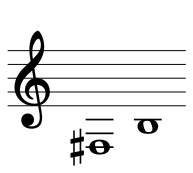
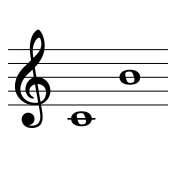
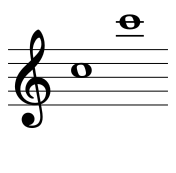
Octaves are in scientific pitch notation (C4 is middle C). Counting accidentals, the chart covers 31 written notes.
The trumpet in the band, the orchestra and jazz
The trumpet is one of the few instruments that is a leading voice in all three worlds. In the concert band (and especially in the Valencian band tradition) it carries the high voice of the brass and shines in the pasodoble and the march. In the orchestra it brings brilliance and fanfare (there the C trumpet is very common). In jazz it is a major solo instrument, from Louis Armstrong to Miles Davis. Its close relative the flugelhorn has the same fingering but a rounder, sweeter tone. And it should not be confused with the trombone, which is lower, changes notes with a sliding slide instead of valves and, unlike the trumpet, does not transpose.
| Written note | On the stafftreble clef | Valves1 2 3 | Sounds |
|---|---|---|---|
| F♯3G♭3 | 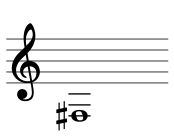 | ●●● | E3 |
| G3 | 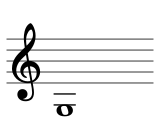 | ●○● | F3 |
| G♯3A♭3 | 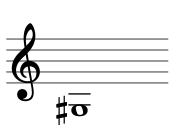 | ○●● | F♯3G♭3 |
| A3 | 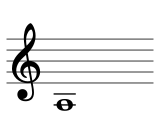 | ●●○ | G3 |
| A♯3B♭3 | 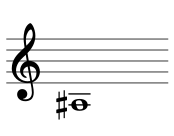 | ●○○ | G♯3A♭3 |
| B3 | 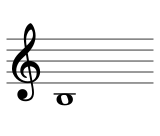 | ○●○ | A3 |
| C4 | 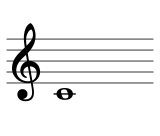 | ○○○ | B♭3 |
| C♯4D♭4 | 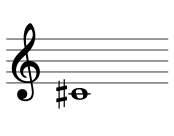 | ●●● | B3 |
| D4 | 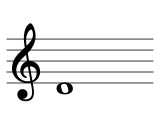 | ●○● | C4 |
| D♯4E♭4 | 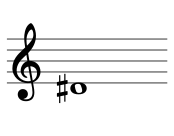 | ○●● | C♯4D♭4 |
| E4 | 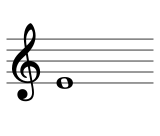 | ●●○ | D4 |
| F4 | 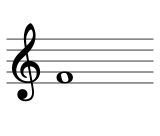 | ●○○ | D♯4E♭4 |
| F♯4G♭4 | 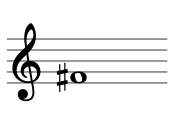 | ○●○ | E4 |
| G4 | 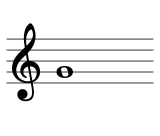 | ○○○ | F4 |
| G♯4A♭4 | 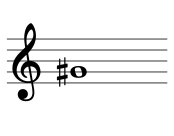 | ○●● | F♯4G♭4 |
| A4 | 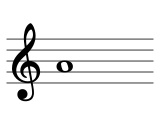 | ●●○ | G4 |
| A♯4B♭4 | 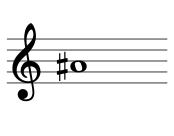 | ●○○ | G♯4A♭4 |
| B4 | 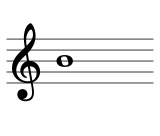 | ○●○ | A4 |
| C5 | 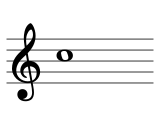 | ○○○ | B♭4 |
| C♯5D♭5 | 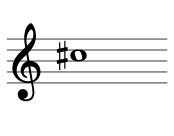 | ●●○ | B4 |
| D5 | 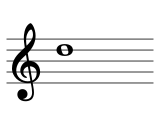 | ●○○ | C5 |
| D♯5E♭5 | 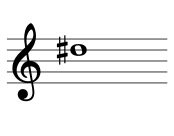 | ○●○ | C♯5D♭5 |
| E5 | 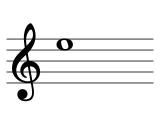 | ○○○ | D5 |
| F5 | 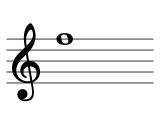 | ●○○ | D♯5E♭5 |
| F♯5G♭5 | 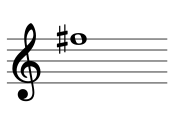 | ○●○ | E5 |
| G5 | 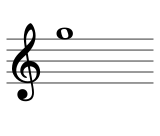 | ○○○ | F5 |
| G♯5A♭5 | 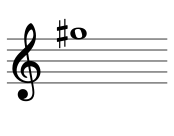 | ○●● | F♯5G♭5 |
| A5 | 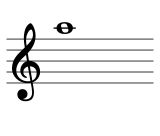 | ●●○ | G5 |
| A♯5B♭5 | 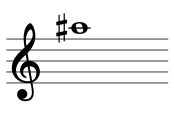 | ●○○ | G♯5A♭5 |
| B5 | 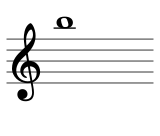 | ○●○ | A5 |
| C6 | 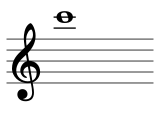 | ○○○ | B♭5 |
● means the valve is pressed and ○ means it is up, in the order they are under your fingers (1st, 2nd and 3rd). "Open" means no valves: only the lips. Notes with accidentals show their enharmonic name underneath, because F♯ and G♭ are the same note and you will see one or the other depending on the key.
This is a transposing instrument: what you read and what sounds are not the same note. If you play a written C4, a B♭3 sounds, a whole step lower. That is the last column. In a band this matters: your C is not the alto saxophone's C or the euphonium's bass-clef C, which sounds as written.
Trumpet fingerings
The diagram shows a trumpet with the mouthpiece on the left, the three valves in the middle and the bell on the right. When you pick a note, the valves you need to press light up in gold (or none, if it is "open"). Remember that one valve combination serves for several notes: the lips adjust the harmonic for the rest.
Pick a note to see its fingering, the note on the staff and how it sounds.
To tune, use the trumpet tuner.
Printable worksheet (PDF)
The same table on paper, on one side of A4 in two columns, for the music stand. And a second sheet to fill in: the 31 notes with the valves column left blank, so you can write the fingering yourself. The reference sheet works as the answer key.

Download the fingerings (PDF) Download the fill-in sheet (PDF)
Common mistakes when learning trumpet notes
- Thinking every note has its own fingering. There are only seven valve combinations. The same fingering gives several notes depending on the harmonic, so you have to train your ear and lips instead of memorizing 31 different positions.
- Mixing up written and sounding notes. The B♭ trumpet sounds a whole step lower; to sound in unison with a piano you must read a whole step higher.
- Forcing the high notes with the throat. The high register is built with the air column and the embouchure, not by squeezing the throat; forcing tires you out and goes out of tune.
- Ignoring the tuning slides of the 3rd (and 1st) valve. Some notes (D4, C♯4, D♯4 and others that use the 1st and 3rd valves together, or all three) tend to be sharp; that is why trumpets have a trigger or ring to lengthen those slides on the fly.
In short
- The trumpet is a brass instrument: the sound comes from vibrating lips, and the three valves add tubing and, with the harmonics, give every note (only 7 combinations).
- The most common one is in B♭ and sounds a major 2nd below the written note (written C4 sounds B♭3); it reads in treble clef.
- Written range F♯3–C6 (sounds E3–B♭5), about 31 notes, extendable upward.
- A leading voice in band, orchestra and jazz; it shares its fingering with the flugelhorn.