
Brass instruments are one of the four families of the orchestra and the sonic foundation of the concert band. What unites them is not that they are made of brass (the saxophone is too, and it is a woodwind) but how they make sound: the player's lips vibrate against a mouthpiece, a buzz that the tube amplifies and turns into music. Below you will find which instruments belong to the family, how they change notes, a comparison chart and a link to the guide for each one.
The most common brass instruments in the band and the orchestra are the trumpet, the flugelhorn, the horn, the trombone, the bass trombone, the euphonium and the tuba:
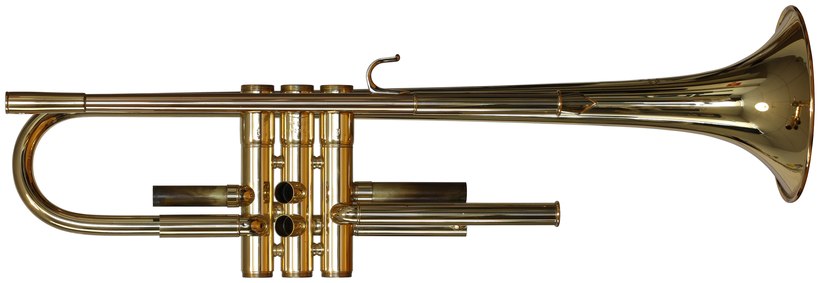
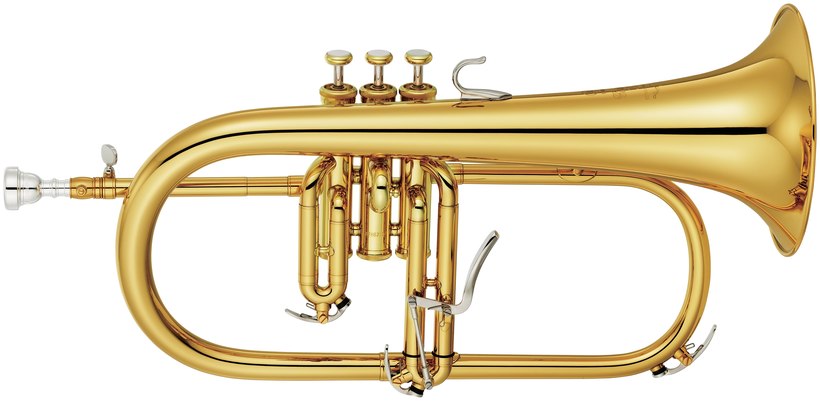
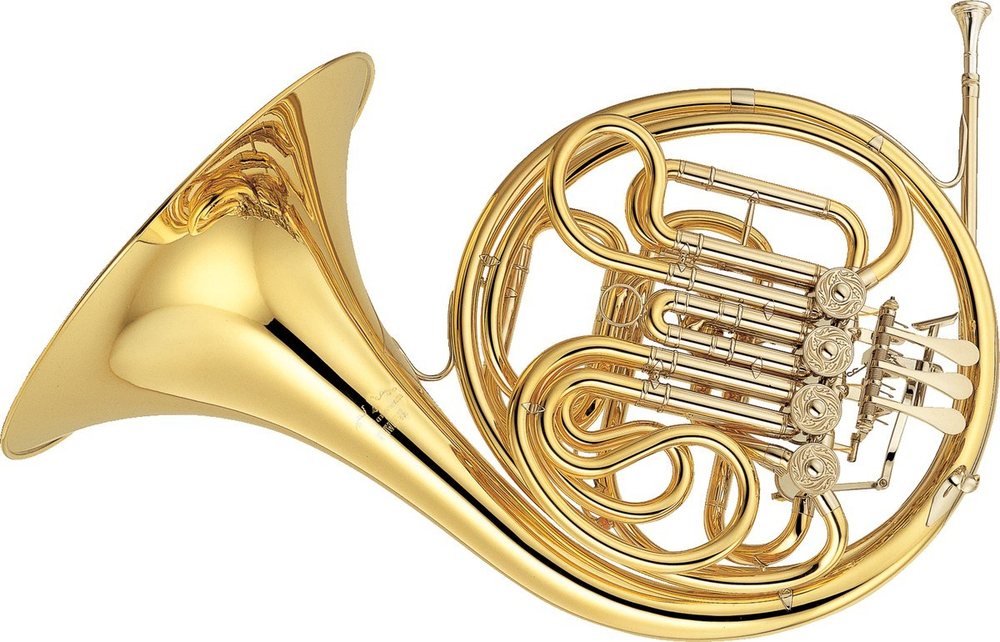
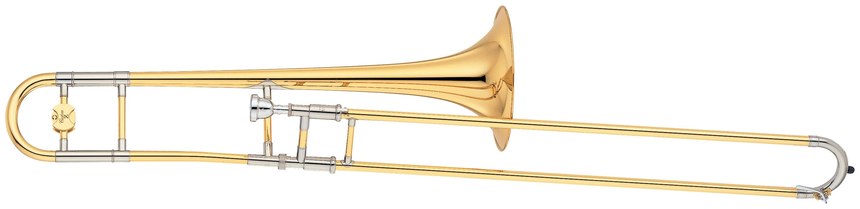
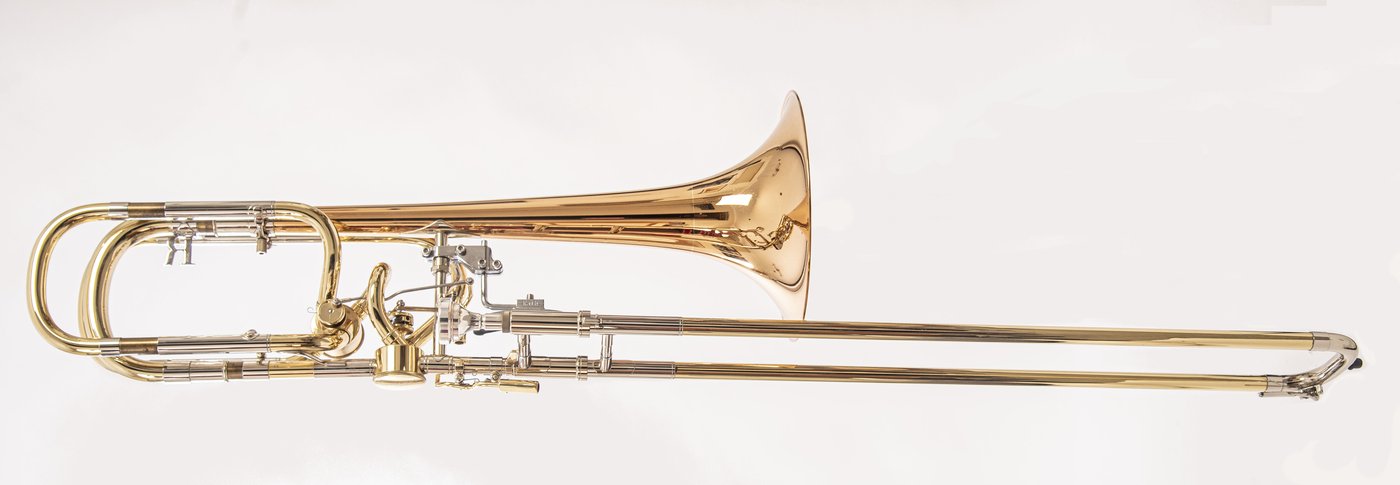
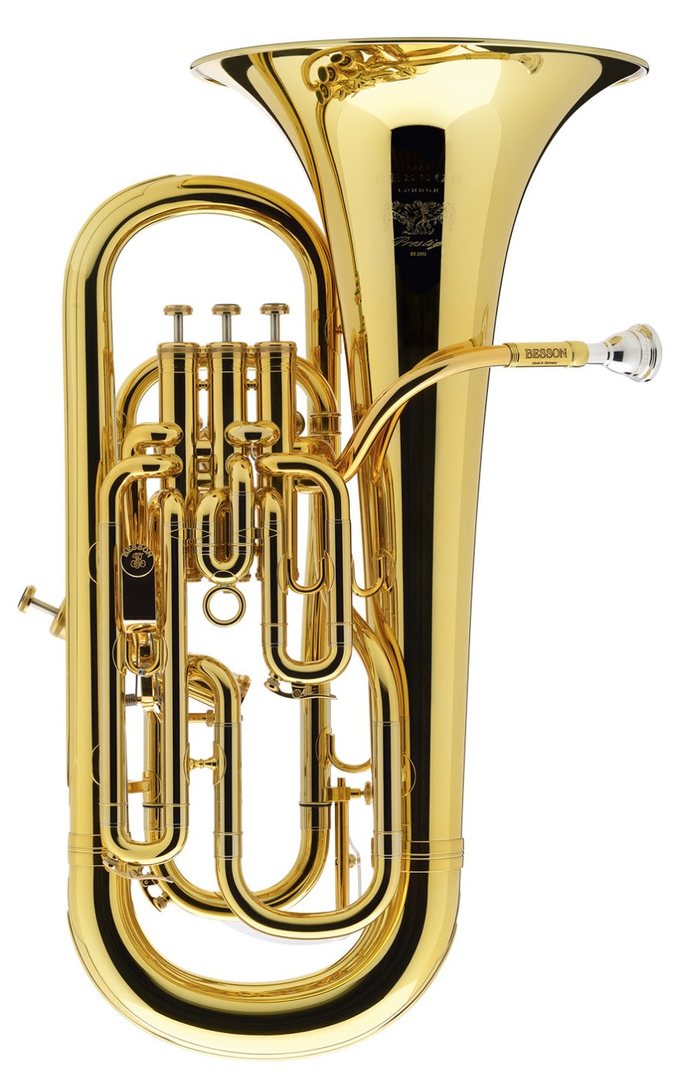
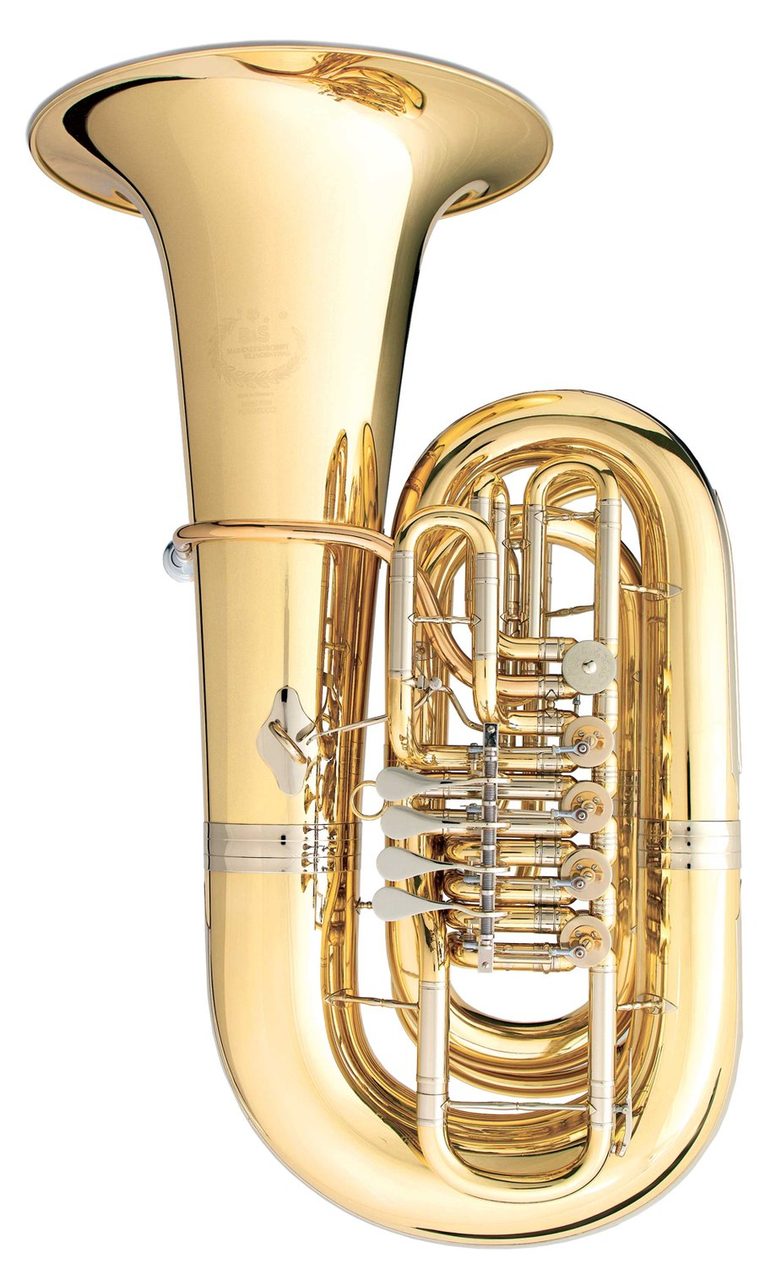


Photos from Wikimedia Commons. Trumpet: Eusebius, CC BY 3.0; Flugelhorn: Yamaha Corporation, CC BY-SA 4.0; Horn: Yamaha Corporation, CC BY-SA 4.0; Trombone: Yamaha Corporation, CC BY-SA 4.0; Bass trombone: Debbie Rawson / Jonathanischoice, CC BY 4.0; Euphonium: Buffet Crampon / Besson, CC BY-SA 4.0; Tuba: Buffet Crampon, CC BY-SA 4.0.


What is a brass instrument?
A brass instrument is an aerophone: it sounds because a column of air vibrates. What makes brass special is how that vibration starts. The player's lips, tightened against a mouthpiece, vibrate like a pair of living reeds and set the tube sounding. There is no cane reed and no sharp edge; the sound begins in the musician. That is the definition, and it clears up the usual misunderstanding:
The word "brass" describes the mechanism, not the material. The saxophone is made of brass and yet it is a woodwind, because it sounds through a reed. A plastic trumpet would still be a brass instrument, because it sounds through the lips. What classifies an instrument is not what it is made of, but how it starts to sound. In bands, these instruments are simply called "the brass".
The mouthpiece: where everything starts
Before the tube comes the mouthpiece: the piece, almost always metal, that the lips rest on and vibrate against. It is the only part of the instrument the player touches, and much of the sound depends on it. That is why brass players are so particular about theirs, and many take their mouthpiece with them even when they change instruments.
Its shape explains the tone of each group as much as the tube does:
- Cup-shaped (hemispherical, with a clear step down to the shank): a bright, direct sound. This is the mouthpiece of the trumpet and the trombone.
- Funnel-shaped (conical, with no step, narrowing gradually): a round, mellow sound. This is the mouthpiece of the horn. The flugelhorn, the euphonium and the tuba use deeper cups, halfway between the two.
Its size follows the register: the lower the instrument, the larger the mouthpiece. A tuba mouthpiece is so wide that a trumpet mouthpiece fits comfortably inside it, because the lips must vibrate more slowly and over a larger area. A deeper cup darkens the sound and helps the low register; a shallower one brightens it and makes high notes easier.
How they change notes: harmonics plus valves or slide
Here is the big difference from the woodwinds. A brass instrument has no finger holes. With a fixed length of tube, the lips can only produce the notes of the harmonic series. That is why a Spanish corneta (the kind used in processional cornetas y tambores bands) or a natural trumpet, with no valves or pistons, can play only those notes: the military call "reveille" is made from them. To fill the gaps between harmonics, the player has to lengthen the tube, and each sub-family comes from a different way of doing it:
| Mechanism | How it lengthens the tube | Instruments |
|---|---|---|
| Piston valves | Valves that, when pressed, open extra lengths of tubing | Trumpet, flugelhorn, euphonium, tuba |
| Rotary valves | Valves that turn, worked by a lever | Horn (and many tubas) |
| Slide | A telescoping tube that slides and lengthens continuously | Trombone, bass trombone |
Whatever the mechanism, the note you hear is always a combination of two things: the harmonic selected by the lips and the extra length of tube. That is why the same fingering (or slide position) serves for several notes.
1. Piston valves
The pistons go down and divert the air through extra tubing. It is the most widespread mechanism: fast and compact.
- Trumpet: the high, brilliant voice; the star of the band, the orchestra and jazz.
- Flugelhorn: the "sweet cousin" of the trumpet, with the same fingering but a rounder, more velvety tone.
- Euphonium (in Spanish, bombardino): the warm, singing baritone, much loved in the band.
- Tuba: the low foundation on which all the harmony rests.
2. Rotary valves
Instead of pistons that move up and down, cylindrical valves turn when a lever is pressed. This is the system of the horn, and also of many Central European style tubas.
- Horn (French horn): a noble, round tone. Most players use a double horn in F/B♭, with a thumb valve that switches between the two instruments.
3. Slide
The trombone is the only common brass instrument that does not use valves. It lengthens the tube with a sliding tube that has seven positions, which allows a glissando and completely free intonation.
- Trombone: the slide and its seven positions; a direct, powerful sound.
- Bass trombone: the low sibling, with a wider bore and (usually) two valves that open up the low register.
There is one more distinction, by the shape of the tube, that explains the tone. Instruments with a cylindrical bore (trumpet, trombone) sound brighter and more direct. Instruments with a conical bore (flugelhorn, horn, euphonium, tuba) sound rounder and mellower.

Brass in the band and in the orchestra
Like the woodwinds, the brass live in two worlds, the symphony orchestra and the concert band, and play a different role in each:
- In the orchestra the brass are the most powerful and brilliant section. The usual lineup is horns, trumpets, trombones and a tuba, saved for moments of strength, fanfares and heroic color. Neither the flugelhorn nor the euphonium is a regular member.
- In the concert band the brass are far more numerous and form the central body of the sound. Trumpets and cornets (and flugelhorns) carry melodies, horns and trombones fill in the harmony, and euphoniums and tubas hold the bass lines and countermelodies. The euphonium, which hardly exists in the orchestra, is one of the band's best-loved melodic voices. In British-style brass bands, the whole ensemble is brass.
Comparison chart of brass instruments
From highest to lowest, with the mechanism, the tuning and the approximate range at concert pitch (what actually sounds). Some instruments transpose: they sound a different note from the one written, as shown:
| Instrument | Mechanism | Tuning | Range (concert pitch) |
|---|---|---|---|
| Trumpet | 3 piston valves | B♭ (sounds a major 2nd lower) | E3–B♭5 |
| Flugelhorn | 3 piston valves | B♭ (sounds a major 2nd lower) | E3–B♭5 |
| Horn | Rotary valves (3 + thumb) | F (sounds a perfect 5th lower) | B1–F5 |
| Trombone | Slide (7 positions) | B♭ (concert pitch) | E2–B♭4 |
| Bass trombone | Slide + 2 valves | B♭ (concert pitch) | B♭1–B♭4 |
| Euphonium | 4 piston valves | B♭ (concert pitch) | B♭1–B♭4 |
| Tuba | 4 valves | C (concert pitch) | E1–B♭3 |
Pitches use scientific pitch notation (C4 is middle C). Click any instrument to see its range register by register, its fingering or slide position, and to hear its real sound. The horn and the tuba also exist in other tunings (the tuba in C, B♭, E♭ or F), and the ranges above are typical, not absolute limits: advanced players go beyond them, especially in the low register. Each guide gives the details.
Why do some transpose and others do not?
A transposing instrument sounds a different note from the one written, so that one player can switch between instruments of different sizes without relearning the fingerings. Both traditions exist in the brass:
- Transposing: the trumpet and the flugelhorn (in B♭, they sound a whole step (UK: tone) lower than written) and the horn (in F, a perfect fifth lower). They are read in treble clef.
- Non-transposing: the trombone, the euphonium and the tuba are usually read at concert pitch in bass clef. Be careful: in the British brass band tradition, the euphonium and other brass are written in treble clef as transposing instruments (a B♭ euphonium reads a major ninth above where it sounds). It is the same instrument read a different way.
A little history
Brass is ancient in its "natural" form, without valves: hunting and war trumpets and horns could only play the notes of the harmonic series. The trombone is the historical exception. With its slide it could already play every note in the 15th century (it was called the sackbut), and it has changed little since. The great leap came around 1815, when Heinrich Stölzel and Friedrich Blühmel developed the valve: suddenly the trumpet and the horn could play all the notes. Soon afterward, around 1835 to 1845, the modern tuba (Wilhelm Wieprecht and Johann Moritz) and Adolphe Sax's family of saxhorns appeared. The flugelhorn and the euphonium are close relatives of that family. This wave of nineteenth-century inventions gave the concert band the brass section we know today.
Tune your brass instrument
Use the online tuner for your instrument: trumpet, flugelhorn, horn, trombone, euphonium and tuba.
Summary
- "Brass" classifies by how the sound is made (the vibration of the lips), not by material. That is why the saxophone, though made of brass, is a woodwind.
- The note is always the combination of a harmonic (the lips) and a lengthening of the tube: piston valves, rotary valves or a slide.
- The mouthpiece (cup- or funnel-shaped, and larger the lower the instrument) shapes much of the tone.
- Seven common members: trumpet, flugelhorn, horn, trombone, bass trombone, euphonium and tuba.
- The trumpet and flugelhorn (B♭) and the horn (F) transpose; the trombone, euphonium and tuba are usually read at concert pitch in bass clef.
- In the concert band the brass are the body and the foundation of the ensemble.