
The flugelhorn is the mellow cousin of the trumpet. You play it exactly the same way: the same three valves, the same B♭ pitch, the same transposition. But it sounds much rounder, darker and more velvety. It is a beloved voice in the band and a favorite of jazz soloists. Below you will find its notes, written and sounding, and a complete fingering chart.


| Family | Brass (conical bore) |
|---|---|
| Pitch | B♭ |
| Transposition | Yes: sounds a whole step below the written note |
| Range | F♯3–C6 written (sounds E3–B♭5), like the trumpet |
| Valves | 3 piston valves (some models add a fourth) |
| Clef | Treble |
| Also called | Flugel, fliscorno (Spanish) |
Trumpet and flugelhorn: same fingers, different tone
If you can play the trumpet, you can play the flugelhorn: the fingerings are identical. What changes is the shape of the tube. The trumpet is mostly cylindrical (it keeps almost the same width up to the bell), which gives a bright, piercing sound. The flugelhorn is conical (it widens gradually from the mouthpiece) and has a wider bell, which gives a warm, dark, enveloping tone that many describe as closer to the human voice. The gradual widening changes the balance of the harmonics: the low and middle partials are stronger and the high ones weaker, so the flugelhorn has less brilliance and more roundness than the trumpet.
| Trumpet | Flugelhorn | |
|---|---|---|
| Tube | Mostly cylindrical | Conical (widening) |
| Tone | Bright, piercing | Round, dark, sweet |
| Fingering | The same (3 valves, in B♭) | |
| Transposition | Sounds a major 2nd below the written note | |
The flugelhorn mouthpiece
A good part of that warm color comes from the mouthpiece. The flugelhorn's has a deeper, funnel-shaped cup than the trumpet's, which reinforces the dark, velvety sound. Even if a trumpet mouthpiece fits, it is better not to swap them: using a trumpet mouthpiece takes away the flugelhorn's character (and often hurts the intonation), unless you want a brighter sound on purpose.
How are the notes produced?
Exactly as on the trumpet: the vibration of the lips picks a harmonic and the three valves lengthen the tube to fill the gaps. With only seven combinations (including open) and the play of the lips, the whole range is covered, so one fingering serves for several notes. In practice there are also alternate fingerings to improve the tuning or ease some passages. To understand why in depth, read about the harmonic series and review the trumpet notes.
Is the flugelhorn a transposing instrument? The B♭
Yes, like the trumpet and the clarinet: it is in B♭ and sounds a major 2nd below the written note. A written C4 sounds B♭3. It is written in treble clef. Every note name on this page is the written note unless it says "sounds".
| Written note | Sounding pitch |
|---|---|
| C4 | B♭3 (a major 2nd lower) |
| G4 | F4 |
| C5 | B♭4 |
Range and registers
The usual written range runs from F♯3 to C6, which at sounding pitch is E3 to B♭5, the same as the trumpet. The flugelhorn is most at home in the middle and low registers, where its warm tone shines; the extreme high register is harder and less common than on the trumpet.
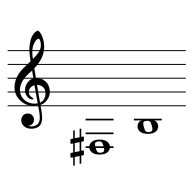
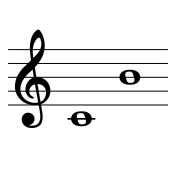
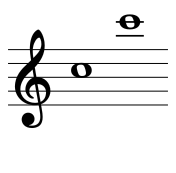
Octaves are in scientific pitch notation (C4 is middle C). Counting accidentals, the chart covers 31 written notes.
The flugelhorn in the band and in jazz
The flugelhorn developed in the 19th century from signal horns and bugles and became popular in central European military bands; from there it passed to civilian bands and, in the 20th century, to jazz.
In Spanish bands, and especially in the Valencian tradition, flugelhorns have their own section: they carry many of the cantabile melodies, with a sweet sound that rounds off the brass and bridges to the woodwinds. In British-style brass bands it is also a regular member; in a typical American concert band it appears only when a part calls for it. In jazz it is a cult solo instrument for its lyricism, made famous by Chuck Mangione, Art Farmer, Clark Terry and Miles Davis, who alternated it with the trumpet for the most intimate passages. In the symphony orchestra it rarely appears.
| Written note | On the stafftreble clef | Valves1 2 3 | Sounds |
|---|---|---|---|
| F♯3G♭3 | 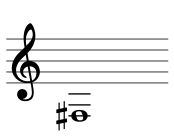 | ●●● | E3 |
| G3 | 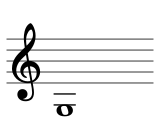 | ●○● | F3 |
| G♯3A♭3 | 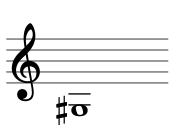 | ○●● | F♯3G♭3 |
| A3 | 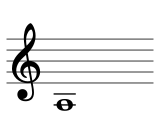 | ●●○ | G3 |
| A♯3B♭3 | 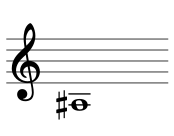 | ●○○ | G♯3A♭3 |
| B3 | 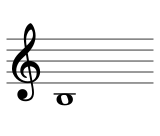 | ○●○ | A3 |
| C4 | 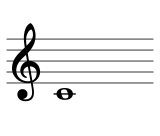 | ○○○ | B♭3 |
| C♯4D♭4 | 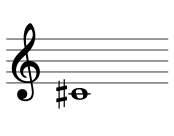 | ●●● | B3 |
| D4 | 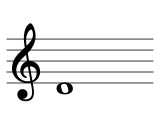 | ●○● | C4 |
| D♯4E♭4 | 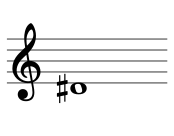 | ○●● | C♯4D♭4 |
| E4 | 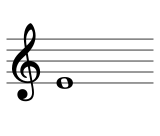 | ●●○ | D4 |
| F4 | 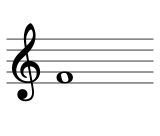 | ●○○ | D♯4E♭4 |
| F♯4G♭4 | 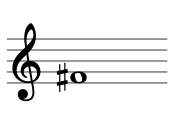 | ○●○ | E4 |
| G4 | 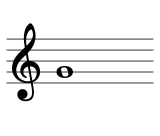 | ○○○ | F4 |
| G♯4A♭4 | 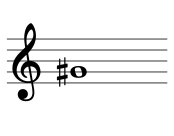 | ○●● | F♯4G♭4 |
| A4 | 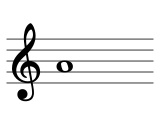 | ●●○ | G4 |
| A♯4B♭4 | 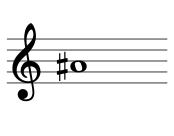 | ●○○ | G♯4A♭4 |
| B4 | 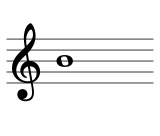 | ○●○ | A4 |
| C5 | 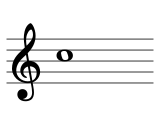 | ○○○ | B♭4 |
| C♯5D♭5 | 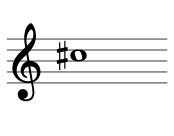 | ●●○ | B4 |
| D5 | 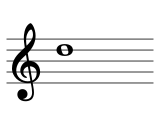 | ●○○ | C5 |
| D♯5E♭5 | 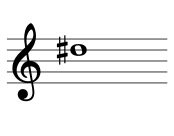 | ○●○ | C♯5D♭5 |
| E5 | 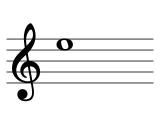 | ○○○ | D5 |
| F5 | 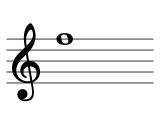 | ●○○ | D♯5E♭5 |
| F♯5G♭5 | 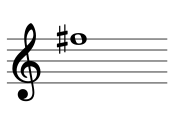 | ○●○ | E5 |
| G5 | 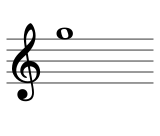 | ○○○ | F5 |
| G♯5A♭5 | 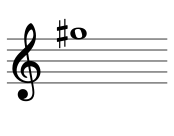 | ○●● | F♯5G♭5 |
| A5 | 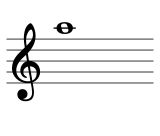 | ●●○ | G5 |
| A♯5B♭5 | 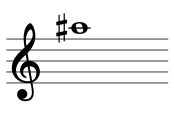 | ●○○ | G♯5A♭5 |
| B5 | 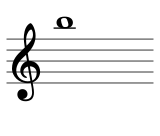 | ○●○ | A5 |
| C6 | 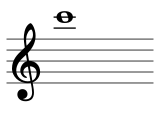 | ○○○ | B♭5 |
● means the valve is pressed and ○ means it is up, in the order they are under your fingers (1st, 2nd and 3rd). "Open" means no valves: only the lips. Notes with accidentals show their enharmonic name underneath, because F♯ and G♭ are the same note and you will see one or the other depending on the key.
This is a transposing instrument: what you read and what sounds are not the same note. If you play a written C4, a B♭3 sounds, a whole step lower. That is the last column. In a band this matters: your C is not the alto saxophone's C or the euphonium's bass-clef C, which sounds as written.
Flugelhorn fingerings
The diagram shows a flugelhorn with the mouthpiece on the left, the three valves in the middle and the wide bell on the right. When you pick a note, the valves you need to press light up in gold (or none, if it is "open"). As on the trumpet, one valve combination serves for several notes: the lips do the rest by adjusting the harmonic.
Pick a note to see its fingering, the note on the staff and its real flugelhorn sound.
To tune, use the flugelhorn tuner.
Printable worksheet (PDF)
The same table on paper, on one side of A4 in two columns, for the music stand. And a second sheet to fill in: the 31 notes with the valves column left blank, so you can write the fingering yourself. The reference sheet works as the answer key.

Download the fingerings (PDF) Download the fill-in sheet (PDF)
Common mistakes when learning flugelhorn notes
- Treating it like a trumpet. The fingers are the same, but it asks for more air and a slightly more relaxed embouchure; forcing it like a trumpet takes away exactly what makes it special, its sweetness.
- Believing every note has its own fingering. As on the trumpet, there are only seven combinations: the same one serves for several notes depending on the harmonic.
- Mixing up written and sounding notes. It sounds a whole step lower; to sound in unison with a piano you must read a whole step higher.
- Insisting on the high register. The flugelhorn shines in the middle and low registers; the very high register is awkward and spoils its tone.
In short
- The flugelhorn is a brass instrument in B♭: the same three valves, fingerings and transposition as the trumpet (it sounds a major 2nd below the written note).
- Its trademark is its tone: conical tube and wide bell give a round, dark, sweet sound.
- Written range F♯3–C6 (sounds E3–B♭5); it shines in the middle and low registers.
- A lyrical voice of the band and a cult jazz soloist; it reads in treble clef.