
The alto clarinet is the alto voice of the clarinet family: the link between the soprano clarinets (the E♭ clarinet and the B♭ clarinet) and the bass clarinet. It is pitched in E♭ and sounds a major 6th below the written note. With its curved neck and its upturned metal bell it looks like a small bass clarinet. It is mainly a concert band instrument and is rare in the orchestra; you will find it in large symphonic bands, in clarinet choirs and in contests such as the one in Valencia. This page gives its range, its registers and what it shares with the clarinet. Its fingerings are the clarinet's.


| Family | Woodwind (single reed) |
|---|---|
| Pitch | E♭ |
| Transposition | Yes: sounds a major 6th below written |
| Range | Written E♭3–A6 (sounding G♭2–C6) |
| Mechanism | Keys (Boehm system) |
| Clef | Treble |
Does the alto clarinet transpose? The major 6th
Yes. It is pitched in E♭, so a written C4 sounds E♭3: a major 6th below. It is written in treble clef like every clarinet, so that the player reads and fingers exactly the same and only changes instrument. All the notes on this page are written notes unless it says "sounding".
The clarinet family has several instruments in E♭ and in B♭; these are the most common. Notice that the E♭ clarinet (Spanish requinto) transposes upward because it is small, while the alto, which is larger, transposes downward:
| Instrument | A written C4 sounds… |
|---|---|
| E♭ clarinet | E♭4 (minor 3rd up) |
| B♭ clarinet | B♭3 (major 2nd down) |
| Alto clarinet (E♭) | E♭3 (major 6th down) |
| Bass clarinet (B♭) | B♭2 (major 9th down) |
Range and registers
The standard written range runs from E♭3 to A6. In sounding pitch that is G♭2 to C6, right between the B♭ clarinet and the bass clarinet. Like the bass clarinet, it has a key for the low written E♭3, a note the B♭ clarinet does not have (its lowest written note is E3). It keeps the four named registers of the family. The notes below are written:
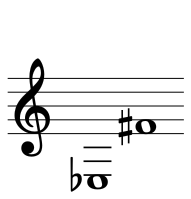
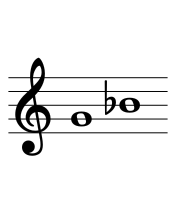
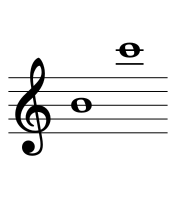
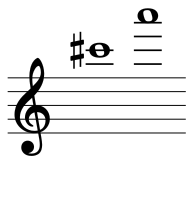
Pitches use scientific pitch notation (C4 is middle C). The tone is warm and slightly veiled, between the brightness of the B♭ clarinet and the depth of the bass clarinet. In the band it reinforces the inner voices and gives body to the clarinet section. Counting the accidentals, it produces 43 different pitches in its standard range.
Is the alto clarinet played like the clarinet?
Yes: the same Boehm system, the same fingerings and the same treble-clef reading, so any clarinetist can double on it without relearning anything, just as a flutist doubles on piccolo or an oboist on English horn. The differences are physical: the mouthpiece sits on a metal curved neck, the body is longer, the metal bell turns upward and forward, it is played seated (with a neck strap or a floor peg) and it adds the key for the low E♭ beside the right little finger. The reed, as on the whole family, is a single reed, larger than the one for the B♭ clarinet.
Why is it curved, and why is it so rare?
The curve is pure ergonomics. A tube in E♭ that long, if it were straight, would put the mouthpiece too high and the holes out of reach of the fingers. The metal curved neck brings the mouthpiece closer to the mouth and the upturned bell folds the end of the tube back, all without changing the acoustic length of the tube, and so without affecting the tuning. It is the same solution as on the bass clarinet, on a smaller scale.
And why is it so rarely seen? It is a relatively uncommon instrument. Many bands prefer to reinforce the low register directly with bass clarinets, so the alto's presence has declined compared with past decades. Even so, it keeps a place in symphonic bands, military bands and clarinet choirs, where it covers the alto voice.
Alto clarinet fingerings
Choose a note and you will see its fingering, the note on the staff and a real alto clarinet sound.
The fingerings are those of the B♭ clarinet (Boehm system) plus the key for the low E♭: the written E3 fingering with the extra right little-finger key.
Common mistakes when learning alto clarinet notes
- Counting the transposition wrong. It is not a whole step as on the B♭ clarinet: it is a major 6th. For the alto clarinet to sound in unison with a piano, its part must be written a major 6th above what the piano plays.
- Mixing it up with the E♭ clarinet. Both are in E♭, but the E♭ clarinet is small and sounds above the written note; the alto is large and sounds below it.
- Forgetting the low E♭ key. It is the one fingering that does not exist on the B♭ clarinet: like E3 but adding the extra key under the right little finger.
- Attacking the low register with a clarinet embouchure. The longer tube needs more air and a more relaxed embouchure; squeezing chokes the low register.
Summary
- The alto clarinet is pitched in E♭ and sounds a major 6th below the written note (written C4 → sounding E♭3). It is read in treble clef.
- Written range E♭3–A6 (sounding G♭2–C6), about 43 pitches.
- The same Boehm fingerings as the clarinet, plus the low E♭ key.
- It is the link between the soprano clarinets and the bass, and above all a band instrument.