
Keyboard instruments are the ones played with a row of keys. The best known are the piano, the organ, the harpsichord and the accordion, joined by the synthesizer and the celesta. What unites them is not how they sound but how they are played: with both hands on the same keys, with all the notes in view, and with the possibility of playing several at once.
This page gives you the overview: what it means for an instrument to be a “keyboard” instrument, how each one sounds, what sets it apart from the others and how its music is written.
The most common keyboard instruments are the piano (grand and upright), the organ (pipe and electronic), the harpsichord, the accordion, the synthesizer and the celesta.
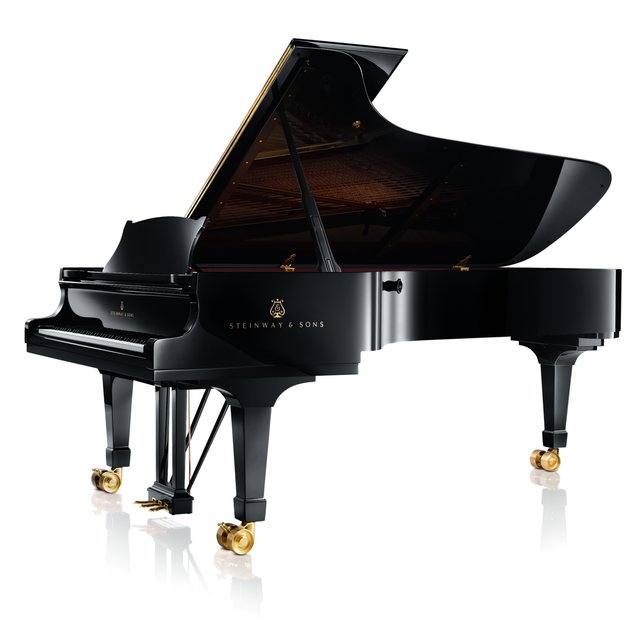
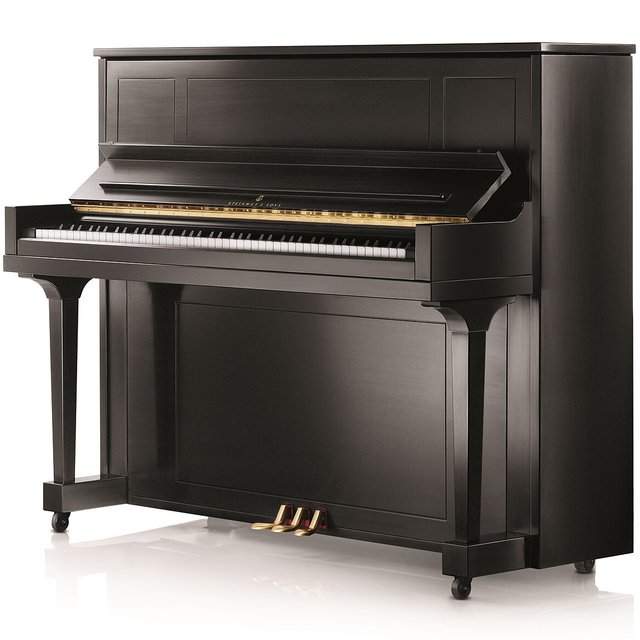
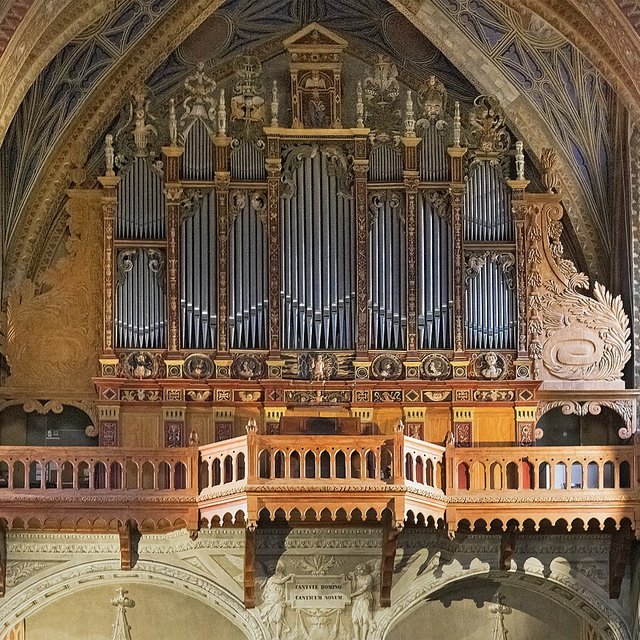
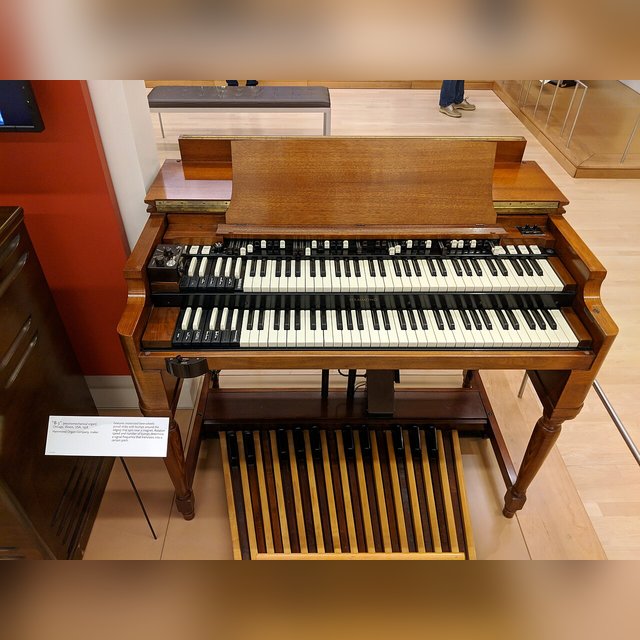
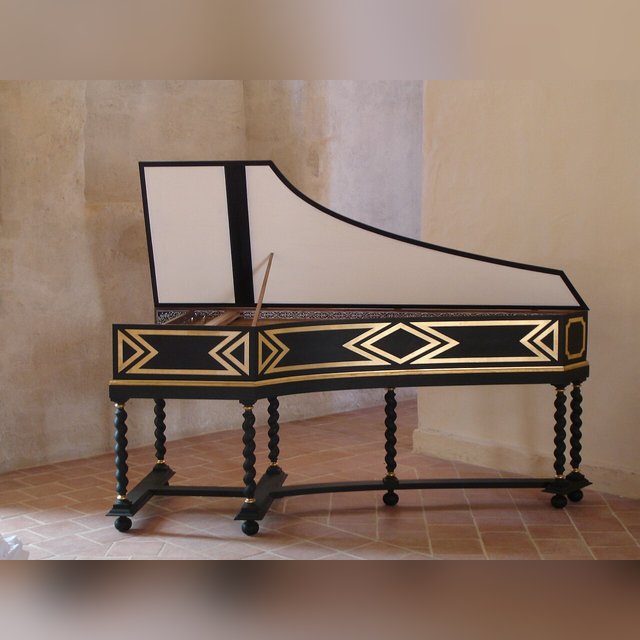
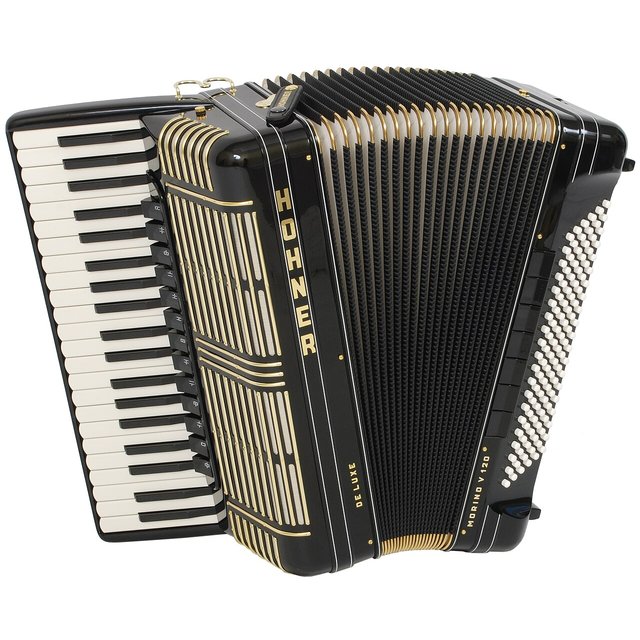
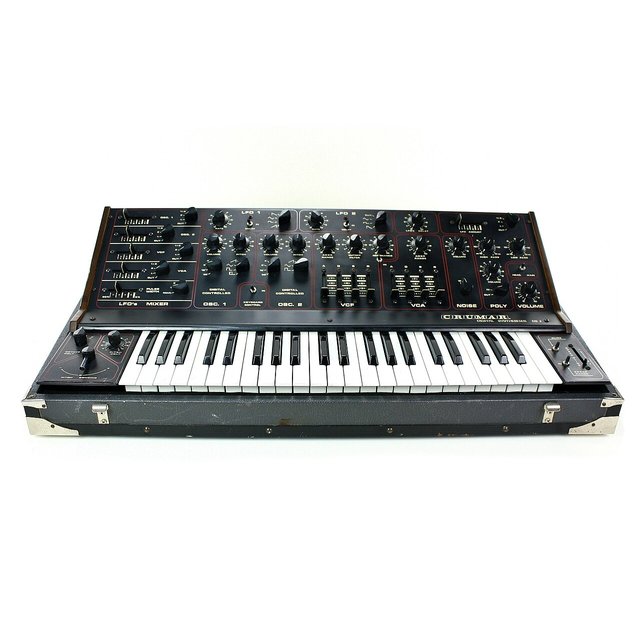
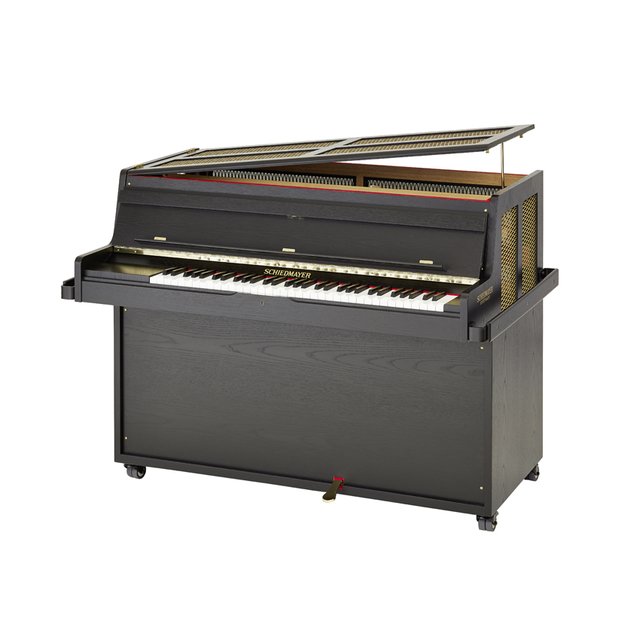


Photos from Wikimedia Commons. Grand piano: Steinway & Sons, CC BY-SA 3.0; Upright piano: Steinway & Sons, CC BY-SA 3.0; Pipe organ: Didier Descouens, CC BY-SA 4.0; Electronic organ: bobistraveling, CC BY 2.0; Harpsichord: David Schou, CC BY-SA 4.0; Accordion: muzyczny.pl, CC BY-SA 4.0; Synthesizer: PerfectCircuit, CC0; Celesta: Schiedmayer Celesta GmbH, CC BY-SA 4.0.


What is a keyboard instrument?
It is an instrument with a keyboard: a series of keys, white and black, arranged from low to high. But note that the keyboard is not an acoustic family in the way strings, winds and percussion are. The keyboard is only the way the instrument is controlled; inside, each one makes its sound in a different way:
| How it sounds inside | Keyboard instruments |
|---|---|
| Hammers that strike strings | Piano |
| Plectra that pluck strings | Harpsichord |
| Air passing through pipes | Pipe organ |
| Air that makes metal reeds vibrate | Accordion |
| Hammers that strike steel plates | Celesta |
| Electric or electronic generation or processing of the sound | Electronic organ, synthesizer |
This is why the same keyboard can hide a string, wind or percussion instrument. The piano, for example, is a struck-string instrument, and the harpsichord is a plucked-string instrument. What counts is the way the sound is started, not the outside shape.
Eight types of keyboard instruments
These are the ones you are most likely to meet in a lesson, a band, an orchestra, a church or a modern music group:
- Grand piano — the concert piano: the case and the strings are laid out horizontally and the lid can be opened to project the sound. Its action lets the player control loudness and tone color by how the keys are pressed.
- Upright piano — the same instrument with the strings vertical, so that it takes up less space. It is the one found in homes, classrooms and conservatories.
- Pipe organ — it sounds through the air passing through hundreds or thousands of pipes. It has several keyboards (manuals) and a pedalboard played with the feet, and it is controlled with stops that change the tone color.
- Electronic organ — it makes its sound with electric or electronic circuits, with no need for pipes. Depending on the model, it can have one or several manuals and a pedalboard. It is used in churches, jazz, rock and other styles.
- Harpsichord — the great keyboard instrument of the Baroque. When a key is pressed, a plectrum plucks the string, and the sound is bright but hardly changes with the force of the touch.
- Accordion — an instrument with bellows: the air that the player pumps makes metal reeds vibrate. On the piano accordion, the right hand plays a keyboard and the left hand plays buttons for basses and chords.
- Synthesizer — it generates or processes sound electronically, with different methods of synthesis, and lets you build new tone colors with its controls. Today it is used in almost all modern music.
- Celesta — a small keyboard that, instead of strings, sounds steel plates, with a crystal-clear, bell-like tone. In the orchestra it is played by the pianist.
A note on the celesta: it makes its sound with hammers that strike tuned metal plates, so by its mechanism it is related to pitched percussion. But it is played from a keyboard and its technique is like the piano's, which is why you will find it here.
What is special about a keyboard
Although the instruments sound very different, the keyboard gives them some common advantages:
- All the notes in view. On a conventional keyboard each key corresponds to a fixed pitch, so the player does not adjust the tuning of each note while playing, unlike on bowed strings. Acoustic instruments such as the piano do, however, need maintenance and regular tuning. The layout of white and black keys is the one you will see on any piano.
- Several notes at once. With two hands you can play melodies, bass lines, chords and arpeggios at the same time. This makes the keyboard an especially useful tool for studying harmony.
- A very wide range. A concert piano covers 88 keys, from A0 to C8: more than seven octaves, much more than most instruments.
How keyboard music is written
Because the keyboard covers so many pitches, its music is written on two staves joined by a brace (one staff is a “stave” in UK English): the upper one, with a treble clef, is usually for the right hand, and the lower one, with a bass clef, for the left. It is the same system used for the harp, and you will see it for the piano, the harpsichord and the organ (where the pedalboard usually gets a third staff in bass clef).
The accordion and the synthesizer can be written the same way, although for the button accordion and in modern music it is also very common to read a melody with chord symbols. The celesta is written on two staves, like the piano, but it sounds an octave higher than written. To see how the notes are laid out for each instrument, see notes on the instruments.
Loud, soft and pedals
Not all keyboards respond in the same way to the player's touch, and this is the big difference between them:
- On the piano and the celesta, the harder you press the key, the louder it sounds. This is the origin of the piano's original name, pianoforte (“soft-loud”). The pedals also let you sustain the sounds or soften them.
- On the harpsichord the force of the touch hardly changes the volume. To vary the sound you change keyboard or stop.
- On the organ the volume does not depend on how the keys are played but on the stops that are drawn and, on many organs, on an expression pedal that opens and closes shutters.
- On the accordion the dynamics are controlled by the bellows: they are opened and closed with more or less pressure.
- On the synthesizer it depends on the model: some have velocity-sensitive keys, like a piano, and others do not.
Comparison chart of keyboard instruments
With how each one sounds, how many keyboards it has and how loudness is controlled:
| Instrument | How it sounds | Keyboards | Loudness |
|---|---|---|---|
| Grand piano | Struck strings | 1 (88 keys) | By the force of the hand |
| Upright piano | Struck strings | 1 (88 keys) | By the force of the hand |
| Pipe organ | Air through pipes | Several, plus pedalboard | With the stops |
| Electronic organ | Circuits | One or several, depending on the model; some with pedalboard | Depends on the model |
| Harpsichord | Plucked strings | 1 or 2 | Almost constant: change stops |
| Accordion | Reeds with bellows | 1 plus bass buttons | With the bellows |
| Synthesizer | Electronic | One, of varying size | Depends on the model |
| Celesta | Struck steel plates | 1 | By the force of the hand |
Each instrument in its place: orchestra, band, church and modern music
In the symphony orchestra, the piano and the celesta appear only when the score calls for them. The celesta, for example, has its great moment in the Dance of the Sugar Plum Fairy from Tchaikovsky's The Nutcracker, and the organ sounds in Saint-Saëns's Symphony No. 3 (the “Organ Symphony”). In the concert band the piano occasionally joins the percussion section.
The harpsichord is the keyboard of Baroque music: it accompanied the other instruments with the basso continuo, and the works of Bach, Scarlatti and Couperin form its own repertoire. The pipe organ lives mostly in churches and cathedrals, and the electronic organ in jazz and rock. The accordion is a leading instrument of folk music in many countries, and the synthesizer is the foundation of much of today's music. As for the piano, it is the great instrument for study, accompaniment and solo playing.
A little history
The organ is one of the oldest keyboard instruments: its ancestors appear in Antiquity, and it has been in churches since the Middle Ages. The harpsichord developed later and dominated the Renaissance and the Baroque. Around the year 1700 the Italian Bartolomeo Cristofori built one of the first documented pianofortes, from which the modern piano descends. The celesta was patented in Paris in 1886 by the instrument maker Auguste Mustel. The accordion was patented in Vienna in 1829 and spread across Europe and the Americas. The electronic synthesizer developed during the 20th century and gained a place in music mainly from the second half of the century, and the first commercially successful electric organ, the Hammond (electromechanical, tonewheel), came on the market in 1935.
In summary
- Keyboard instruments are played with keys, but each one sounds in a different way: striking strings, plucking them, air through pipes or reeds, steel plates or electronics.
- The main ones are the piano, organ, harpsichord, accordion, synthesizer and celesta.
- Keyboard music is usually written on two staves, normally with treble clef above and bass clef below; the layout can vary with the instrument and the work.
- Loudness is controlled differently on each one: by the hand, by stops, by the bellows or depending on the model.
- The piano has 88 keys and covers more than seven octaves.