
The bowed string instruments are the heart of the orchestra: they sound when a string is rubbed with a bow. There are four of them: the violin, the viola, the cello and the double bass. They form an unusually consistent family: all have four strings, no frets, and are played with the same bowing motion. Here you will see what they are, what they share and what sets them apart, with a comparison chart.
This is the overview of the family; from here you can go on to each instrument.
From highest to lowest, the bowed string instruments are the violin, the viola, the cello and the double bass:
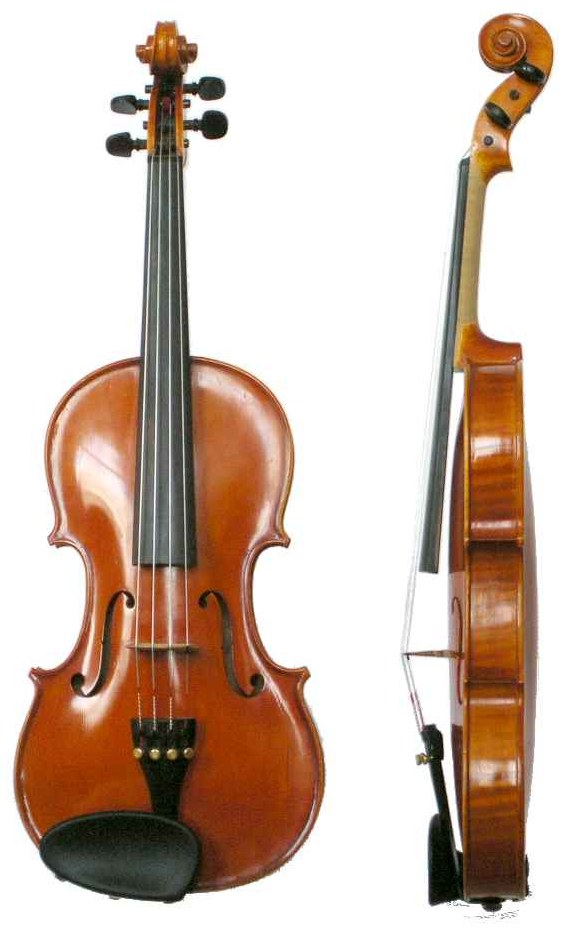
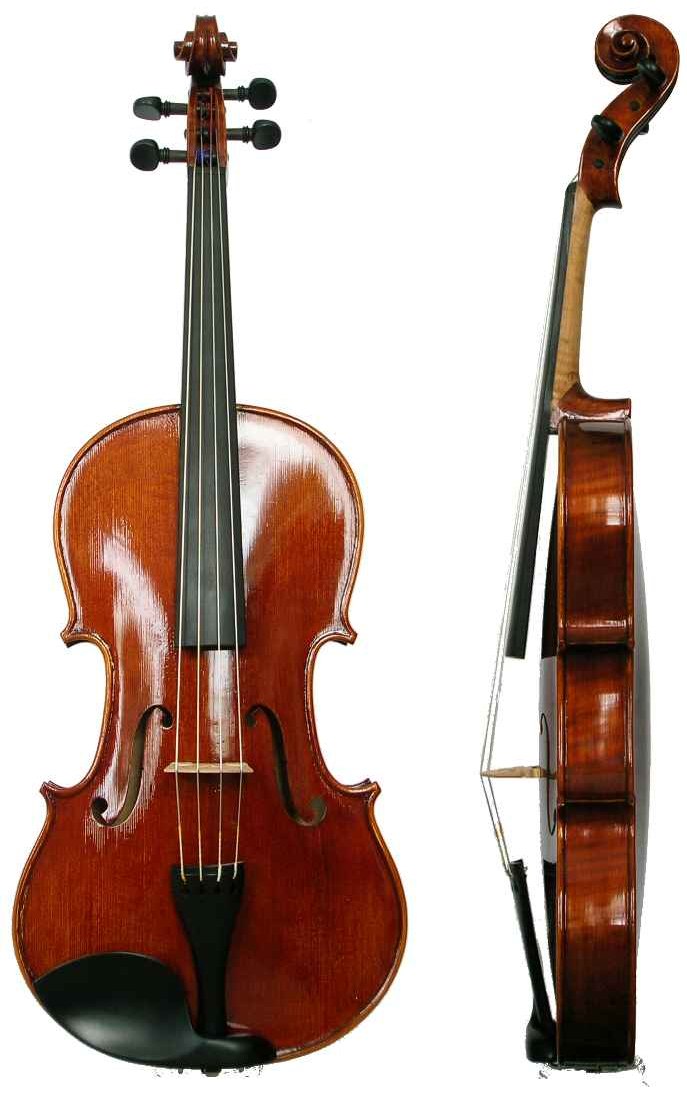
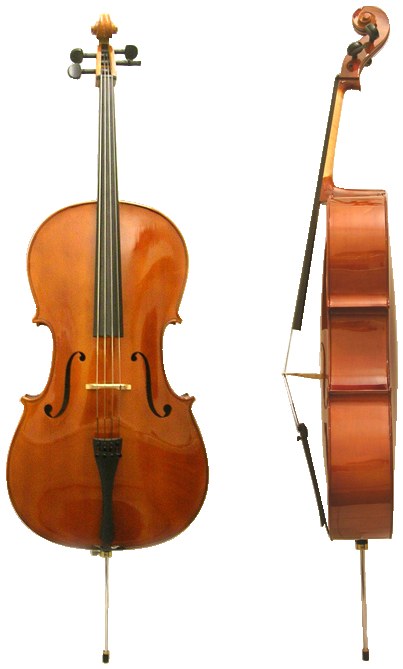
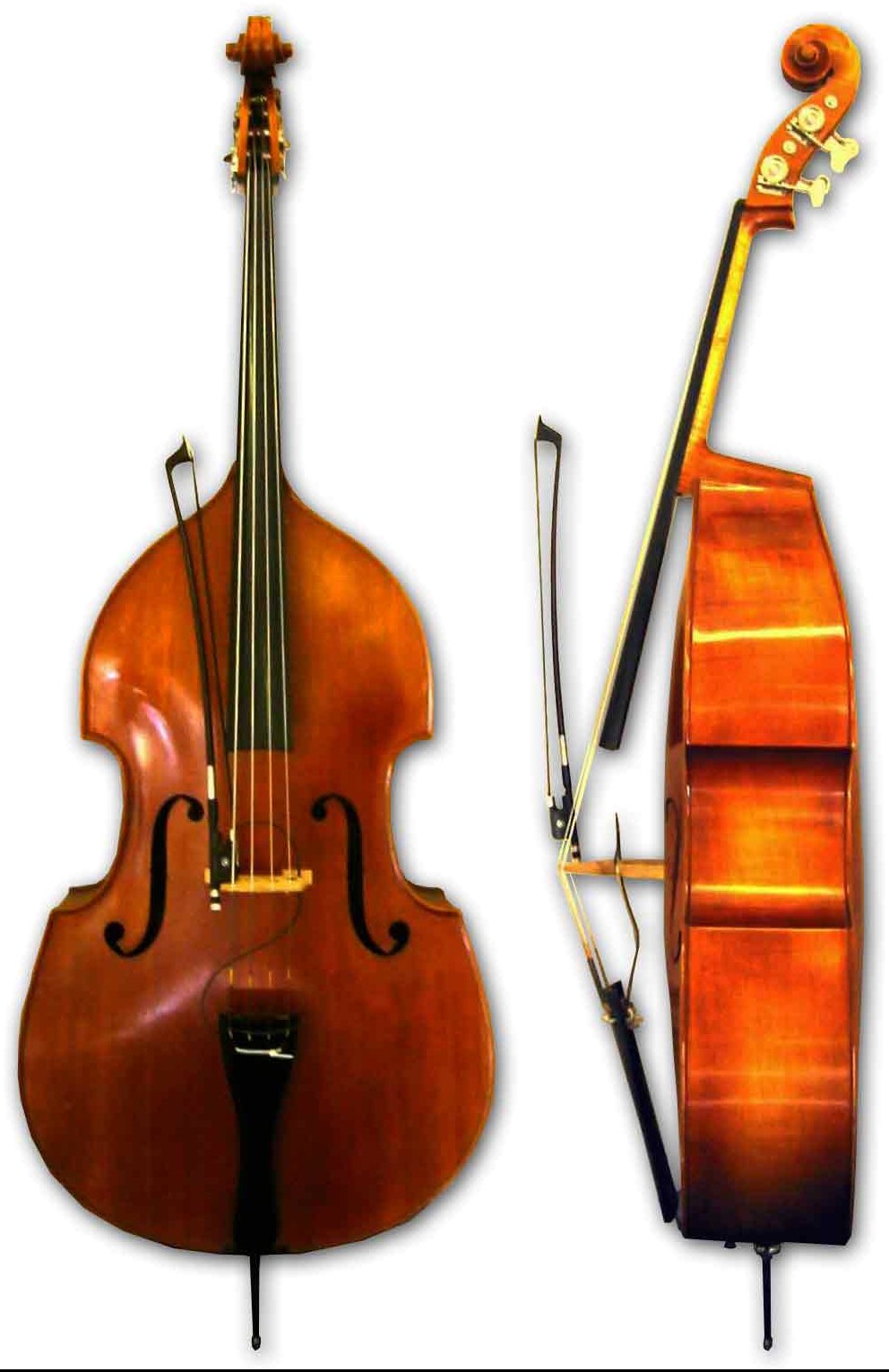


Photos from Wikimedia Commons. Violin: Just plain Bill, public domain; Viola: Just plain Bill, public domain; Cello: Georg Feitscher, CC BY 3.0; Double bass: AndrewKepert, CC BY-SA 3.0.


What is a bowed string instrument?
It is a chordophone (it sounds through the vibration of a stretched string) with one special feature: the string is set vibrating by rubbing it with a bow, a stick strung with horsehair coated in rosin. This continuous friction keeps the string vibrating for as long as the bow moves, which is why these instruments can sustain and shape a sound like a singing voice, making it louder or softer at will.
This is what separates them from the plucked strings (guitar, harp), where the string is plucked and the sound dies away quickly. In fact, bowed instruments can also be plucked, which is called pizzicato, but their natural way of playing is with the bow.
The three large string families are distinguished by how the string is made to sound:
| String family | How it sounds | Examples |
|---|---|---|
| Bowed | With a bow | Violin, viola, cello, double bass |
| Plucked | Plucking with the fingers or a pick | Guitar, harp, bass guitar |
| Struck | Striking with hammers | Piano |
The four instruments, from highest to lowest
The family covers the whole range, from the bright high register of the violin to the deep low register of the double bass:
- Violin: the highest and most numerous; it carries the melody and is the “soprano” of the strings.
- Viola: the alto voice, a fifth below the violin; it is read in alto clef (C clef).
- Cello (short for violoncello): the tenor-bass, warm and singing; it is played seated, resting on an endpin.
- Double bass: the low foundation; the only one tuned in fourths and the only one that sounds an octave lower than written.

What they share: four strings and no frets
What makes this family so recognizable is that all its members share the essentials:
- Four open strings, which give the reference notes.
- No frets. Unlike the guitar, there are no bars to fix the note: the pitch is the exact point where the finger shortens the string, and the ear decides it. This allows vibrato, expressive intonation and the glissando.
- The same note in several places. Because the strings overlap in range, a note can be played open on one string or stopped on the one below; they do not sound the same, and the player chooses.
- Tuning in fifths for the violin, viola and cello, with a single exception: the double bass, which is tuned in fourths.
How they are held: under the chin or standing
Size rules. The two high instruments, violin and viola, are small and rest on the shoulder, under the chin. The two low ones, cello and double bass, are too big for that: they rest on the floor on an endpin. The cellist plays seated, holding the instrument between the knees; the double bassist plays standing or on a high stool.
The bow and common techniques
The bow is a wooden stick (today almost always pernambuco or carbon fiber) with a ribbon of stretched horsehair. Its parts: the stick, the hair, the frog (the block at the end where it is held), the screw (which tightens the hair) and the rosin rubbed on the hair so that it grips the string. Without rosin the bow would slip and make no sound.
All four instruments share the same basic techniques:
- Arco: drawing the bow across the string for a sustained, singing sound.
- Pizzicato: plucking the string with a finger (a short sound).
- Double stops: playing two strings at once; with three or four, “broken” chords.
- Harmonics: touching the string very lightly to get the notes of the harmonic series, high, flute-like sounds.
Comparison chart of the bowed strings
From highest to lowest, with their open strings, tuning, the clef they read and how they are held:
| Instrument | Open strings | Tuning | Clef | Position |
|---|---|---|---|---|
| Violin | G3·D4·A4·E5 | Fifths | Treble | Under the chin |
| Viola | C3·G3·D4·A4 | Fifths | Alto (C clef) | Under the chin |
| Cello | C2·G2·D3·A3 | Fifths | Bass (also tenor and treble) | Seated, with endpin |
| Double bass | E1·A1·D2·G2 (sounding) | Fourths | Bass (sounds an octave lower) | Standing, with endpin |
Look at the strings: the viola and the cello have the same four (C·G·D·A), an octave apart; the violin shares the three upper ones with the viola (G·D·A) and adds the E; and the double bass is the odd one out, tuned in fourths and transposing. Pitches use scientific pitch notation (C4 is middle C).
Each one reads its own clef
Because the family covers an enormous range, each instrument uses the clef that fits it best: the violin reads treble clef; the viola reads C clef on the 3rd line (alto clef; it is practically the only instrument that uses it every day); the cello reads bass clef, moving to tenor clef and treble clef in the high register; and the double bass reads bass clef, but written an octave higher than it sounds.
In the orchestra, the quartet and the band
The bowed strings are the foundation of the symphony orchestra: the largest section, arranged as first violins, second violins, violas, cellos and double basses. They are also the heart of chamber music, starting with the string quartet (two violins, viola and cello). In the wind band they hardly appear, since the band is a matter of winds and percussion. The main exception is the double bass, which some symphonic bands add (and some add a cello too), reinforcing the bass line alongside the tubas and euphoniums.
A little history
The violin family as we know it arose in northern Italy in the 16th century, gradually replacing the older viols (viola da gamba), which had frets and were held between the legs. In Cremona, between the 16th and 18th centuries, the workshops of Amati, Stradivari and Guarneri built the most famous instruments in history, which are still highly prized and sell for fortunes. The shape of the violin has barely changed since then.
In summary
- The bowed strings are four instruments: violin, viola, cello and double bass, from highest to lowest.
- They sound when the string is rubbed with the bow (or plucked: pizzicato) and they have no frets.
- They are tuned in fifths, except the double bass (fourths, and it sounds an octave lower than written).
- The two high ones are played under the chin; the two low ones rest on an endpin (cello seated, double bass standing).
- They are the foundation of the orchestra and of the quartet; in the band, mainly the double bass.