
The plucked string instruments are the ones that sound when a string is plucked with the fingers or a pick. The best known are the guitar, the ukulele, the bass guitar and the harp, joined by the mandolin, the banjo and, in Spanish rondallas (plucked-string ensembles), the bandurria and the lute. They share one thing: the string receives a single impulse and the sound dies away by itself.
This page gives you the overview: how they work, how they differ from the bowed strings, what tricks they use to prolong a fading note, and a chart with the strings and tuning of each.
The most common plucked string instruments are the guitar, the ukulele, the bass guitar, the harp, the mandolin, the banjo and, in rondallas, the bandurria and the lute:
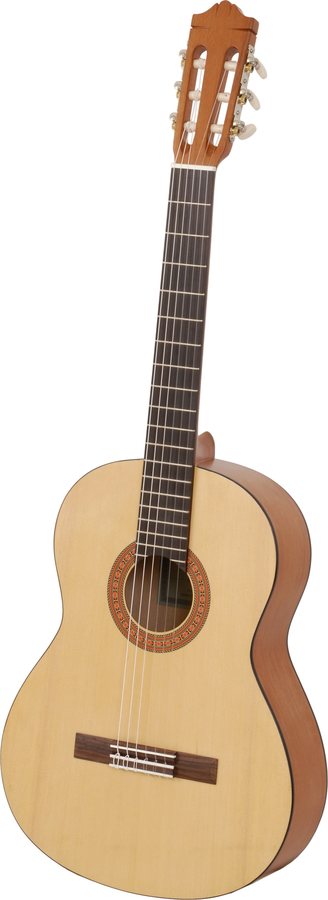
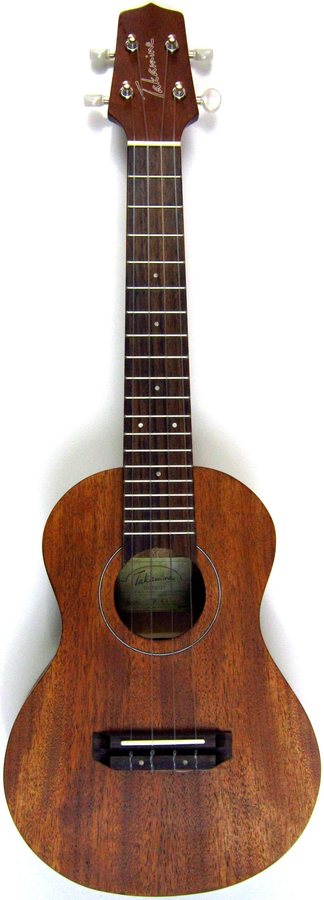
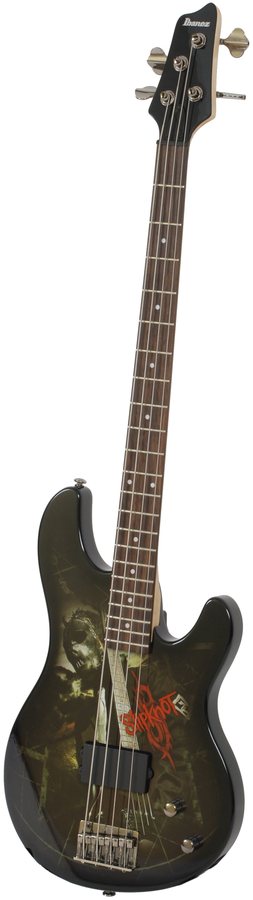
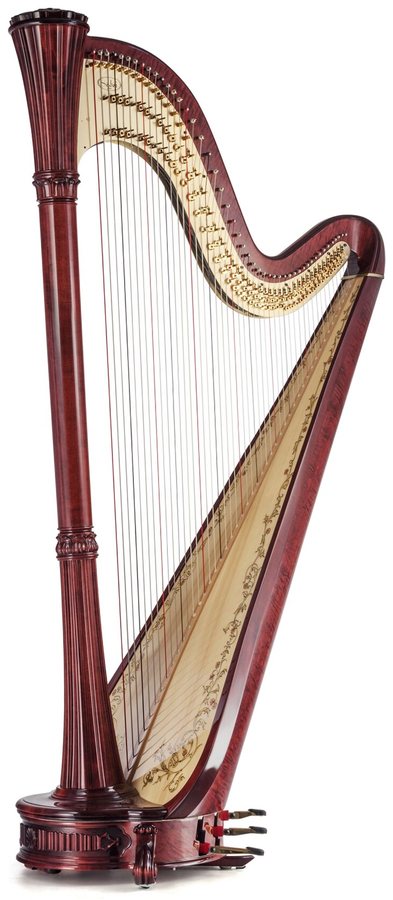
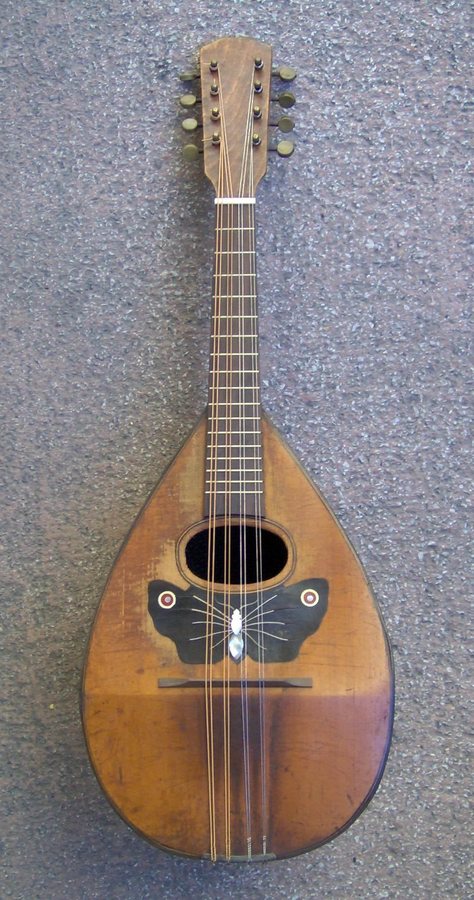
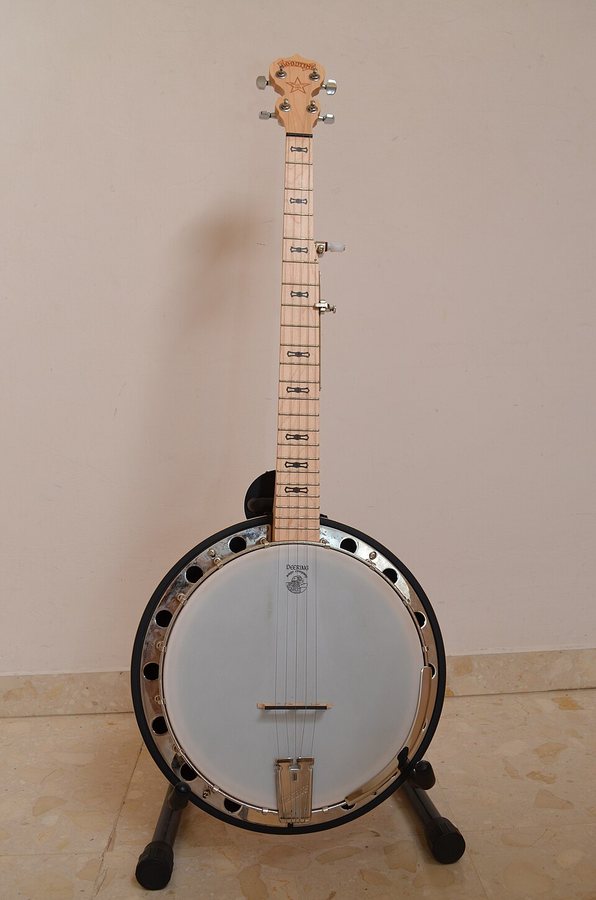
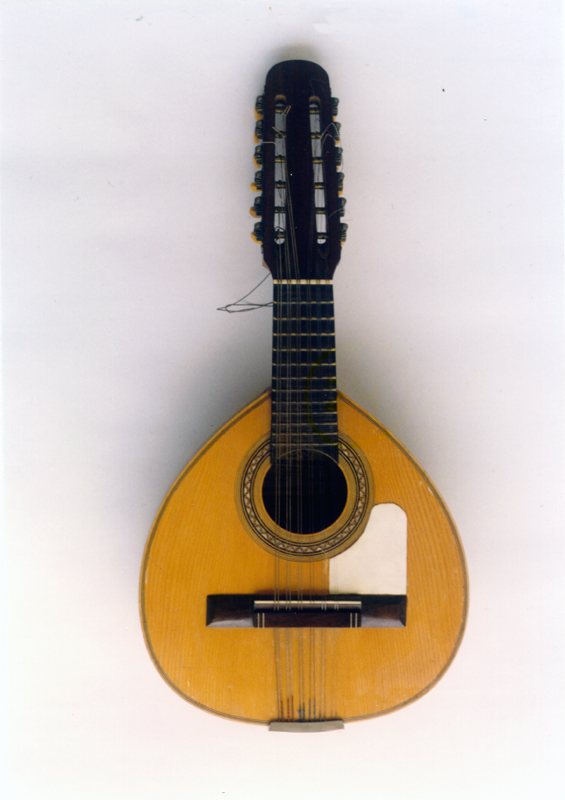
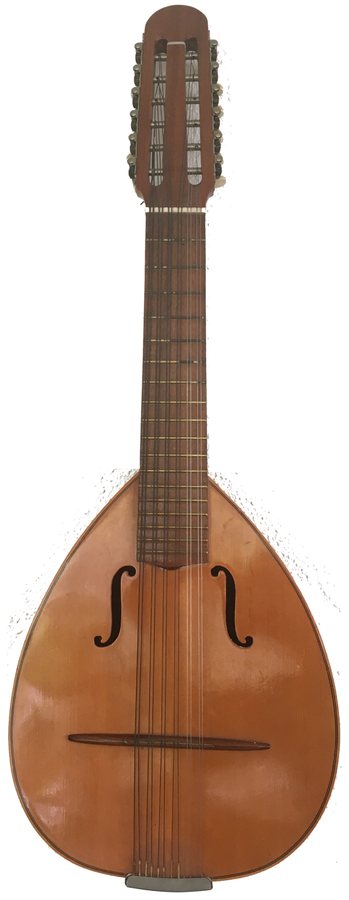


Photos from Wikimedia Commons (guitar, ukulele and bass guitar, rotated and cropped). Guitar: muzyczny.pl, CC BY-SA 4.0; Ukulele: Lardyfatboy, CC BY-SA 4.0; Bass guitar: muzyczny.pl, CC BY-SA 4.0; Harp: N.S.M. s.p.a., CC BY-SA 4.0; Mandolin: Villanueva, public domain; Banjo: דג בלי מלח, CC BY-SA 4.0; Bandurria: Soinuenea, CC BY-SA 4.0; Lute: Arent, CC BY-SA 4.0.


What is a plucked string instrument?
It is a chordophone (it sounds through the vibration of a stretched string) in which the vibration is started by pulling the string and letting go. This gesture is called plucking. After the pluck the string is free: it vibrates with all its energy at the start and gradually loses it, so the note starts strong and decays. It is the opposite of the violin bow, which keeps the string vibrating as long as it moves.
Chordophones are divided according to how the string is set in motion:
| String family | How it sounds | Examples |
|---|---|---|
| Bowed | With a bow | Violin, viola, cello, double bass |
| Plucked | Plucking with fingers or a pick | Guitar, harp, mandolin, banjo… |
| Struck | Striking with hammers | Piano |
The boundaries are not watertight. Bowed instruments can also be plucked (that is pizzicato) and, the other way around, the harpsichord (one of the keyboard instruments), although it has a keyboard like the piano, sounds because small plectra pluck the string. What counts is the way the string is excited, not the shape of the instrument.
The eight main instruments
The family is huge and spans the whole world, but these are the ones you are most likely to meet in a class, a band, an orchestra or a rondalla:
- Guitar: six strings and frets; played with the fingers or a pick, it is the basis of much popular music. It is written an octave higher than it sounds.
- Ukulele: four soft strings and a small neck; its highest string is placed where the lowest would be (re-entrant tuning).
- Bass guitar: four thick strings, tuned like the four lowest strings of the guitar but an octave lower; it is the low foundation in rock, jazz and modern music.
- Harp: the only one on the list without frets and with one string for each note; in the orchestra it is played seated, with both hands and the feet on the pedals.
- Mandolin: eight strings in pairs, tuned like the violin; it is played with a pick and is heard mostly in Italian folk music and bluegrass.
- Banjo: a round body covered by a drumhead, like a tambourine, and a short fifth string; it is the instrument of bluegrass and American folk.
- Bandurria: twelve strings in six pairs, tuned in fourths and played with a pick; it is the high voice of the Spanish rondallas.
- Spanish lute (laúd): the lute of the rondalla has the same layout as the bandurria, but sounds lower and fills out the ensemble.
Fingers or pick: two ways to pluck
In general, the way of plucking changes the attack and the tone, although the result also depends on the instrument, the strings and the technique:
- With the fingers (or fingernails): a rounder sound and the possibility of plucking several strings at once with different fingers. It is the norm on the harp, on the classical guitar and on the bass.
- With a pick (or plectrum): a thin piece of plastic, shell or a similar material that gives a brighter, more defined attack and allows very fast repetition of the same note. It is the way to play the mandolin, the bandurria and the lute, and it is very common on the electric guitar and the tenor banjo.
The guitar, the ukulele and the bass accept both, and also strumming: sweeping across several strings at once to sound a chord, instead of plucking them one by one.
How to prolong a fading sound
Because the note decays, plucked string instruments have found ways to sustain a melody without a bow. The two most important are built into the instrument itself:
- The tremolo. The same note is plucked again and again, very fast, until the plucks blend into a continuous sound. It is the signature technique of the mandolin and the bandurria; it is explained on the tremolo page.
- Double strings. The mandolin has eight strings grouped in four pairs tuned in unison; the bandurria and the lute have twelve strings in six pairs. When a pair is plucked, both strings sound at once, which contributes to a richer sound with more body, and it combines very well with the tremolo.
Other resources are simpler: choosing an open string, which vibrates longer than a stopped one; plucking notes in sequence so that they overlap, as in an arpeggiated chord; or using the resonating body, which on the harp and the acoustic guitar prolongs and rounds the note.
With frets and without frets
Most of the instruments on this page have frets: metal bars on the neck that fix each note. You press between two frets and the note comes out in tune, always the same, without the ear having to decide. This is the big difference from the orchestral bowed strings, which have no frets and leave the tuning to the player.
Of the instruments on this page, the harp is the only one without frets. There is no neck and nothing is pressed: each string is one note. A concert harp has 47 strings, seven per octave, covering about six and a half octaves (from C♭1 to G♭7). To play in any key it has seven pedals, one for each note name, with three positions: up, the string sounds flat; in the middle, natural; down, sharp. To find your way, the C strings are red and the F strings are black or blue.
Comparison chart of the plucked strings
With the open strings of each instrument, from lowest to highest, and how they are plucked. Pitches use scientific pitch notation (C4 is middle C):
| Instrument | Strings | Open strings | How it is plucked |
|---|---|---|---|
| Guitar | 6 | E2·A2·D3·G3·B3·E4 | Fingers or pick |
| Ukulele | 4 | G4·C4·E4·A4 (re-entrant) | Fingers |
| Bass guitar | 4 | E1·A1·D2·G2 | Fingers or pick |
| Harp | 47 | One per note; the 7 pedals alter them (flat, natural, sharp) | Fingers |
| Mandolin | 8 (4 pairs) | G3·D4·A4·E5 | Pick |
| 5-string banjo | 5 | D3·G3·B3·D4 and the short G4 | Fingers with finger picks |
| Bandurria | 12 (6 pairs) | G♯·C♯·F♯·B·E·A (fourths; no octave numbers, because the sources do not fix them) | Pick |
| Spanish lute (laúd, in the rondalla) | 12 (6 pairs) | The same notes, an octave lower | Pick |
Notice three things. The mandolin has the same four notes as the violin, so a violinist finds their way at once. The bass and the bandurria are tuned in fourths; the guitar is too, except between the 3rd and 2nd strings (G-B), which form a major third. And the ukulele and the banjo share an oddity: a high string that is not where you would expect, the re-entrant G of one and the short fifth string of the other. The notes of the guitar and the bass are written an octave higher than they sound; those of the ukulele and the mandolin are not.
Each instrument in its place: orchestra, rondalla and band
In the symphony orchestra the plucked strings are soloists and color: the harp is the only regular member of the family, and it is usually written on two staves, like the piano, with treble and bass clefs. The mandolin and the guitar appear only when a score calls for them, as in the serenade from Mozart's Don Giovanni or in Mahler's Seventh Symphony.
The rondalla (also called a “plectrum-and-fingers orchestra”, orquesta de pulso y púa in Spanish) gathers the plucked strings in an ensemble of their own: bandurrias, lutes and guitars (the “plectrum” and “finger-plucked” instruments), with other additions depending on the place. It is a very living tradition in Spain.
The wind band, on the other hand, is a matter of winds and percussion and hardly uses plucked strings, apart from occasional appearances of the harp or the electric bass in a particular work. This is a difference from the bowed strings, of which at least the double bass is sometimes added to the symphonic band. In jazz and modern music the opposite is true: guitar and bass guitar are the basis of the rhythm section.
A little history
Plucked strings appear in very different and very ancient musical traditions, which is why their history is not a single line. The harp is one of the oldest instruments known: it appears in depictions from Mesopotamia and ancient Egypt several thousand years old. The word lute comes from the Arabic al-ʿūd, and that instrument reached Europe through Muslim Spain. The mandolin took its classical form in Italy in the 17th and 18th centuries, hence the name Neapolitan mandolin. The banjo was born in America from string instruments of African origin, and from there it passed into folk, bluegrass and jazz.
In summary
- Plucked strings sound when the string is plucked with the fingers or a pick, and the note decays quickly.
- The main ones are the guitar, ukulele, bass guitar, harp, mandolin, banjo, bandurria and Spanish lute.
- Almost all have frets; the harp does not, and has one string per note and seven pedals.
- To prolong the sound, players use the tremolo and double strings (mandolin, bandurria, lute).
- The harp is the only regular member in the orchestra; the rondalla brings together bandurrias, lutes and guitars.