
Unpitched percussion instruments, also called instruments of indefinite pitch, are the ones that sound without a specific note. You hit a snare drum, a bass drum or a triangle and you hear a tone color, a hit, a noise with character, but not a C or a D. This is the section with the most variety in the orchestra, and we sort it by what makes the sound: a drumhead, a piece of metal, a piece of wood, or something that is shaken or scraped.
This page covers the main unpitched instruments and sets you will meet in a band, an orchestra, a drum kit or a percussion lesson, with a photo of each one, how it is played and how it is written on the staff. Instruments that do play notes, such as the xylophone or the orchestral timpani, are on the page about pitched percussion.
What is an unpitched percussion instrument?
It is an instrument that sounds when it is hit, shaken or scraped and that is not used to play notes of a definite pitch. Its sound does not have a pitch clear enough to be treated as a musical note. (In pitched instruments the sound is built on a series of partials that the ear hears as one pitch.) What matters here is tone color: dry, bright, deep, metallic, woody. Some of these instruments sound lower or higher than others, like a large tom next to a small one, but that is not a note written on the staff.
“Indefinite pitch” does not mean “no pitch at all.” A floor tom sounds lower than a small tom, and a small cymbal sounds higher than a large one. What we cannot say is which exact note it is. For this reason the score does not place these instruments by notes but by instruments, which is where the percussion clefs you will see below come from.
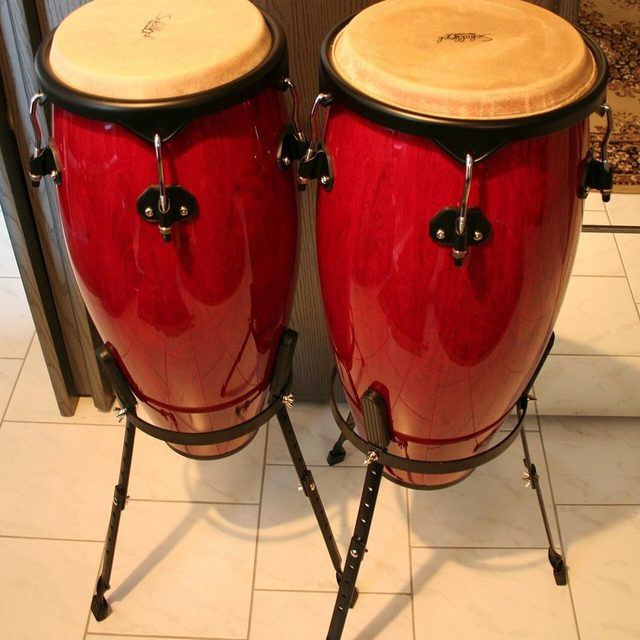
Two technical words help to organize the list. Instruments that sound through a stretched drumhead are membranophones (snare drum, bass drum, congas). Instruments that sound through the vibration of their own body, whether metal or wood, are idiophones (triangle, claves, maracas).
Unpitched percussion: classification and examples
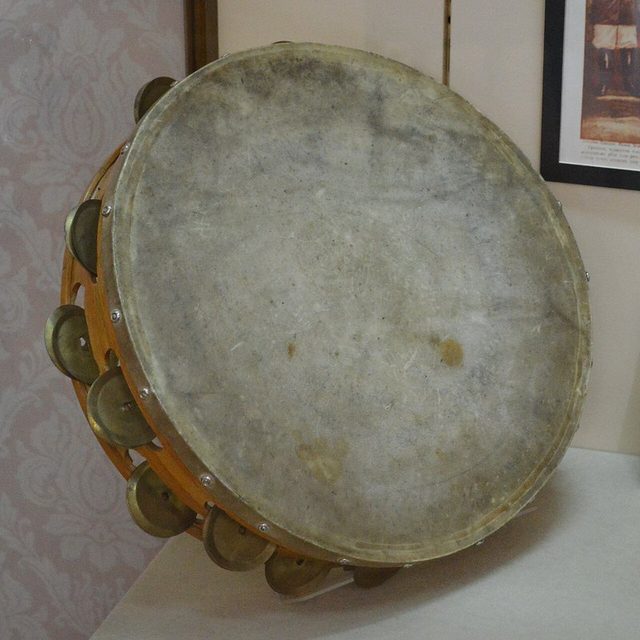
To make them easier to identify, we group them by the part that makes the sound (drumhead, metal, wood) or by the way they are played (shaken or scraped). The groups are not exclusive: the tambourine, for example, combines a drumhead with metal jingles.
There are five groups: drums with a head, metal instruments, wooden instruments, instruments that are shaken or scraped, and the set that combines several of them, the drum kit.
Drums with a head


Metal instruments


Wooden instruments


Shaken and scraped instruments


The set: the drum kit

Photos from Wikimedia Commons. Snare drum: Vladimir Morozov, CC BY 2.0; Bass drum: Yooperz, CC BY-SA 4.0; Tom-toms: Marco van den Hout, CC BY-SA 3.0; Bongos: muzyczny.pl, CC BY-SA 4.0; Congas: Stephan Czuratis, CC BY-SA 3.0; Tambourine: Лапоть, CC0; Crash cymbals: Andrewa, CC BY-SA 3.0; Hi-hat: Wyglif, public domain; Triangle: Hannes Grobe, CC BY 3.0; Cowbell: Michael Malak, public domain; Tam-tam: Serg Childed, CC BY-SA 4.0; Claves: Hnidopichwiki, CC BY-SA 4.0; Wood block: Museu de la Música de Barcelona, CC BY-SA 4.0; Castanets: TheMexican, public domain; Whip: Foamposite, CC BY-SA 3.0; Ratchet: Yoninah, public domain; Maracas: Axel Heymann, CC BY-SA 3.0; Sleigh bells: Serg Childed, CC BY-SA 4.0; Güiro: Miguel Andrade, public domain; Drum kit: TommySalami, public domain.


What each one does
Drums with a head
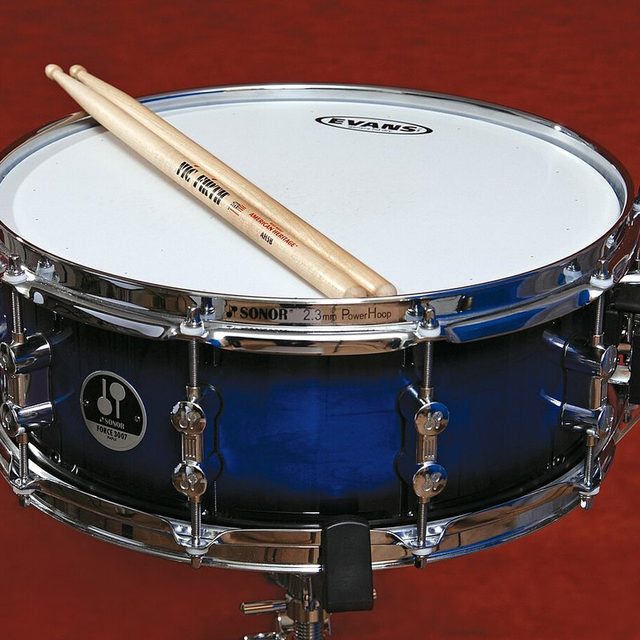
- Snare drum. A drum with two heads and a set of metal wires, the snares, stretched against the lower head. When the drum is hit, the snares vibrate and give it its dry, rattling sound. It is played with sticks, and its signature technique is the roll. It is the essential drum of the band and of the drum kit.
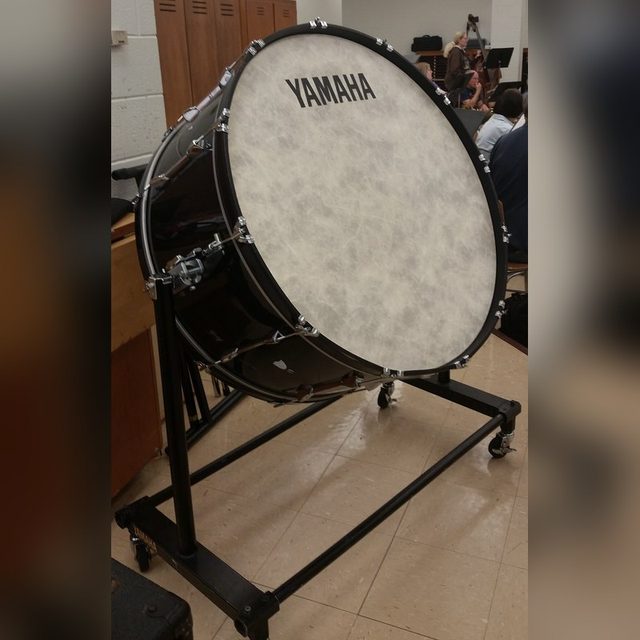
- Bass drum. The large, deep drum. In the band and the orchestra it is played with a mallet and it is the lowest-sounding of the drums on this page; on the drum kit it is played with a foot pedal.
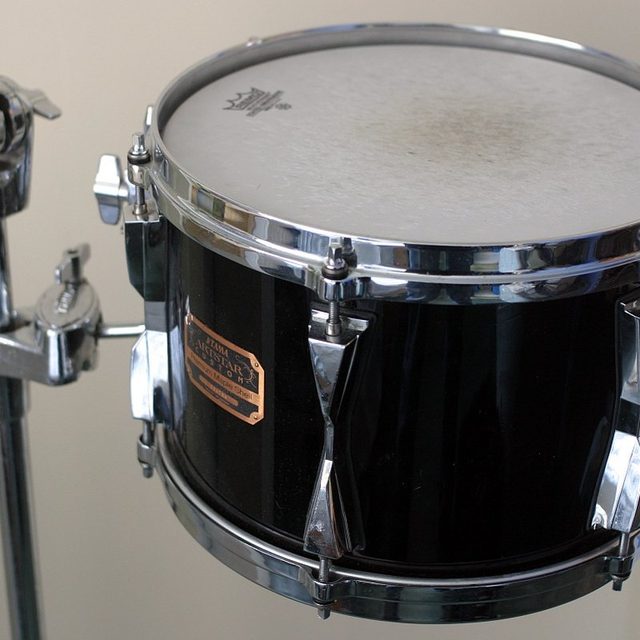
- Tom-toms. Drums with no snares, in different sizes: the larger the drum, the lower it sounds. A drum kit usually has several mounted above the bass drum and one on the floor.
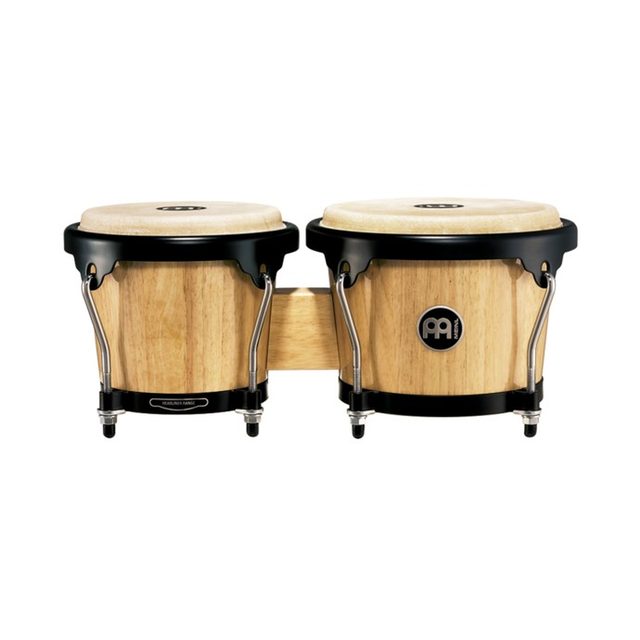
- Bongos. A pair of small drums joined together, one higher than the other, played with the hands. The player sits and holds them between the knees. They belong to Latin music.
- Congas. Tall, barrel-shaped drums played with the hands. They come from Afro-Cuban music and are often played in sets of two or three.
- Tambourine. A frame with a head and small metal jingles that ring when it is shaken. It is struck with the hand and shaken, and it is one of the most recognizable instruments in popular music.
Metal instruments
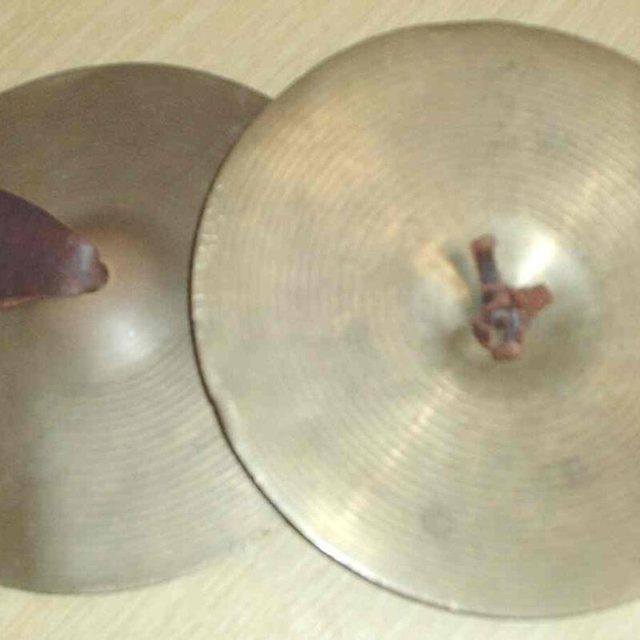
- Crash cymbals. Two bronze discs held with straps and clashed together, in the band and the orchestra; or a single cymbal that is suspended and played with a stick, a mallet or even a bow. A drum kit has cymbals of different sizes.
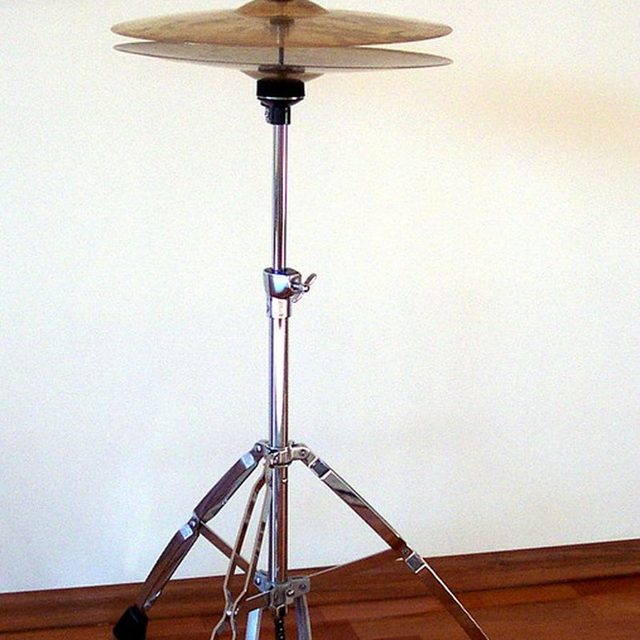
- Hi-hat. Two cymbals mounted one above the other on a stand with a pedal, part of the drum kit. Pressing the pedal closes them and releasing it opens them, which changes the sound.
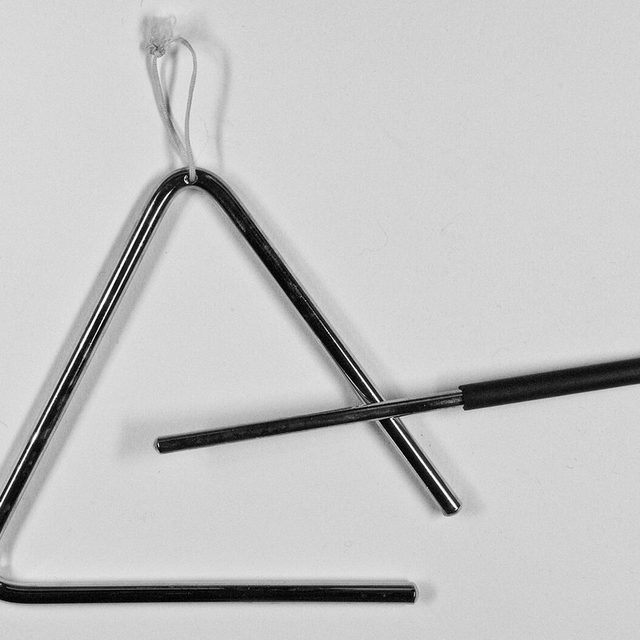
- Triangle. A steel bar bent into the shape of a triangle that is open at one corner. It hangs from a cord and is struck with a metal beater. It sounds bright, high and long, and it carries well even when played softly.
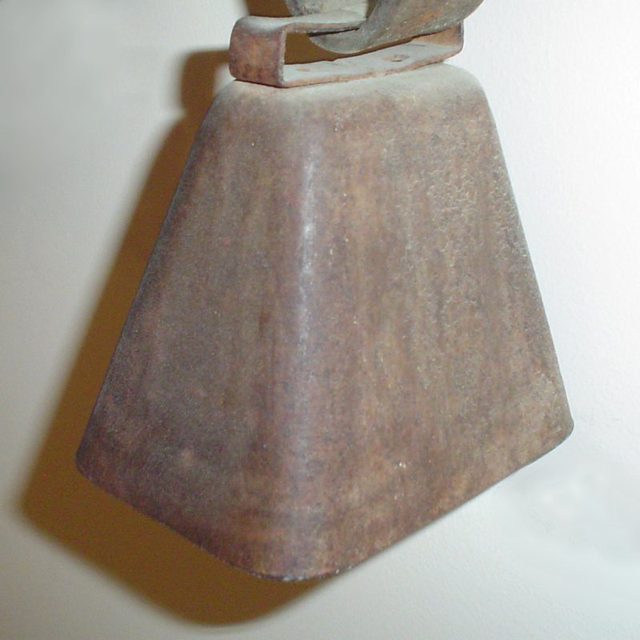
- Cowbell. A metal bell with no clapper, played with a stick. It comes from the bells that animals wear around the neck, and it is typical of Latin music and rock.
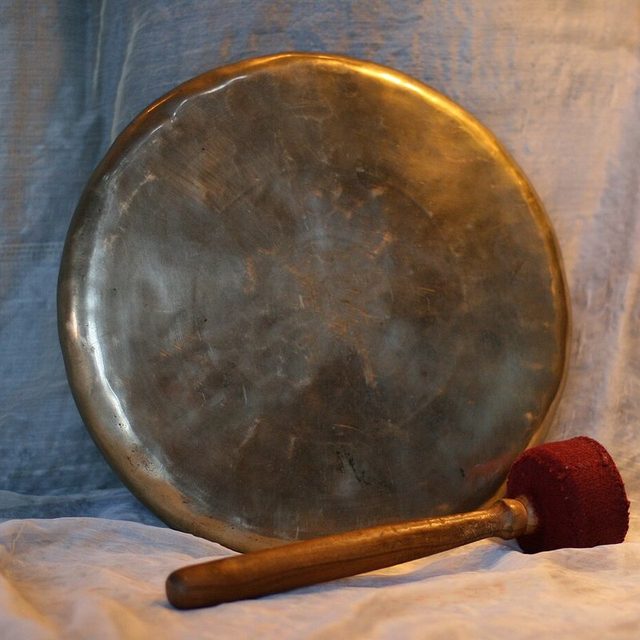
- Tam-tam. A large hanging metal disc, struck with a soft mallet. Its sound grows slowly, fills with overtones and lasts a very long time, and it is used for dramatic moments. It is often called a gong, but they are not the same thing: the orchestral tam-tam normally gives a sound of indefinite pitch, while some gongs are built to sound a more recognizable pitch.
Wooden instruments
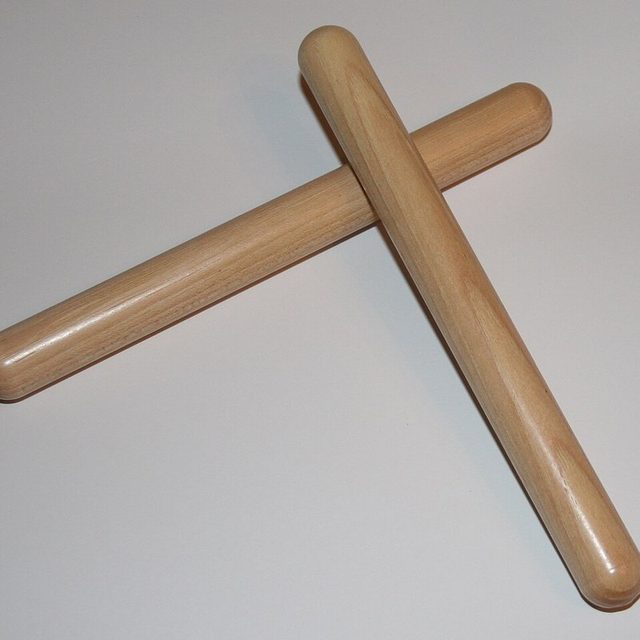
- Claves. Two cylindrical sticks of hard wood that are struck against each other, with one resting on the cupped hand so that it can resonate. They come from Cuban music. Note that they have nothing to do with the musical clefs (treble, bass and C), which have their own page. They are the sticks that play the Afro-Cuban clave rhythm pattern.
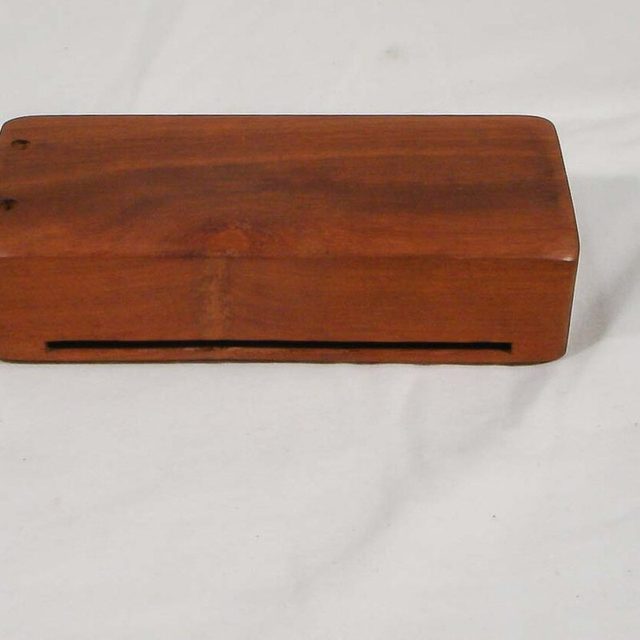
- Wood block. A hollow block of wood with a slit, played with a stick. It gives a dry, hollow knock.
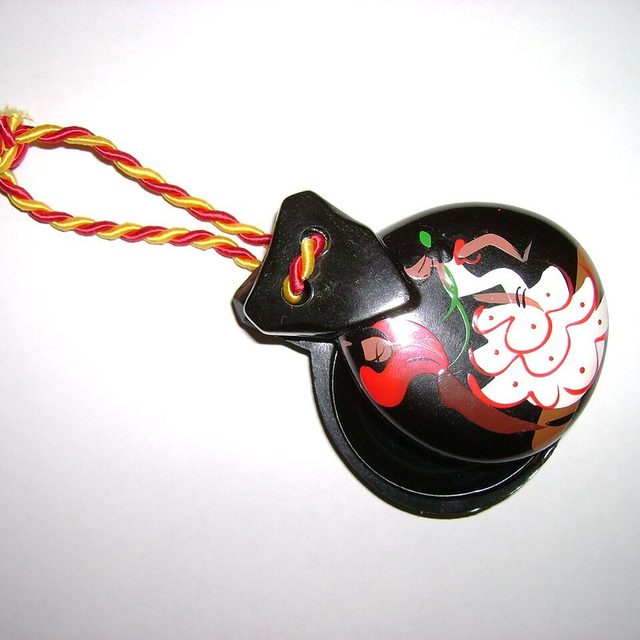
- Castanets. Two shell-shaped pieces of wood joined by a cord that goes around the finger, and sounded with the fingers. They are the Spanish instrument par excellence and the orchestra uses them too.
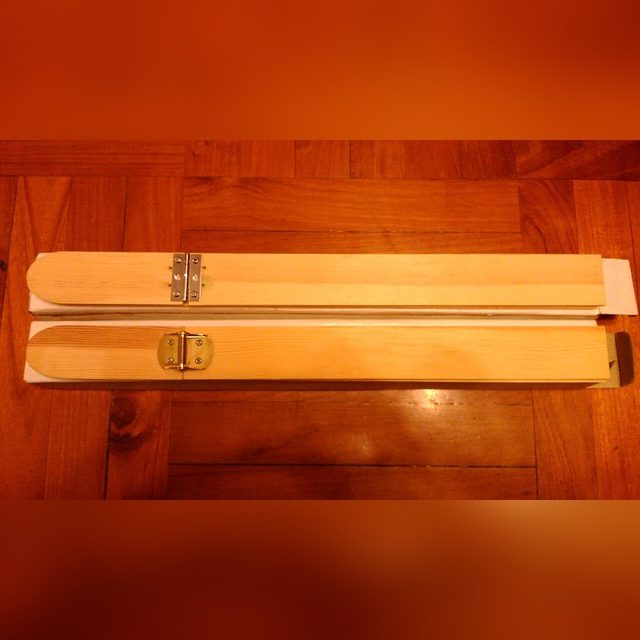
- Whip (slapstick). Two boards of wood joined by a hinge that are snapped shut to make a crack that imitates a whip. It is the orchestral whip, also called a slapstick, not a real whip.
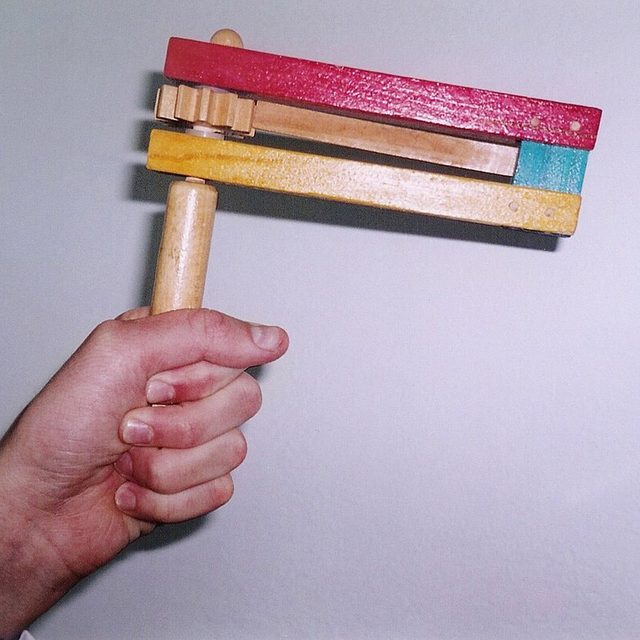
- Ratchet. A toothed wheel that turns against a flexible wooden tongue and produces a rapid series of dry clicks. It is not the Spanish matraca of Holy Week (a board with hinged hammers that strike when it is shaken). The orchestra uses it for effects, and it is also used in popular festivals.
Shaken and scraped instruments
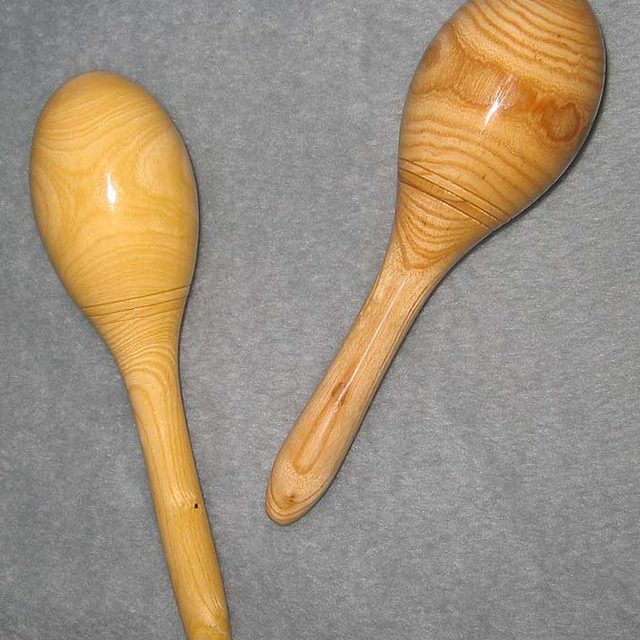
- Maracas. A pair of hollow shells with seeds or small beads inside and a handle. They are shaken, one in each hand.
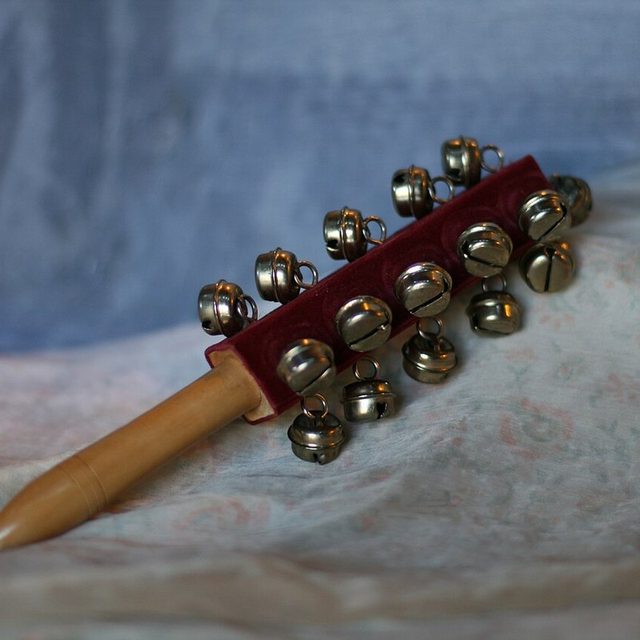
- Sleigh bells. A row of metal bells on a handle, shaken to give a continuous, bright sound. They are the “sleigh bells” of Christmas songs.
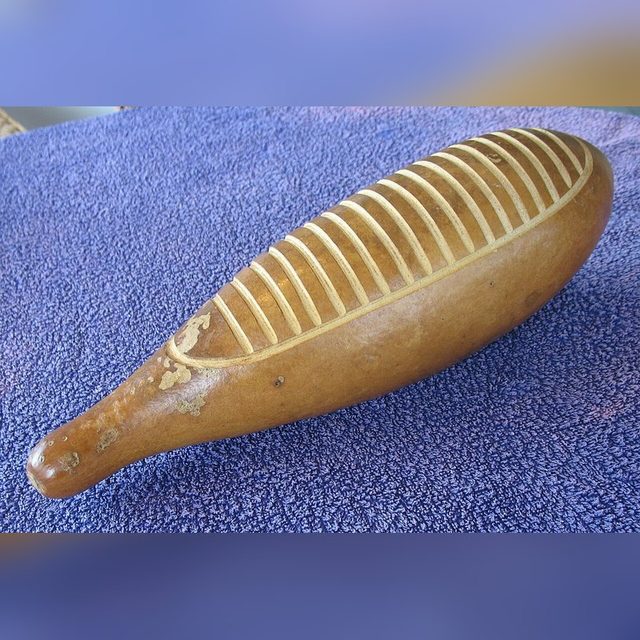
- Güiro. A hollow gourd (or a wooden or metal version) with notches along its side, scraped with a stick. It sounds like a low, rhythmic ratchet. It belongs to Caribbean and Latin American music.
The set: the drum kit
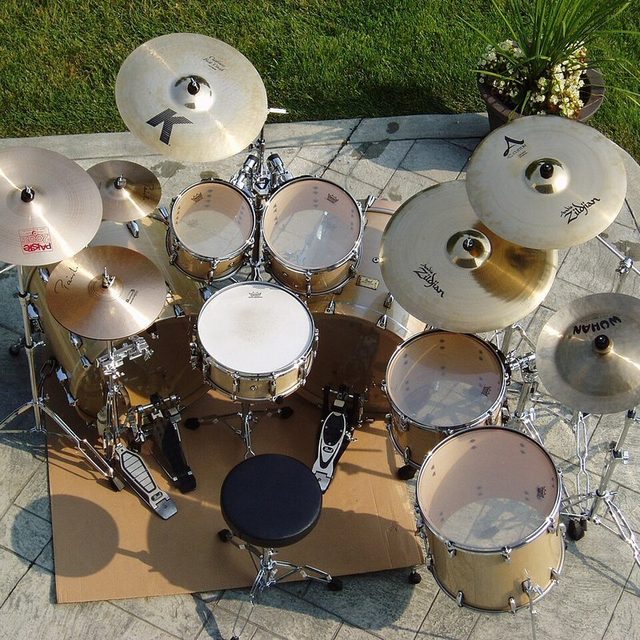
The drum kit is not one instrument but a way of bringing several of them together so that one person can play them: usually a bass drum with a pedal, a snare drum, several tom-toms, a hi-hat and several cymbals. It is the base of almost all modern music, and its music uses the percussion conventions in the next section.
How they are written on the staff
Because they have no notes, unpitched percussion instruments are written with a percussion clef: two thick vertical bars in place of a treble or bass clef. It does not say “this line is a G”; it says “there are no pitches here.” Positions on the staff (UK: stave) are assigned to the different instruments according to the convention used, so a line or a space can stand for an instrument instead of a pitch. This is why you should always check the legend of the score. The staff can have the usual five lines or, when only one instrument is written, a single line.
- One instrument, one line. When only one instrument plays, such as the triangle or the snare drum, a single line is enough and you read only the rhythm. This is what you will see in band parts.
- Several instruments, each in its own place. In a common drum-kit layout, each instrument has a fixed position on the staff: the bass drum in the bottom space, the snare drum in the third space, the toms in between, and the hi-hat and cymbals with x-shaped noteheads at the top, on or above the fifth line.
- Stems and rests are the usual ones. Whole, half, quarter and eighth notes (UK: semibreve, minim, crotchet, quaver) and rests have exactly the same values; the only thing that changes is which instrument sounds at each position.

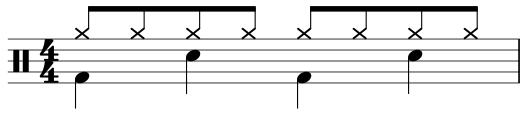
Every score should include a legend that says which instrument goes on which line, because there is no universal rule. If there is none, ask the composer or the conductor. Typical abbreviations are S. D. (snare drum), B. D. (bass drum), Cym. (cymbals) and Tri. (triangle); in Italian scores you will see G. C. (grancassa, bass drum), Ptti. (piatti, cymbals) and Trgl. (triangolo). You can find more in the table of instrument names in other languages.
Sticks, mallets and hands
What strikes the instrument changes the sound as much as the instrument itself:
- Sticks. Wooden rods (sometimes nylon or plastic) with a small tip; they are used on the snare drum, the toms and the drum-kit cymbals. A wooden tip gives a drier, more defined sound.
- Mallets. Sticks with a large head of felt or yarn, for the bass drum, the tam-tam or a suspended cymbal. The softer the head, the gentler and rounder the stroke.
- Brushes. Wire brushes that are swept across the head of the snare drum, typical of jazz.
- Hands. Bongos, congas and tambourines are played with the hand, and the technique (fingers, palm, edge of the head) changes the sound.
Three common percussion techniques
- The roll. A roll repeats the strokes so quickly that they blend into one continuous sound, to prolong a sound that dies away quickly. Its function can be compared with that of the tremolo on other instruments, although the playing technique is different. It is usually written with slashes across the stem, but the notation depends on the instrument and on the convention of the score.
- The rimshot. Instead of hitting the center of the head, the player strikes the rim of the drum, or the head and the rim at the same time (a rimshot). It gives a drier, sharper sound, typical of the snare drum.
- Damping or letting ring. Cymbals, the tam-tam and the triangle keep sounding after the stroke. The percussionist dampens them with the hand or the body when the music asks for it, or lets them ring when the score says l.v. (laissez vibrer, “let it ring”).
Comparison chart of unpitched percussion
The instruments and sets on this page, with what they are played with and where you hear them most:
| Instrument | Group | Played with | Where you hear it most |
|---|---|---|---|
| Snare drum | Drumhead | Sticks | Band, orchestra, drum kit |
| Bass drum | Drumhead | Mallet (or pedal) | Band, orchestra, drum kit |
| Tom-toms | Drumhead | Sticks | Drum kit |
| Bongos | Drumhead | Hands | Latin music |
| Congas | Drumhead | Hands | Afro-Cuban music |
| Tambourine | Drumhead and jingles | Hand, shaken | Popular music |
| Crash cymbals | Metal | Clashed together, or stick or mallet | Band, orchestra, drum kit |
| Hi-hat | Metal | Sticks and pedal | Drum kit |
| Triangle | Metal | Metal beater | Band, orchestra |
| Cowbell | Metal | Stick | Latin music, rock |
| Tam-tam | Metal | Soft mallet | Orchestra, concert band |
| Claves | Wood | Struck together | Cuban music |
| Wood block | Wood | Stick | Orchestra, band |
| Castanets | Wood | Fingers | Spanish music, orchestra |
| Whip (slapstick) | Wood | Snapped shut | Orchestra |
| Ratchet | Wood | Turned by hand | Orchestra, popular festivals |
| Maracas | Shaken | Shaken | Latin music |
| Sleigh bells | Shaken (metal) | Shaken | Orchestra, Christmas songs |
| Güiro | Scraped | Stick | Caribbean and Latin American music |
| Drum kit | Set | Sticks and pedals | Modern music |
In the band and in the orchestra
The percussion section of a band or an orchestra brings together two worlds, pitched and unpitched, and each player is in charge of several instruments. In a concert band the percussionists usually share the snare drum, bass drum, cymbals and triangle, in addition to the pitched percussion. Which instruments a work calls for, and how many players are needed, is shown in the list of instruments at the start of the score.
The instruments that now seem most classical entered the European orchestra relatively late. The bass drum, cymbals and triangle were added to the European orchestra during the 18th century, under the influence of Turkish military (“Janissary”) music. Castanets have been linked to Spanish music for centuries, and the conga, bongos, claves and güiro came from Cuba and the Caribbean.
In summary
- Unpitched percussion sounds without a specific note: what you hear is a tone color.
- It is grouped by the part that sounds or by how it is played: drumhead (snare drum, bass drum, tom-toms, bongos, congas, tambourine), metal (cymbals, hi-hat, triangle, cowbell, tam-tam), wood (claves, wood block, castanets, whip, ratchet) and shaken or scraped (maracas, sleigh bells, güiro); the drum kit is a set that combines several.
- It is written with a percussion clef: each line or space is an instrument, not a note.
- What strikes the instrument (stick, mallet, brush, hand) changes the sound as much as the instrument.
- Pitched percussion (xylophone, marimba, timpani and so on) is the percussion that does play notes.